 E-Paper
 Sign In




UAE's strategic investments bolster global supply chain resilience
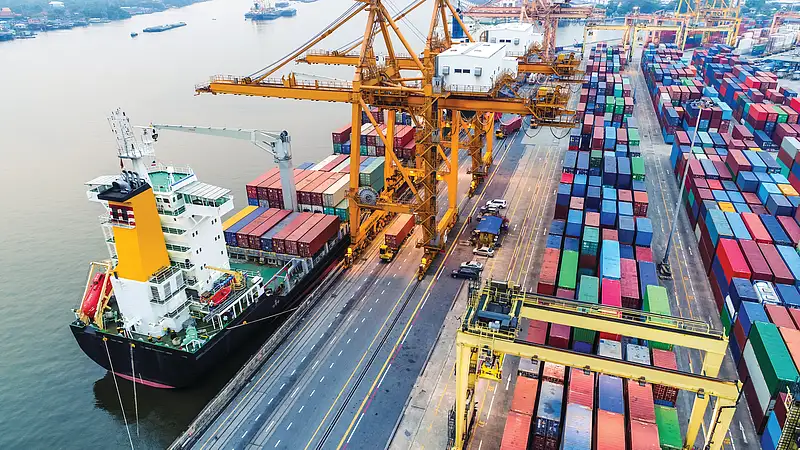
The nation has continued to double down on strategic investments in logistics infrastructure, supportive legislation, and long‑term partnerships with leading private‑sector and international players
- PUBLISHED: Mon 6 Apr 2026, 7:30 AM


The UAE has further solidified its standing as a resilient and forward‑ready global logistics hub, consistently ensuring the seamless flow of trade regardless of shifting global circumstances. While safeguarding steady access to essential goods for local markets, the nation has continued to double down on strategic investments in logistics infrastructure, supportive legislation, and long‑term partnerships with leading private‑sector and international players. These efforts have firmly positioned the UAE as a pivotal node in both regional and global supply chains.
Minister of Foreign Trade Dr Thani Bin Ahmed Al Zeyoudi recently underscored that these combined strengths have helped create a stable, predictable, and highly conducive environment for trade and investment — even when the global landscape is anything but predictable.
Recommended For You


Al Zeyoudi chaired a high-level coordination meeting held by the Ports, Customs and Free Zone Corporation (PCFC) at its headquarters in Dubai with officials from global shipping companies operating in the UAE and representatives of shipping associations. The meeting was convened as part of efforts to strengthen collective coordination in addressing the current challenges facing regional supply chains.
“This strategic meeting with representatives of global shipping companies and associations focused on the current state of global supply chains amidst the prevailing geopolitical landscape. We explored the challenges confronting international trade and their impact on the efficiency of trade flows and market stability,” the minister said.
“We also discussed practical solutions to address these challenges, leveraging the UAE’s integrated and adaptable logistics infrastructure. This robust system is designed to navigate all circumstances, strengthen the reliability of supply chains, and ensure their seamless continuity,” Al Zeyoudi added.
The UAE remains committed to working hand‑in‑hand with local and international partners to develop innovative and sustainable solutions that advance supply chain efficiency and fuel economic growth. The country’s cutting‑edge trade, customs, and logistics systems — strengthened through strategic global collaborations — form a cornerstone in supporting international commerce. In doing so, the UAE reaffirms its unwavering pledge to uphold the integrity, resilience, and efficiency of the global trading ecosystem, ensuring reliable trade flows come rain or shine.
Global Supply Chain Hub
The UAE has strengthened its status as a global hub for food supply chains, even as the international food system faces mounting pressures. Its strategic location and advanced infrastructure have enabled the country to integrate smart technologies with world‑class logistics facilities, supporting regional and global food security through a highly efficient network of ports, airports, and land transport corridors.
Logistics experts say the UAE’s broad capabilities position it to tap into emerging opportunities across regional and global food supply markets. According to Mordor Intelligence, the Middle East’s food logistics sector is valued at $67.14 billion in 2025 and is forecast to grow to $100.59 billion by 2030, reflecting an annual compound growth rate of 8.42 percent. This upward trend is echoed in the UAE’s performance in the Agility Emerging Markets Logistics Index, where it ranks first regionally and third worldwide, behind only China and India.
Food Cluster Economy
A key component of the country’s strategy is the Ministry of Economy and Tourism’s “Food Cluster Economy” initiative, which places the private sector at the center of developing legislation, projects, and national initiatives. The model connects farms, factories, supply chains, and retailers, fostering a collaborative framework designed to enhance competitiveness and deliver shared benefits.
Ports are central to the UAE’s logistics strength. Jebel Ali Port alone manages roughly 73 per cent of the nation’s food and beverage trade by value and links businesses to more than 150 international ports.
The UAE is also widening its footprint in the sector with the launch of the “Dubai Food District.” Announced by DP World, the multi-phase development is scheduled to open its first stage in 2027. The district will feature cold storage and temperature‑controlled warehouses, primary and secondary processing centers, digital back‑office services, cash‑and‑carry facilities, and a gourmet food hall aimed at serving both business clients and consumers.
Alternative Logistics Corridors
The UAE has activated alternative logistics corridors, expanding port capacity and relying on inland transport routes to keep cargo moving across the Gulf Cooperation Council (GCC) as regional tensions raise risks for vessels passing through the Strait of Hormuz, one of the world’s most strategically vital maritime chokepoints.
Governments and logistics operators have begun rerouting shipments to ports outside the affected zone and shifting goods onto overland corridors, bonded transit pathways and emerging rail networks to safeguard the continuity of supply chains, according to media reports and statements from industry operators.
In the UAE, shipments are being rerouted to ports along the Gulf of Oman, such as Fujairah and Khor Fakkan, which sit outside the primary risk zone.
DP World noted that its contingency plans enable containers to be offloaded at east‑coast ports and then moved under bonded road transit to Jebel Ali for final processing and clearance.
Meanwhile, Etihad Rail continues to run freight services across the national rail network, connecting ports, industrial zones and inland logistics hubs. Over the past nine days, the company has completed more than 100 freight trips, transporting roughly 459,000 tonnes of cargo and nearly 8,000 containers. Additional rail corridors have also been activated, with intermodal capacity redirected to East Coast ports and the Al Ghail Dry Port Rail Terminal, supported by five extra train services.
AD Ports Group reported that all UAE ports and terminals under its Ports Cluster remain fully operational, with vessels in the Strait continuing to run intra‑Gulf routes. In parallel, the UAE government has opened emergency air corridors in coordination with GCC countries and the International Civil Aviation Organisation, providing capacity for up to 48 flights per hour.
