 E-Paper
 Sign In


Commentary: NATO 3.0 - US hands Europe the defense bill, not the command
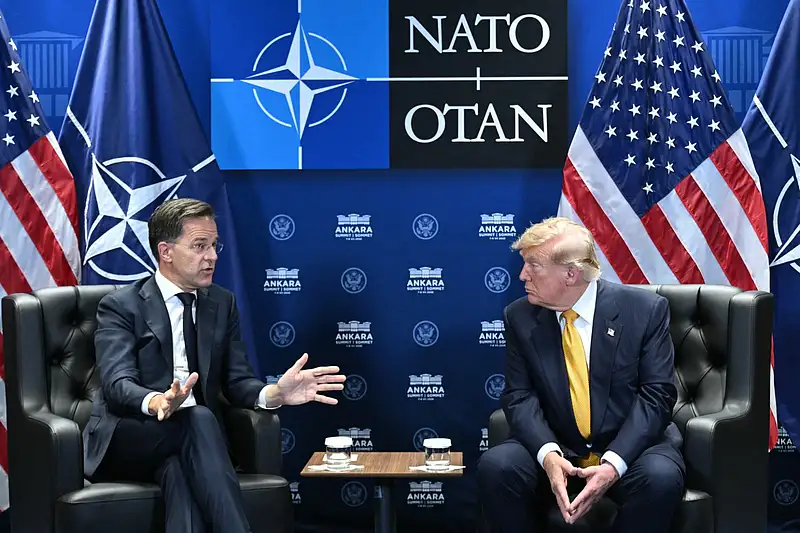
US has paid more than its fair share of the NATO bill since 1949, calling some allies "freeloading dependents" and showing non-NATO members hold 13 times Russia's economic output
- PUBLISHED: Wed 30 Sept 2026, 6:00 AM
- By:
- Imran Khalid


The author is a geostrategic analyst and senior fellow at Foreign Policy In Focus - USA. His work centres on international affairs and global security.
On September 18, General Alexus Grynkewich sent US Defense Secretary Pete Hegseth the first set of options for shrinking America's military presence in Europe. NBC News reported a range of 25,000 to 40,000 troops, out of roughly 80,000 on the continent, with aircraft, ships and weapons attached. Germany hosts 36,000 of them, while Italy hosts 12,000.
Recommended For You




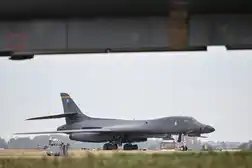
Three weeks earlier, Foreign Policy suggested the review might not end in deep cuts. That forecast has aged badly. The same day, Grynkewich joined a Pentagon briefing with policy chief Elbridge Colby on what the US leaves behind.
President Donald Trump chose that day to announce "major progress" toward a permanent Army base in Poland, which Warsaw has offered about $4 billion to host. Read together, the two announcements describe one policy: the old western garrisons thin out. A paid-for presence sits on the eastern flank, and Europe is told to handle the rest.
Stay up to date with the latest news. Follow KT on WhatsApp Channels.
To be sure, Washington has paid more than its fair share of the NATO bill since 1949. About 430,000 American troops were stationed in Europe in the late 1950s, and 248,000 were still there when the Berlin Wall fell. In 2014, the year Russia seized Crimea, US accounted for 69 per cent of all NATO defense spending and put 3.7 percent of its GDP into its military.
European allies and Canada managed 1.4 percent. American spending has not fallen below 3.1 percent of GDP in any year since, and even after Europe's post-2022 surge, the US paid $980 billion of the alliance's $1.59 trillion last year.
By McKinsey's count, European NATO members spent $1.6 trillion less over three decades than the alliance's 2 percent target required. European governments spent that money at home instead. Washington now says it will stop footing Europe's defence bill. It has been footing that bill for three generations.
Two days before Grynkewich's options reached Hegseth, NATO Secretary General Mark Rutte supplied the vocabulary at Ditchley Park. "To stay transatlantic, NATO is becoming more European," he said, adding that America's allies "have broad shoulders and are ready for more responsibility."
Responsibility for which part?
That was settled last month, on August 3, in Wiesbaden, and most of the press filed it as paperwork. There, Grynkewich announced that within a year a European or Canadian officer will command NATO's Ukraine support mission, NSATU (NATO Security Assistance and Training for Ukraine), with an American as deputy. The US group it replaces, he said, was "always meant to be a temporary command."
NSATU is not a ceremonial post. It routes Western arms, training and repairs to Ukraine. Whoever runs it decides whose consignment moves first, and after any settlement, it becomes the machinery that sustains Ukraine's army. Europe has shown it can absorb such work. In July, Grynkewich said European allies had "in a matter of weeks" largely filled the gaps left by US reductions to NATO's force model.
That is Europeanisation in the form Washington is offering. Europe gets the plumbing. The United States keeps the top command, the nuclear guarantee and control of the clock.
Congress wrote that asymmetry into law. The defense authorisation act passed last December sets a floor of 76,000 troops in Europe unless the Pentagon certifies it has consulted allies. It also requires the head of US European Command to remain supreme allied commander. No SACEUR (Supreme Allied Commander Europe) has been anything other than American since Eisenhower took the job in 1951. Washington will hand an ally a three-star logistics command. The four-star one is not on offer.
Europeans are hedging even on the guarantee Washington intends to keep. On September 22, Latvia's prime minister, Andris Kulbergs, said Emmanuel Macron had agreed to open talks on Latvia joining France's nuclear deterrence initiative.
Colby has been blunt about the purpose. His review is meant to ensure NATO moves "fast and irreversibly toward Europe taking primary responsibility for its conventional defense." The moves since spring fit that aim. The Pentagon announced 5,000 troops would leave Germany. An armoured brigade rotation to Poland was cancelled in May and revived in July after Warsaw pushed back. Final recommendations are due by November 6 and Trump makes the call.
'Freeloading dependents'
The reasoning was published in January. The Pentagon's national defense strategy calls some allies "freeloading dependents" and includes a chart showing that non-US NATO members hold 13 times Russia's economic output. It treats Russia as Europe's problem and holds American forces back for a contingency elsewhere, chiefly in Asia.
This week, Asia does not look like a theatre in crisis. Xi Jinping arrived in Washington on September 23 to a planeside welcome from Trump, and the two governments extended their trade truce to January.
Trump's Pentagon wrote the China threat into the rationale for leaving Europe. Trump himself is rolling out the red carpet for Beijing. A president bracing for a Pacific confrontation does not host China's leader and extend his trade terms in the same week. The drawdown looks more like a decision about American budgets and bandwidth than a response to Beijing, and Europe should plan for it on those terms.
On money, Europe has already taken over. At the Ukraine Defense Contact Group on September 8, chaired by Germany and Britain, allies confirmed over $10 billion committed in the past year to buying American weapons for Kyiv. That includes $3.5 billion from the EU's Ukraine loan. Europeans fund the pipeline and chair the meeting. They do not own the factory.
In SIPRI's latest ranking, 26 European firms among the world's top 100 earned $151 billion from arms in 2024. Thirty-nine American firms earned $334 billion. Brussels set a target of 2 million shells a year by the end of 2025. That is progress, not parity.
Ownership explains much of the gap. Italy's state lender CDP (Cassa Depositi e Prestiti) holds nearly 64 per cent of Fincantieri, and the French state is Naval Group's majority owner. France's navy chief, Nicolas Vaujour, has said Europe runs "around 14 shipyards" where three or four would do. The Naviris venture between the two companies, he said, "didn't quite live up to expectations."
Brussels tried to buy its way past the problem. Governments sought €188 billion from the €150 billion SAFE (Security Action for Europe) loan fund. Its successor is stuck. Eastern capitals that have exhausted their borrowing room want grants, and western ones refuse. In August, Italy cut its request from €14.9 billion to €8 billion after coalition partners objected.
The obvious rejoinder is the TKMS-Fincantieri memorandum on submarines, signed on September 1. Read the terms — both firms stay independent, the framework is due only by year's end, and Naval Group is absent. A cooperation pact between two firms that remain separate is not the cross-border merger Europe has failed to build for a decade.
That gap matters more now than it did in August. On September 14, Trump claimed Russia and Ukraine had agreed to stop hitting each other's energy infrastructure, and Kyiv said it had not been told. On September 23, after meeting Trump at the UN, President Volodymyr Zelenskyy said Ukraine was ready for an energy ceasefire if Russia stopped attacking its grid.
Who takes responsibility?
Moscow wants sanctions relief first. If any truce hardens into a settlement, the Paris declaration of January puts British and French military hubs inside Ukraine. European quartermasters would then arm a postwar Ukrainian army for a generation, and NSATU is the command that does that job.
A European general holding the Wiesbaden flag can pool requests and expose duplicate orders. He cannot make Paris release Naval Group, and he cannot build a shell plant no finance ministry has funded.
Europe is being handed the responsibility on Washington's timetable, which runs out on November 6. The industrial decisions that would make that responsibility bearable are still sitting in national capitals, where they have sat since 2022.