 E-Paper
 Sign In





From tragedy to victory: How students changed Serbia's political landscape
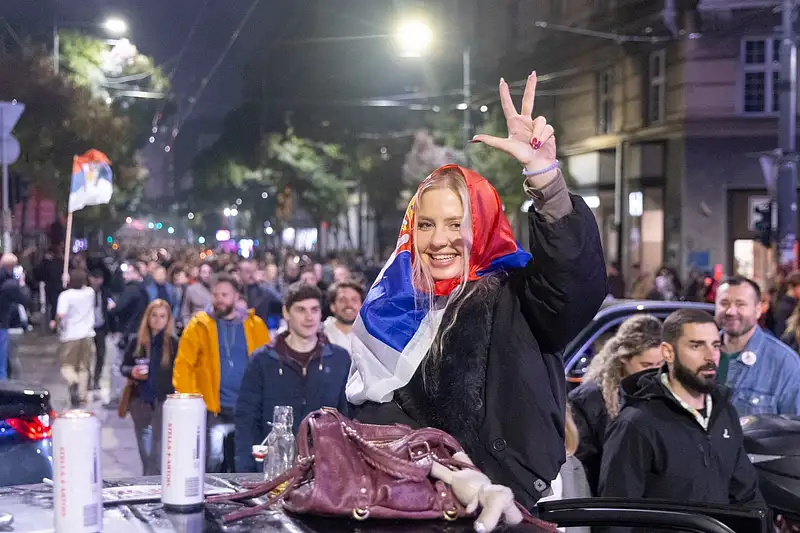
A railway station collapse that killed 16 people sparked nearly two years of protests, before a student-backed movement defeated Serbia's longtime ruling party in a historic parliamentary election
- PUBLISHED: Mon 26 Oct 2026, 4:11 PM


For nearly two years, students in Serbia filled university campuses and city streets demanding answers over a railway station tragedy that killed 16 people. Now, their movement achieved something few had expected: An election victory over the party that had dominated Serbian politics for more than a decade.
The student-led opposition movement, Student List, secured 52.65 per cent of the vote in Serbia's snap parliamentary election, according to preliminary results released by the Republic Electoral Commission on Monday, October 26.
Recommended For You




The ruling coalition led by former Serbian president and longtime political leader Aleksandar Vucic received 39.22 per cent, while voter turnout reached 68.78 per cent.
Stay up to date with the latest news. Follow KT on WhatsApp Channels.
The figures were based on results from 8,135 polling stations, with the official count still being finalised. Vucic conceded defeat on Sunday night, bringing an end to his party's long period of political dominance. But the story behind the election began long before voters went to the polls.

How a tragedy sparked nationwide protests?
On November 1, 2024, a concrete canopy collapsed at the newly renovated railway station in Novi Sad, Serbia's second-largest city. Sixteen people died, triggering public anger and allegations of corruption and negligence surrounding the construction project.
University students began organising demonstrations and demanding a transparent investigation into the tragedy. As the protests continued, their demands expanded beyond accountability for the collapse.
Students called for wider political changes and early parliamentary elections, while demonstrations attracted support from people across the country.
At times, hundreds of thousands joined the movement, making it one of Serbia's largest waves of protest in decades.
How students turned protests into election victory?
The movement eventually supported an electoral list made up largely of academics, professionals and people outside traditional party politics. Rather than campaigning around a single political personality, the Student List focused on demands for accountability, stronger institutions and an end to corruption.
Their message reached beyond university campuses, attracting voters from different generations. By the time Serbia held its parliamentary election on October 25, the movement had become the strongest challenger to Vucic's Serbian Progressive Party.
According to the latest official figures, the Student List received 2,246,423 votes, compared with 1,673,241 for the Vucic-led coalition. The result gave the student-backed movement a clear lead and put it on course to form a parliamentary majority.
Watch the video below of Student List celebrating their victory:
Why is the result significant?
Vucic and his allies had dominated Serbian politics since the Serbian Progressive Party came to power in 2012.
The former president had served in several senior government positions, including prime minister and president, and remained one of the country's most influential political figures.
His party's defeat represents a major change in Serbia's political landscape. It is also an unusual victory for a movement that began with students demanding accountability rather than seeking political office.
The election has demonstrated how a protest movement, sustained over nearly two years, can develop into a nationwide political force.
What happens next for Serbia?
Despite its election victory, the Student List now faces a different challenge: governing. Political observers underscored the movement must translate its promises of greater accountability and institutional reform into practical policies.
Its new representatives will also have to address Serbia's economic challenges and its relationships with the European Union, Russia and other international partners. Questions remain about how the movement's diverse candidates will work together and who will take leading roles in the next government.
For the students who first gathered to demand answers after the Novi Sad tragedy, however, the election has already marked a turning point. What began as a call for justice after 16 deaths has become a movement capable of reshaping Serbia's political future.