 E-Paper
 Sign In


Why is China’s stock market calling all foreigners?
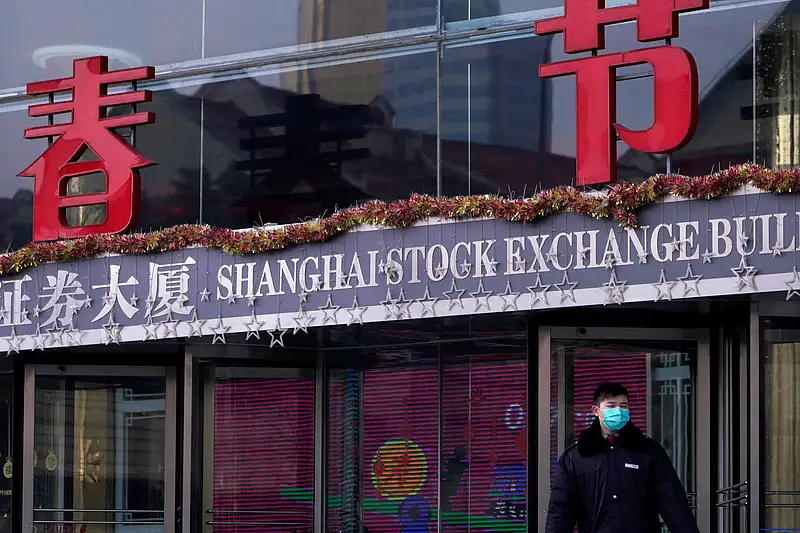
Tech opportunities and a growing demand for diversification beyond US assets is luring more investment
- PUBLISHED: Fri 19 Sept 2025, 2:18 PM


Foreign investors are plotting a return to China’s stock markets in a big way three years after pulling back and terming them uninvestable, encouraged by the tech opportunities on offer, and a growing demand for diversification beyond US assets.
Progress in China’s adoption of artificial intelligence (AI) and its development of semiconductors and innovative drugs this year has given comfort to global investors that the Sino-US trade war and Washington’s tech export bans have not deterred innovation in the world’s second-biggest economy.
Recommended For You





The US-China tariff truce and a domestic monetary easing environment have further boosted sentiment. As a consequence, the Shanghai Composite Index touched a decade high last week while Hong Kong stocks hit a four-year high.
The changing sentiment of foreign investors could potentially add fuel to the market rally, which has so far been mainly driven by domestic players.
Foreign early birds are already back in China, lured by this year’s bull run and as they seek diversification from crowded US assets, said Brett Barna, a former hedge fund manager who now manages two New York-based single-family offices.
“China is interesting because it’s very uncorrelated to the rest of the world, at least the onshore A-share market,” Barna said, adding he plans to set up an investment platform that would allow the US and European capital to access China’s capital markets.
Data on fund launches and flows illustrates the growing enthusiasm for a $19 trillion (Dh69 trillion) Chinese stock market, including Hong Kong.
August marked the biggest monthly buying of China stocks by global hedge funds in six months, according to a report by Morgan Stanley, which did not detail numbers.
Morningstar data showed the number of emerging market ex-China equity fund new launches slid to eight in 2025 versus 21 in 2024 and 16 in 2023. That meant demand for emerging market investments that did not include China had cooled substantially this year. “A year ago, people wanted to exclude China from indices. Now, China is seen as a standalone asset class (they cannot ignore),” said Zheng Yucheng, chief investment officer of the China fund unit of Allianz Global Investors.
The anecdotal evidence is also piling up. Polar Capital, a London-based $20 billion (Dh73 billion) asset manager, pivoted to a positive stance on China in late 2024 from underweight and has further increased the China allocation to over 30 per cent from the low 20 per cent range within its emerging market portfolio this year, said its fund manager Jerry Wu.
The firm’s annual conference in February this year attracted a full house of 55 clients to the China session, more than double the attendance in 2023, he said.
Momentum
There is “a revaluation of Chinese innovative assets” triggered by DeepSeek’s breakthrough, said Wu, referring to the creator of the highly cost-efficient AI model that rivals ChatGPT. He said momentum has picked up across the board, from AI to biotech and robotics.
Benjamin Low, senior investment director at investment firm Cambridge Associates, said his team has received some 30 client inquiries about searching for China funds this year, in a sharp contrast to the trough in 2023 when there were very limited queries about China-focused mandates.
Many non-Asia-based allocators are planning trips to China and Hong Kong later this year to explore investment opportunities, with some for the first time since Covid, he said.
To be sure, some of China’s long-standing problems are persisting. Its broad economy remains mired in weakness, as indicated by August factory output, retail sales data, and some other indicators.
Foreign direct investment in the first five months of 2025 slumped 13.2 per cent from the year-earlier period, forcing China to unveil new measures in July to reverse the decline.
The fragile economy is one of the main reasons that, while early movers are coming in, it has not yet translated into meaningful long-term capital inflows.
CLSA chief equity strategist Alexander Redman said the deflationary pressure in the economy is preventing him from overweighting the entire market. And Wu of Polar Capital said the AI boom has to benefit the broader economy to sustain the rally beyond 2025.
Foreign investors are now in a “rerating” phase, focusing on China’s long-term competitiveness, said Cheng Yu, a portfolio manager at the Allianz China fund unit.
“Foreign capital is standing at the door and watching. They haven’t stepped in yet — but are at least thinking about coming back.”