 E-Paper
 Sign In


Why do Indonesians smile so much? Cultural significance, way of life explained
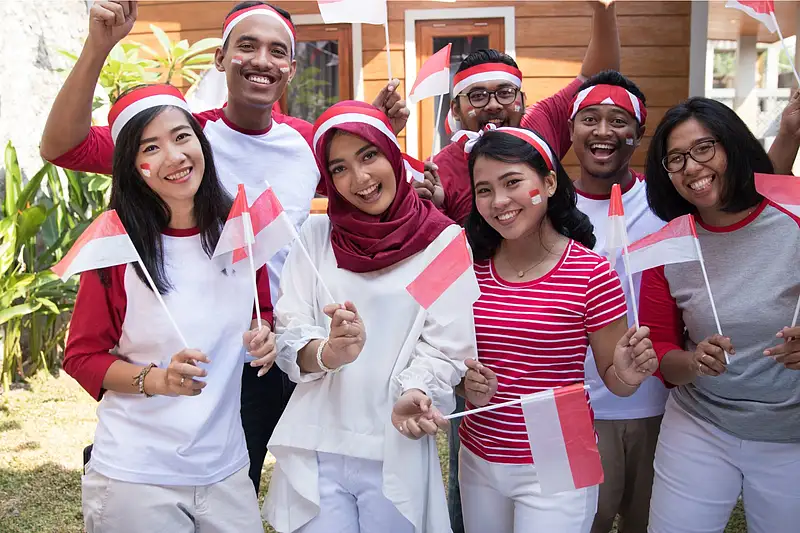
From greeting strangers to smiling even when angry, Indonesians share how childhood lessons, hospitality and a sense of togetherness shape their everyday interactions
- PUBLISHED: Thu 22 Oct 2026, 6:00 AM


From hotel staff and shopkeepers to people passing by on the street, one thing stood out during a recent trip across Indonesia: the smiles. Whether welcoming visitors, exchanging greetings or simply crossing paths with strangers, smiling seemed to be a natural part of everyday life. It was a small gesture, but one that left a lasting impression.
Curious about what lies behind these smiles, Khaleej Times spoke to four Indonesians to understand whether the habit comes from happiness, politeness or something deeply rooted in the country's culture.
Recommended For You





Their answers revealed a common thread: Smiling is more than an expression of happiness. For those interviewed, it is a way of showing respect, making others feel welcome and building connections, sometimes without exchanging a single word.
Stay up to date with the latest news. Follow KT on WhatsApp Channels.
A smile that brings people together
For Mwahyudirwandi, who comes from West Sumatra, the Indonesian smile is closely connected to gratitude, warmth and a strong sense of community. He pointed to gotong royong, an Indonesian concept of mutual cooperation and helping one another, as one of the values that shapes how people treat each other.

Growing up with Minangkabau cultural traditions, he said respect, hospitality and helping others were important lessons passed down through generations.
He said making others happy was something he had been taught from childhood, not at the expense of his own happiness, but because kindness could create a positive connection between people.
For him, smiling at someone and receiving a smile in return creates a sense of connection, even between strangers. He also recalled a saying that reflects this approach to life: "A thousand friends are too few, but one enemy is too many."
For Mwahyudirwandi, a smile is a simple way of building friendships and strengthening relationships.
Kindness taught from childhood
For Leah Sandin, who was born and raised in Lombok, smiling is closely connected to the values people learn while growing up.
"In our tradition, we grow up with kindness," she told Khaleej Times, noting: "Children are encouraged to be polite, honest and considerate towards others. These values continue to shape their behaviour as adults."
For Leah, smiling is a simple but important way of showing those values in everyday interactions. She also described smiling as a kind of exercise for the face, reflecting how naturally the gesture comes to her.
Even when angry, they smile
But does a smile always mean someone is happy? Not necessarily, according to Dina, another resident of Lombok. She believes there is no particular secret behind the Indonesian smile. Instead, she sees it as something that comes naturally from people's kindness.
"Even when we are angry, sometimes we smile," she told Khaleej Times. Her observation offers a different perspective, suggesting that smiling is not always a reflection of someone's emotional state.
Sometimes, it is simply a familiar way of interacting with others, even when the person smiling may not be feeling particularly happy.
'You can touch the heart with a smile'
For Ayu, the habit begins at home. She recalled how her parents taught her to smile whenever she met someone, whether a neighbour, a guest or even a stranger passing by on the road.
"When we were kids, our parents taught us every time we met people, we had to smile," she said.
As Ayu grew older, the habit stayed with her, including at work, where colleagues sometimes asked why she smiled so often while speaking to people. Her answer was simple: it was something she had grown up doing.
For her, smiling is also an important part of Indonesian hospitality, helping visitors feel comfortable and welcome. "You can touch the heart with a smile," she said.
Ayu believes that even when someone is having a bad day, receiving a smile from another person can help improve their mood.
More than just a friendly gesture
Although the four Indonesians shared different experiences, their explanations highlighted similar values: kindness, respect, hospitality and a sense of togetherness.
For some, smiling reflects cultural traditions passed down through generations. For others, it is a natural habit that remains part of everyday life, regardless of how they are feeling.
Their experiences also show that a smile does not always mean happiness. Sometimes, it is simply a way of acknowledging another person and making them feel welcome.
For visitors discovering Indonesia, these everyday interactions can become just as memorable as the country's beaches, temples and landscapes. And sometimes, the simplest introduction to a new culture begins with a smile.