 E-Paper
 Sign In


Philippines faces 6,500 heat-related deaths as 'super El Niño' looms, US group warns
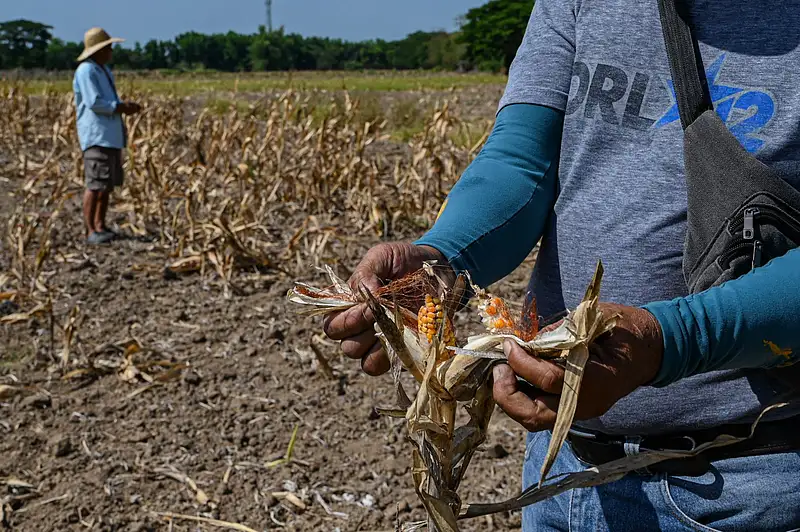
Climate Impact Lab predicts that Indonesia, already battling climate-induced wildfires for months, would suffer the most among Southeast Asian countries, with 19,300 heat-stimulated deaths projected
- PUBLISHED: Fri 25 Sept 2026, 6:00 AM


There may be 6,500 heat-related deaths from this month to February next year in the Philippines as super El Niño looms over the Western Pacific, a US-based group warns.
According to the US-based Climate Impact Lab, the Southeast Asian country may be heavily impacted by this year’s El Niño, which is expected to shatter casualty records worldwide.
Recommended For You





“We have long been able to predict the impacts of temperatures on crops, and now we can predict their impact on the worst outcome—death. The result is that we now can estimate that 451,000 people [worldwide] may die in the coming months due to El Niño,” group co-founder Michael Greenstone said in a statement.
Stay up to date with the latest news. Follow KT on WhatsApp Channels.
“This is such a large number that it can be numbing, but it is made up of parents and children, grandparents and neighbours, people going to work, caring for families, and living their lives,” Greenstone added.
Climate Impact Lab is a collaborative research organisation that measures and communicates the economic and social impacts of climate change on humans. The institute was established in 2016 by researchers from the University of Chicago's Energy Policy Institute (EPIC), the University of California, Berkeley, Rhodium Group, and Rutgers University.
The group’s latest report highlighted that “6,500 additional heat-related deaths are projected in the Philippines [from] September 2026 to February 2027 versus a normal year” as the weather phenomenon creeps westward from American coastlines.
Philippine experts echo warning
In a separate briefing on Wednesday, Philippine experts issued their own Super El Niño warnings, saying the extreme weather condition has in fact already arrived in the Philippines.
According to Philippine Atmospheric, Geophysical and Astronomical Services Administration (Pagasa) climate monitoring and prediction section chief Ana Liza Solis, eight provinces are projected to experience drought conditions as the El Niño phenomenon intensifies, while 45 provinces face rainfall deficits and dry conditions.
Among the areas feared to suffer drought are Albay, Camarines Norte, Camarines Sur, Catanduanes, Quirino, Negros Oriental, Samar, and Siquijor provinces.
Ten more provinces are predicted to suffer dry conditions, while 27 would be subjected to dry spells.
“There is a higher probability that we will experience the impact, specifically a significant reduction in rainfall and hotter temperatures. Consequently, our agriculture could be affected,” Solis explained.
Pagasa hydrometeorologist Edgar dela Cruz meanwhile reported that dams surrounding the Philippine capital are currently full, predicting, however, that water levels may soon drop as the monsoon season passes.
“We will be closely monitoring the situation as we do not want a repeat of last July’s situation when dams supplying water to Metro Manila had reached dangerously low levels,” dela Cruz said.
Southeast Asia to suffer heavily
Climate Impact Lab predicts that Indonesia, already battling climate-induced wildfires for months, would suffer the most among Southeast Asian countries, with 19,300 heat-stimulated deaths in the coming months.
The researchers said combined casualties in the Philippines, Vietnam, Thailand and Cambodia may reach an additional 19,400 deaths.
The group said emergency response efforts should be directed at high-priority regions to tackle heat-related mortality in the coming months.
“This report allows decision makers to see exactly where emergency actions can be taken now to save tens of thousands of lives in the coming months,” Greenstone said.
Climate Impact Lab describes this year's El Niño as a “postcard from the future,” delivering temperatures that will become normal in a few decades.