 E-Paper
 Sign In


Philippine Senate lowers number of votes needed to convict VP Sara Duterte
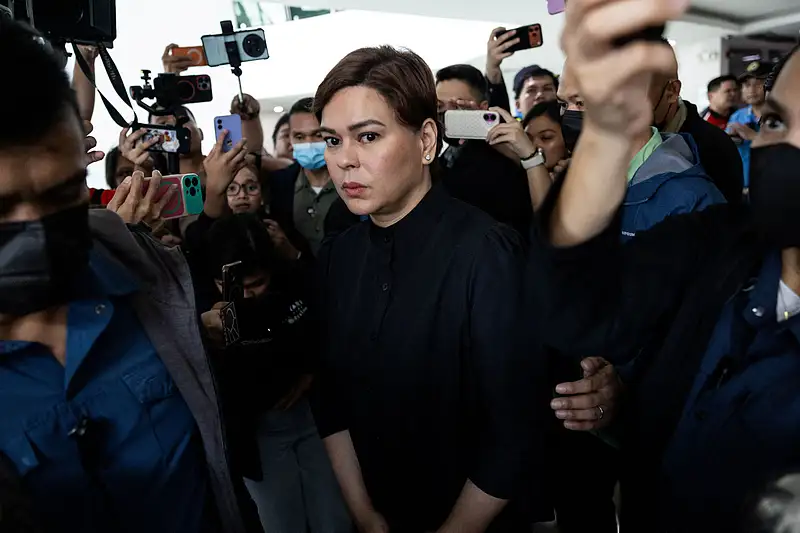
The impeachment court ruled that only senator-judges able to participate in the trial should be counted when determining the threshold for conviction
- PUBLISHED: Wed 23 Sept 2026, 10:14 AM UPDATED: Wed 23 Sept 2026, 4:47 PM


Philippine Vice President Sara Duterte appears closer to being booted out of office as the Senate, sitting as an impeachment court, decided on Wednesday to lower the number of votes needed to convict her.
The constitution requires a two-thirds vote to convict an impeached official. The court ruled that only senator-judges able to participate in the trial should be counted when determining the threshold for conviction. Four of the 24 senator-judges have been unable to participate in the proceedings and cannot vote. This means, prosecutors now need 14 votes instead of 16 to gain a conviction.
Recommended For You





Sweeping aside attempts by the minority to stop the reduction of the threshold for impeachment, the court first voted on a minority senator’s point of order questioning whether it is constitutional to reduce the conviction threshold.
Stay up to date with the latest news. Follow KT on WhatsApp Channels.
The court voted 13-6, rejecting the point of order. Senator Mark Villar abstained and did not offer an explanation.
The result was immediately and roundly condemned by minority Senators Imee Marcos, Camille Villar, Robinhood Padilla and Christopher Lawrence Go in their explanation of votes. Siblings Alan Peter and Pia Cayetano joined them.
How did the Court vote on threshold reduction?
After their lunch recess, the court proceeded to change the conviction threshold with a similar 13 affirmative votes. Mark Villar joined the majority.
This time, the six minority senators did not participate in the second voting, refusing to return to the plenary hall for the afternoon session.
Presiding Senator-Judge Francis Escudero voted against the motion, in consideration of his July 6 opening statement that the impeachment threshold would be 16.
Today’s result agreed with the opinions offered by three retired Supreme Court chief justices last week who said the impeachment court may decide on its rules, being sui generis (of its own kind).
Who were the 13 who voted in the affirmative?
Senate President Sherwin Gatchalian
Bam Aquino
Juan Miguel Zubiri
Vicente Sotto III
JV Ejercito
Risa Hontiveros
Lito Lapid
Panfilo Lacson
Francis "Kiko" Pangilinan
Erwin Tulfo
Raffy Tulfo
Joel Villanueva
Mark Villar
All are members of the Senate majority, except Mark Villar, who voted against Duterte’s interests for the first time as a senator. He was a long-time public works secretary under the Rodrigo Duterte presidency.
What could have made Mark Villar change sides?
For the first time in the trial, Senator Camille Villar took center stage on Wednesday, first making an emotional appeal to colleagues to remain respectful of each other despite differences.
After the minority’s failed attempt to stop the vote, Camille read an explanation of her vote. Her brother Mark, however, remained mum until he cast the day’s most shocking vote by agreeing to lower the number of votes needed to oust the vice president.
Scions of an ultra-rich family, the siblings and the entire Villar family are facing criminal and administrative complaints filed by the Office of the Ombudsman and the Department of Justice over alleged graft and securities violations.
Two counts of graft and administrative complaints involving "grossly disadvantageous" joint venture agreements between local water districts and the Villar-owned PrimeWater Infrastructure Corp. (PWIC) had been filed last week. The charges alleged Villars’ failure to fulfill service obligations, poor water delivery systems, and unfulfilled rehabilitation commitments across 75 local water districts from 2015 to 2022.
Political analysts said Mark’s decision at the impeachment court may be seen as an attempt to save the family business empire by offering one vote to the majority and contributing towards the elimination of Sara Duterte, President Ferdinand Marcos Jr’s biggest rival.
Who could no longer vote in the impeachment?
Escudero, the presiding judge, outlined five specific conditions under which a senator-judge would be excluded from the voting base:
Detained and/or suspended, or otherwise legally restrained from exercising the functions of a senator.
Persons sought by authorities whose whereabouts are unknown.
Those suffering from a physical or medical incapacity.
Individuals who are beyond the coercive processes of the Senate.
Others who are similarly situated.
Under the new formula, the phrase "all members of the Senate" applies only to those who are legally and factually capable of participating in the proceedings.
Who are the senators that fall into such conditions?
There are two incumbent senators who are in jail: Jinggoy Estrada and Rodante Marcoleta, who are facing the non-bailable offense of plunder and could not physically attend impeachment hearings and Senate sessions. Their appeals to be allowed to cast votes electronically had been ignored.
Senator Ronald dela Rosa is a fugitive from the International Criminal Court and has fled Senate premises in the dead of night last May.
Senator Loren Legarda went to France for a medical leave but her ailment was not disclosed. She had been abroad for more than a month and has extended her leave six times.
There are now only 20 active senators. With Mark Villar joining the majority vote on Wednesday, pro-impeachment senators may have just reached the magic number to oust Sara Duterte from office and perpetually disqualify her from holding any public office.
What is Duterte being accused of?
The Philippine vice president is charged with misuse and misappropriation of public funds, bribery and corruption, unexplained wealth, grave threats and betrayal of public trust.
She, in turn, said her impeachment is an attempt by the Marcos government to disqualify her from seeking the presidency in the 2028 Philippine national elections.
(With inputs from Reuters)