E-Paper
 Sign In





'Philippine peso is weak as economy is weak’: Economist slams Marcos’ don’t panic plea
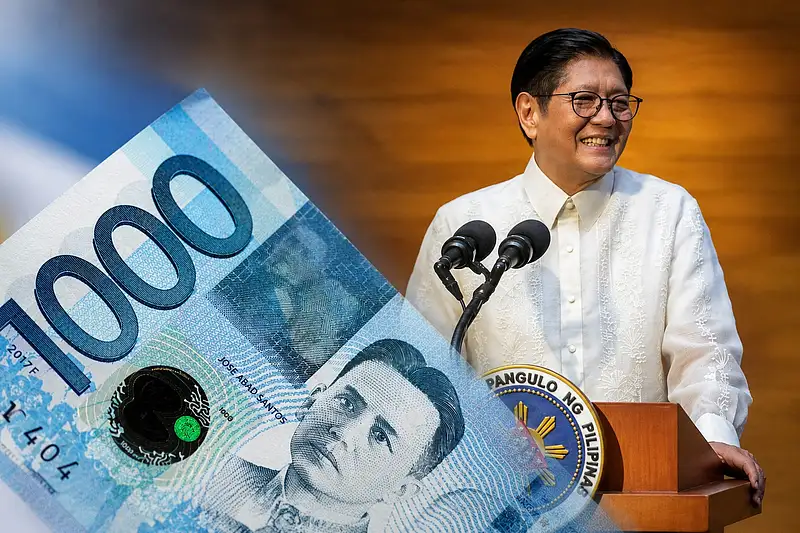
President Marcos should stop blaming geopolitical pressures alone, such as the Iran war, for the peso’s current status as the worst-performing currency in Southeast Asia
- PUBLISHED: Fri 30 Oct 2026, 6:00 AM


“The peso is weak because the economy is weak,” an independent Filipino economist said, criticising President Ferdinand Marcos Jr’s recent appeal for the public not to panic over the Philippine currency’s continued steep depreciation.
The Philippine peso breached the P64-per-US dollar level this week amid rising oil prices and surging inflation.
Recommended For You





Sonny Africa, executive director of think tank Ibon Foundation and an alumnus of the London School of Economics, said Marcos should take a deep look at why the value of the Philippine peso has fallen to a level not seen before in the country’s history.
Stay up to date with the latest news. Follow KT on WhatsApp Channels.
"Contrary to his assurances that there is no need to panic, Marcos should start acting and must stop blaming geopolitical pressures alone, such as the war in the Middle East, for the peso’s current status as the worst-performing currency in Southeast Asia," Africa explained.
Marcos said the Philippines’ foreign exchange reserves are healthy enough to defend the peso. The president blamed the currency slide and broader price pressures on supply-side factors, especially oil and energy, due to the ongoing war in the Middle East.
Africa, however, said the president’s words are not having their intended effect as the Philippines grapples with its steepest inflation rate this year, at 7.2 per cent.
Marcos’ own technocrats are not as optimistic either. His energy secretary, for instance, told reporters on the sidelines of the Singapore International Energy Week: “This is not the best time to be secretary.”
Energy secretary Sharon Garin warned that the weakened peso is driving up the cost of imported coal, diesel and liquefied natural gas, on which the country mostly depends for electricity generation. The falling peso adds pressure to electricity rates and fuel pump prices at a time when the country is also grappling with high global oil prices and the threat of El Niño, she said.
Garin said she would soon meet with the Energy Regulatory Commission (ERC) to find ways to cushion the impact of the peso depreciation and continued market volatility.
Woes for common folks
Ordinary Filipinos are feeling the brunt of a weak peso. Erna Basinal was surprised by the spike in her household's electricity bill for October, which rose by at least 30 per cent, from less than P4,000 in September to more than P6,000 this month.
“We do not know where else to find money to pay this,” she said, citing how her husband’s monthly pension as a retired office clerk could no longer cover their living costs. This comes as the ERC approved a transmission cost hike for Meralco, the country’s largest power distribution company.
While the war in the Middle East could be blamed for triggering the peso’s decline, Africa said Marcos should stop blaming geopolitical conflicts alone for the country’s woes.
“The peso is weak because the economy is weak. We need more and more dollars to import what we don't produce, but produce less and less to export and earn dollars from,” Africa said.
He said Marcos should be blamed for his lack of support for Philippine agriculture, which has allowed the country to import $20 billion in food and agricultural products while exporting just $9.3 billion in return. He added that the Philippines also suffers from a trade imbalance in consumer goods.
The one thing that Africa agrees with Marcos on is the role of overseas Filipino workers in keeping the Philippines afloat with $40 billion in annual remittances.
Africa underscored Marcos should allocate more resources to rural development to encourage greater agricultural production and reduce the Philippines’ dependence on imports. He also encouraged national industrialisation to curb spending on commodity imports.
“The fault isn't in the short-term factors being blamed, like the US attack on Iran driving up oil prices. It's in the long neglect of strengthening domestic agriculture and Filipino industry,” he said.
“Filipinos have reason to panic. As things are, food prices and inflation look set to get even worse through Christmas and into the New Year. What is more panic-inducing to Filipinos is the president saying not to panic, while he is not really doing anything to help the millions of families being driven into deeper distress and crisis," Africa concluded.