 E-Paper
 Sign In


Maintain human connection, creators told as AI is fast changing content production
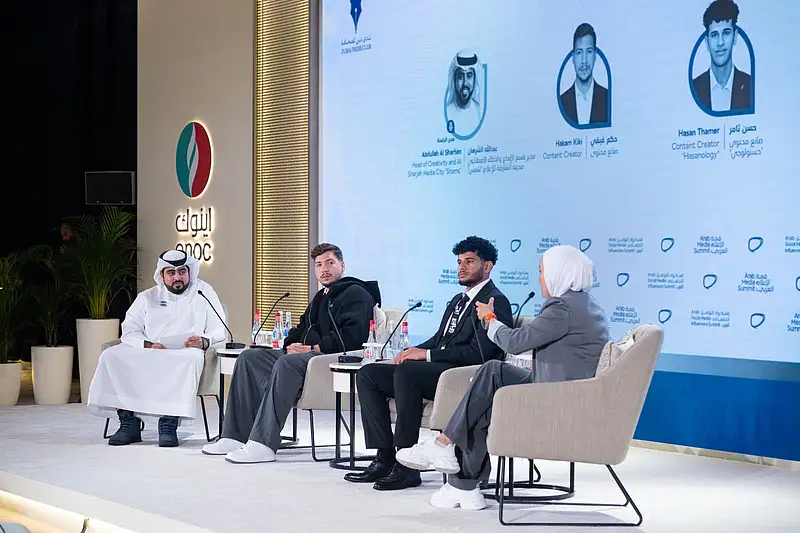
AI can now support creators from the first idea to final production, but experts say speed and lower costs must be balanced with authenticity, credibility and the human touch
- PUBLISHED: Fri 18 Sept 2026, 6:01 PM


From coming up with an idea to producing the final edit, artificial intelligence is becoming part of almost every stage of content creation.
But as creators gain access to tools that can help them work faster and produce complex content at lower costs, a new question is emerging: How much of the creative process should be handed over to AI?
Recommended For You





The question was at the centre of a session titled Using Artificial Intelligence in Content Creation at the Arab Media Summit 2026 in Dubai on Thursday.
Stay up to date with the latest news. Follow KT on WhatsApp Channels.
AI is no longer limited to generating text or images. This was highlighted in the session that brought together content creators Hasan Thamer, Hakam Kigi and Sara Younis. It was moderated by Abdullah Al Sharhan, head of creativity and AI at Shams Media City.
The session explored how AI tools are being used across the content creation process, starting with brainstorming and developing ideas and continuing through editing and final production.
For creators, these tools can make it easier to turn ideas into finished content while reducing some of the time and resources traditionally needed for production.
The discussion also looked at how modern digital tools can help creators produce more complex visual ideas at lower costs, pushing beyond some of the traditional limits of content production.
But easier and faster production brings another challenge: when the same powerful tools are available to more people, how does a creator make their work stand out?
Keeping content human
One of the main themes of the discussion was the importance of protecting the human side of content creation.
As creators rely more on advanced technology, maintaining emotion and real human experiences can help prevent content from becoming repetitive or disconnected from audiences.
The session highlighted the importance of preserving the human touch and authenticity even when advanced AI tools are used in the creative process.
AI may help execute an idea, but the creator still decides which stories are worth telling and how they should connect with an audience.
Credibility and copyright in the AI era
The rise of generative AI has also created challenges beyond creativity and production.
The session addressed ethical questions surrounding intellectual property and credibility as AI-generated content becomes more common across digital platforms.
For creators, these issues are becoming increasingly important as AI tools are used to generate images, videos, text and other forms of content.
At the same time, audiences are increasingly exposed to material that may be partly or entirely AI-generated, making trust an important part of the relationship between creators and their followers.
What happens to media jobs?
Another question raised during the session was what greater use of AI could mean for the future of jobs in media and on digital platforms.
Tasks that once required more time, larger teams or specialised production skills can increasingly be supported by AI tools.
This could change the skills expected from content creators as technology becomes more deeply integrated into everyday production.
As AI becomes part of brainstorming, editing and production, human creativity, judgement and authenticity could become even more important in distinguishing one creator from another.
The technology can make content faster and cheaper to produce. The challenge is making sure it still feels human.