E-Paper
 Sign In


How Mumbai manages disaster risks for a daytime population of 20 million
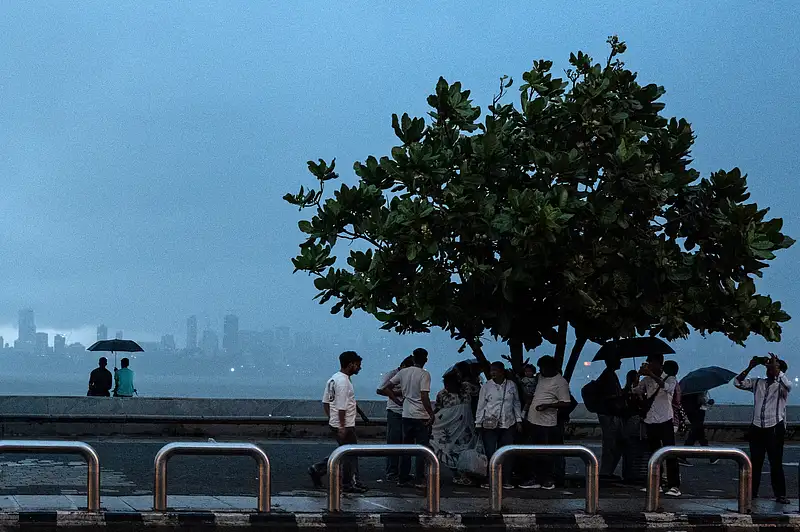
City officials highlighted early-warning systems, flood mitigation and climate planning as a delegation of international journalists visited the municipal corporation
- PUBLISHED: Wed 16 Sept 2026, 10:42 PM


India's financial capital Mumbai is strengthening its early-warning systems, flood-prevention infrastructure and climate planning to manage disaster risks in a city where the daytime population reaches around 20 million, according to officials at the Brihanmumbai Municipal Corporation (BMC).
An international delegation of journalists covering the 18th Brics Summit in India visited the BMC headquarters in Mumbai as part of a programme organised by India's Ministry of External Affairs to showcase the country’s urban and development experience.
Recommended For You





The delegation, comprising journalists from Brics member countries, partner countries and invited nations, was briefed on Mumbai's disaster-management systems, emergency-response mechanisms and efforts to strengthen the city’s resilience to climate-related risks.
Stay up to date with the latest news. Follow KT on WhatsApp Channels.
20 million daytime population
BMC officials said Mumbai’s population swells significantly during working hours as millions of people travel into the city every day from surrounding areas.
The number of people in Mumbai during the daytime reaches around 20 million, placing additional pressure on infrastructure, public services and emergency-response systems.
Officials said this makes disaster preparedness particularly important for one of India’s largest urban and economic centres.
Early-warning systems and disaster response
During the briefing, officials outlined Mumbai's early-warning and emergency response systems, as well as mechanisms used to assess multiple hazards and identify areas that are particularly exposed to risks.
The city is also working with the United Nations Development Programme (UNDP) on multi-hazard risk assessments designed to strengthen preparedness and enable a more proactive response to emergencies.
The presentation also covered projects aimed at reducing flood risks and improving stormwater drainage networks, an important part of Mumbai’s efforts to manage weather-related emergencies.
Net-zero target by 2050
Officials also highlighted the Mumbai Climate Action Plan, which sets a target for the city to achieve net-zero emissions by 2050. The plan includes expanding sustainable transport and electric buses, alongside projects covering water, health and the environment.
The measures form part of a wider effort to strengthen the city’s infrastructure and sustainability while preparing Mumbai for increasing climate-related risks.
The visit was part of a programme organised by India’s Ministry of External Affairs for the international media delegation following its participation in the 18th Brics Summit in New Delhi.
Emergency infrastructure
According to figures presented by BMC, Mumbai’s emergency infrastructure includes 35 fire brigade centres, supported by the city’s disaster-management operations. More than 10,000 CCTV cameras are also deployed across Mumbai to support public safety and monitoring.
BMC itself has a workforce of around 148,000 people and operates its own hospitals and medical colleges, reflecting the scale of municipal services required to support the city.
3,000km stormwater network
Mumbai has developed around 3,000km of stormwater drainage networks, alongside approximately 2,250km of drains, according to figures presented by BMC. The infrastructure forms part of the city’s efforts to manage heavy rainfall and reduce the impact of flooding.
The city is also developing seven wastewater treatment facilities at a cost of around Rs330 billion, aimed at treating and recycling Mumbai’s wastewater.
3.95 billion litres of water a day
Mumbai receives around 3.95 billion litres of water every day from seven water sources, according to BMC. New water-treatment facilities are also being developed as part of efforts to strengthen the city’s water supply system.
6.4 million passengers use local trains daily
Mumbai’s local rail network operates around 3,200 trains and carries approximately 6.4 million passengers every day, underlining the scale of the public transport system that officials described as the city’s “lifeline”.
Officials said the city’s public transport network is also becoming more environmentally friendly. Around 1,000 electric buses have been added to the BEST fleet, while the presentation said the city was targeting a substantial further expansion of the electric fleet.Pedestrian First’
Mumbai is also implementing a “Pedestrian First” initiative, aimed at clearing encroachments from footpaths and creating better conditions for walking, cycling and other forms of non-motorised transport.
Officials said local trains, buses and the expanding metro network remain central to mobility in the city, while highlighting the underground Metro Aqua Line as an example of new transport infrastructure.
Fourth city with a climate budget
Mumbai launched its Climate Action Plan in 2022, followed by a climate budget in 2024. BMC officials said Mumbai became the fourth city in the world to publish a climate budget, after London, Oslo and New York.
Bmc has more than 27 departments, and officials said implementation of the climate plan is treated as a shared responsibility. Municipal projects are assessed through what they described as a “green lens”, examining how projects can become more environmentally friendly and align with the Mumbai Climate Action Plan.
Infrastructure investment
The Bmc presentation said infrastructure work orders worth around Rs1.15 trillion have been awarded for major projects across Mumbai.
The municipal corporation has built around 2,000km of roads and 450 bridges, while another 800km of roads are being upgraded at an expenditure of around Rs120 billion.
Among the major projects highlighted was the Mumbai Coastal Road, designed to improve connectivity through an eight-lane coastal route and underground tunnel, as well as the Goregaon-Mulund Link Road, which includes underground twin tunnels and is intended to strengthen east-west connectivity.
Healthcare network
Bmc said it is spending around Rs73.8 billion on the health sector, equivalent to about 10 per cent of its current total budget.
Its healthcare network includes five major hospitals and five affiliated medical colleges, while the municipal corporation has also established 215 neighbourhood clinics.
Schools and green space
BMC schools provide education to more than 300,000 students in eight languages, according to the presentation.
Officials also highlighted Mumbai’s green areas, saying around 111 square kilometres of the city is under forest cover, including Sanjay Gandhi National Park. A 300-acre Mumbai Central Park is also planned in South Mumbai.
Waste management
BMC collects and transports around 6,300 metric tonnes of waste every day, while Mumbai’s sewage-disposal infrastructure includes approximately 2,000km of sewer networks.
The city has also completed more than 1,200 works under the Mumbai Beautification Project over the past two-and-a-half years, according to figures presented during the briefing.