 E-Paper
 Sign In





From incident to investigation: A timeline of Cornell University rape probe
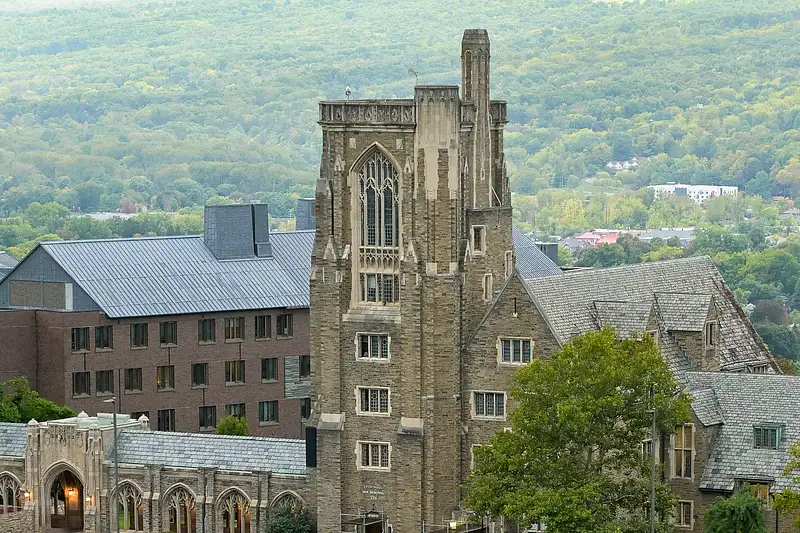
Last month, the woman, who was a sophomore at Cornell in Ithaca, New York, sued the university, the fraternity, her sorority and the seven men who she says assaulted her
- PUBLISHED: Wed 7 Oct 2026, 9:46 AM


New York Attorney General Letitia James is leading an investigation into a former Cornell University student’s claims that several men raped her at a campus fraternity house two years ago while coercing her to take drugs.
Last month, the woman, who was a sophomore at Cornell in Ithaca, New York, when the alleged attacks occurred and who is identified in court filings as Jane Doe, sued the university, the fraternity, her sorority and the seven men who she says assaulted her.
Recommended For You





Jane Doe reported the assault to the Cornell police three weeks after she said it happened. Police opened an internal investigation into her accusations, and asked the Tompkins County district attorney’s office to review her statement. The Tompkins County district attorney, Matthew Van Houten, closed the case after determining that there was not enough evidence to bring criminal charges.
Stay up to date with the latest news. Follow KT on WhatsApp Channels.
Gov. Kathy Hochul cited a loss of faith in the district attorney’s office when she named James as special prosecutor in the case on October 1.
The seven men named in Jane Doe’s lawsuit have denied her accusations and maintain that any sexual acts were either consensual or did not occur.
Here is a timeline of the events so far.
Oct. 19, 2024: Jane Doe leaves Lot 10, an Ithaca bar at around 11pm. She walks about a mile to the Chi Phi fraternity house to meet a male Cornell student, Matthew Ingalls, a friend whom Jane Doe will later accuse of sexual assault. After arriving, she claims in her lawsuit, she is coerced to take ketamine and is sexually assaulted by several men.
Oct. 21, 2024: Jonathan Newell, another man eventually accused of sexual assault by Jane Doe, sends her an apology via text message. Newell says that both he and Ingalls feel badly that they were too inebriated to “shut it down and kick people out before it got way out of hand.” Jane Doe texts him back with reassurance.
Oct. 22, 2024: Jane Doe sees a doctor at Cornell Health after contracting a urinary tract infection. She is also tested for sexually transmitted infections. She tells the doctor she acquired the UTI in a “traumatic way.”
In the three days since the party, Jane Doe appears to have mixed feelings about what happened, at one point confiding in a sorority sister that there are rumours circulating that she is promiscuous. She adds, lightheartedly, that they are true. The sorority sister believes Jane Doe was still processing what had occurred.
Oct. 23, 2024: Jane Doe texts Ingalls, saying that “everyone knows” and it is “RUINING” her life. She says all she can do is “sleep and cry all day.” Ingalls assures her it will all blow over. Sometime later, Jane Doe instructs her roommates that if anyone brings up the episode, they should say it didn’t happen.
Days later, Jane Doe sends an image of a forum post accusing Chi Phi of gang rape to Ingalls. He replies that he will report this.
Oct. 28, 2024: Jane Doe’s roommate overhears Jane Doe talking on the phone with Ingalls, who apologises to her. But her attitude appears to have changed. She says, “How could you let this happen?”
Soon afterward, Jane Doe is disinvited from Chi Phi’s Halloween party and sends a perturbed message to Ingalls saying that the fraternity’s members are “covering your asses.”
Nov. 3, 2024: Jane Doe texts Newell saying that “90 per cent of what happened that night was not consensual.” She says that she was given too much ketamine and that Newell knew she did not feel comfortable and did not know anyone in the room.
Nov. 7, 2024: Jane Doe goes to an emergency room in Ithaca and is given a pelvic exam.
Nov. 8, 2024: Jane Doe reports her accusations of sexual assault and coerced drug use to the Cornell University Police Department.
Nov. 8, 2024: The university suspends the fraternity temporarily while it investigates the accusations as potential violations of Cornell’s Student Code of Conduct. The university also suspends the students Jane Doe accuses of attacking her.
Nov. 14, 2024: Jane Doe speaks for hours during a meeting with a Cornell police investigator and an investigator for the university’s Title IX office, which is responsible for investigating internal accusations of discrimination and harassment of so-called protected classes of people. Also in attendance is a person meant to provide emotional support to Jane Doe and a separate adviser to explain her rights. The 120-page transcript of the conversation is eventually condensed into a six-page official statement signed by Jane Doe.
November 2024: Cornell police notify the office of Van Houten, the Tompkins County district attorney, that they are investigating the accusations, and then ask the office to review the woman’s claims to determine whether they constitute allegations of crimes.
Nov. 25, 2024: After Van Houten declines to review additional evidence offered to him by the Cornell police, an officer who took Jane Doe’s statement files a document reporting that the district attorney has reviewed her statement and determined that “criminal charges would not be pursued in this case.”
Nov. 26, 2024: Cornell’s president, Michael I. Kotlikoff, issues a statement saying that the university is investigating the accusations and noting the suspensions of the fraternity and the students.
January 2025: Jane Doe files a complaint with the university’s Title IX coordinator, and an inquiry is opened. Six of the accused men are interviewed and all deny any wrongdoing.
May 2025: Cornell’s Title IX committee holds at least 12 hearings.
Nov. 4, 2025: The university releases a statement on the results of its 2025 survey of sexual assault and related misconduct. The survey, taken by both students and staff members, notes an increase in sexual misconduct and says alcohol has a role in more than half of reported cases.
Sept. 16, 2026: Jane Doe, in a detailed complaint, sues Cornell, the university’s leaders, the Chi Phi fraternity and seven men who she says assaulted her. Also named in the suit is her sorority, Delta Delta Delta, which she accuses of failing to protect her.
Sept. 21, 2026: A student newspaper, The Cornell Daily Sun, publishes an editorial naming the seven men and criticizing university leaders for their handling of the case.
Sept. 28, 2026: Van Houten says his office is reopening the case and preparing to bring it to a grand jury.
Sept. 30, 2026: Hochul meets with Kotlikoff, the president of Cornell. An agreement is reached to open an independent investigation into Jane Doe’s allegations.
Oct. 1, 2026: Hochul appoints James to oversee the investigation.
Oct. 2, 2026: At a news conference, Hochul strongly criticises the Cornell University Police Department’s handling of the case. She admonishes the “partial record” shared with the district attorney’s office that omitted specific language about rape, calling it a failure.
Oct. 3, 2026: In a video, Kotlikoff calls the inquiry a “defining moment” for Cornell. He says that the university supports an independent investigation of the allegations and that Cornell will be more transparent about how its handles sexual assault cases in the future. The president also discusses the need to hold fraternities and sororities more accountable.
This article originally appeared in The New York Times.