 E-Paper
 Sign In


From 100 to 600 videos, AI boosts creator's science content monthly
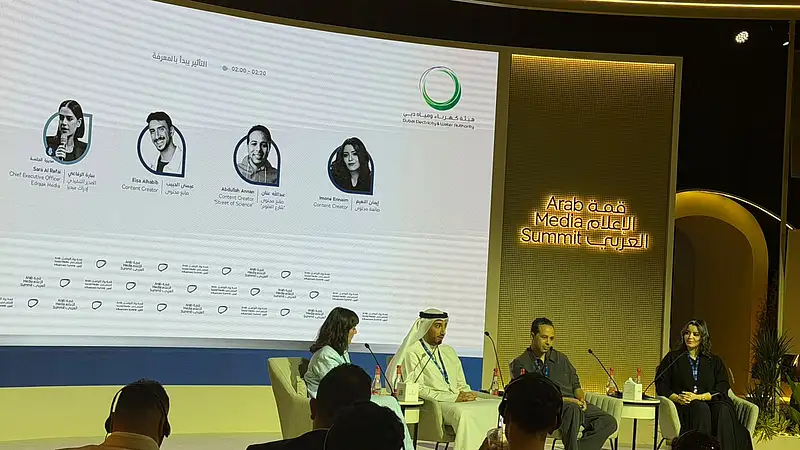
Science creators at the Arab Media Summit discussed how AI is transforming production, while stressing that accuracy, human judgement and audience trust must remain central
- PUBLISHED: Sat 19 Sept 2026, 7:00 AM


Artificial intelligence (AI) has helped one science content company increase its monthly video production from around 100 to 600 videos without expanding its team, showing how quickly the technology is changing the way educational content is produced.
But for science creators, producing more content is only part of the challenge.
Recommended For You




During a session titled Influence Begins with Knowledge at the Arab Media Summit 2026 in Dubai, content creators Abdullah Anan, Eisa Alhabib and Imane Ennaim discussed how they simplify science for large audiences, deal with mistakes and use AI in very different ways. The session was moderated by Sara Al Refai, CEO of Edraak Media.
Stay up to date with the latest news. Follow KT on WhatsApp Channels.
Six times more videos with the same team
Anan, the creator behind Street of Science, described AI as an important part of his work, saying the technology is now used across different areas of his company.
It supports tasks including research, developing ideas, language checks, production and marketing.
According to Anan, this has helped the company increase its output from around 100 videos a month to about 600 with the same team.
His approach showed one end of the AI debate among the creators.
Ennaim described a more cautious approach, using AI mainly as a supporting tool, including for language checks and reviewing work after human input. She said she still prefers ideas developed by people rather than relying heavily on AI-generated concepts.
Alhabib also spoke about using AI across different parts of his agency's operations, including design and communication, while highlighting the importance of maintaining the human element.
Their different approaches reflected a wider question facing creators: how much of the creative process should be handed to AI?
Making science simple without making it wrong
Long before AI entered the conversation, science creators faced a different challenge — turning complicated information into something people can understand.
The speakers described their role as helping close the gap between academic or technical information and the general public.
That means removing complicated terminology and explaining ideas in a simple way without changing their scientific meaning.
They also spoke about curiosity as an important part of their work. People naturally have questions about the world around them, and science creators can help answer those questions with information based on evidence rather than allowing misinformation or myths to fill the gap.
But simplifying science comes with responsibility.
The creators stressed the importance of checking information carefully before publishing, particularly when their audiences may not have the specialist knowledge needed to identify an error themselves.
What happens when creators get it wrong?
The speakers also acknowledged that mistakes can happen.
Rather than pretending otherwise, they discussed the importance of being transparent when an error is identified, including clarifying or correcting information for audiences.
Feedback and criticism can also help creators identify gaps in an explanation and improve future content.
For science creators, credibility can be particularly difficult to rebuild once it is damaged, making accuracy an important part of the relationship they develop with their audiences.
Can science content become a career?
The discussion also moved beyond views and followers to a question many aspiring creators have: 'Can educational content become a sustainable career?'
The speakers said specialised content can attract commercial opportunities as companies increasingly recognise the value of creators with clearly defined audiences.
Anan has expanded Street of Science beyond social media into a wider business that includes shows, laboratories, educational courses and AI-related products.
He also discussed focusing on building his own products and their value rather than accepting smaller brand deals that may not reflect the commercial value of his content.
Ennaim and Alhabib also discussed brand partnerships and agency work as possible sources of income.
However, the discussion repeatedly returned to the idea that commercial success follows the value a creator provides to an audience, rather than being the starting point.
AI may now allow creators to research, produce and distribute content faster than before. But when the subject is science, speed alone is not enough. For the creators on stage, the challenge remains the same: Make complicated knowledge understandable, keep audiences curious and ensure that what reaches them is accurate.