 E-Paper
 Sign In


UAE activates alternative trade corridors as Hormuz closure tests supply chains
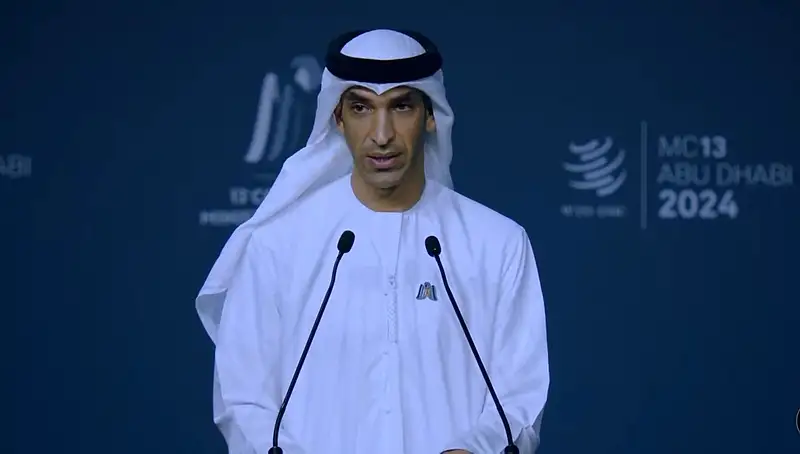
The UAE’s Minister of Foreign Trade said the country will continue accelerating its energy transition while strengthening its position as a global hub for capital and commerce
- PUBLISHED: Tue 8 Sept 2026, 11:41 AM


The UAE has activated alternative logistics corridors and accelerated the development of its east coast ports to keep trade flowing amid the closure of the Strait of Hormuz, Dr Thani bin Ahmed Al Zeyoudi, Minister of Foreign Trade, said on Tuesday.
Addressing the second day of the Hili Forum, Al Zeyoudi said the geopolitical challenges facing the region in 2026 had taken a 'more direct, more dangerous form', threatening supply chains on a global scale.
Recommended For You

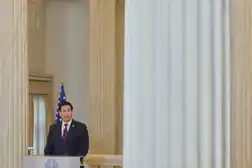
He said the UAE’s long-term growth strategy remained unchanged, but the immediate challenge had forced the country to rethink how it reaches those goals.
Stay up to date with the latest news. Follow KT on WhatsApp Channels.
“Since the closure of the Strait of Hormuz, we have worked to maintain vital trade routes into and out of the country,” Al Zeyoudi said.
The UAE activated regional logistics corridors linking the Arabian Gulf with the Red Sea and Gulf of Oman while working with Oman to process UAE-bound shipments through the ports of Sohar and Duqm. It also expanded the use of road, rail and freight services to move shipments by land, he said.
At the same time, the UAE accelerated the development of its east coast ports, including Khor Fakkan, Fujairah and Dibba, while commissioning new pipelines to connect the country’s energy resources to global markets.
“No other country has the ability to activate multiple new trade corridors at this scale and with this speed,” Al Zeyoudi said.
He stressed that the measures should not be viewed as temporary solutions.
“These are not short-term fixes. These are now permanent shifts in our positioning,” he said, adding that “no single checkpoint can be allowed to threaten our economic viability.”
Trade hits record
The minister pointed to the UAE’s latest trade figures as evidence of the resilience of its strategy.
The country’s non-oil foreign trade reached a record Dh1.94 trillion in the first half of 2026, marking a 13.1 per cent year-on-year increase and nearly 80 per cent growth compared with the first half of 2022.
Non-oil exports also reached an all-time high of Dh453 billion, which Al Zeyoudi said reflected the competitiveness of UAE products as well as the strength of its diversified trade corridors.
“The short-term action succeeded, but the UAE’s long-term vision must be preserved,” he said.
Al Zeyoudi said the UAE would continue expanding its network of trade and investment partners, investing in future technologies and industries, accelerating the energy transition and positioning the country as a conduit for global capital and commerce.
He also highlighted the UAE’s Comprehensive Economic Partnership Agreements (CEPA) programme, saying 38 deals with key partners across six continents were now concluded.
The agreements, he said, were creating new opportunities for UAE exporters while strengthening the country’s position at the centre of global trade.
‘No country owns Strait of Hormuz'
Al Zeyoudi also called for international waterways to remain open and free from restrictions. “We cannot allow individual nations to determine our trade ambitions,” he said, calling for international waterways to remain free from “any form of restriction or toll”.
“No countries own the Strait of Hormuz, and no country should determine who can and can’t access it,” he said.
“This is a red line for the UAE and should be for every country in the Gulf,” he added.
The minister said the events of the past six months had tested governments and businesses, but the UAE had responded by turning disruption into an opportunity to strengthen its economic position.
“Every challenge we have faced, we have emerged with a renewed purpose, turning crisis into structural advantage,” Al Zeyoudi said.
The UAE, he added, would continue seeking to capture global commerce and strengthen its role as a bridge connecting different continents.


Ruqayya Alqaydi is an associate editor with an endless curiosity to learn. Like a journalist on a caffeine overdrive, she is fuelled by passion and on a mission to uncover every gem in the UAE.