 E-Paper
 Sign In





UAE's Lana Nusseibeh announces UN chief bid, vows to pursue peace through quiet diplomacy
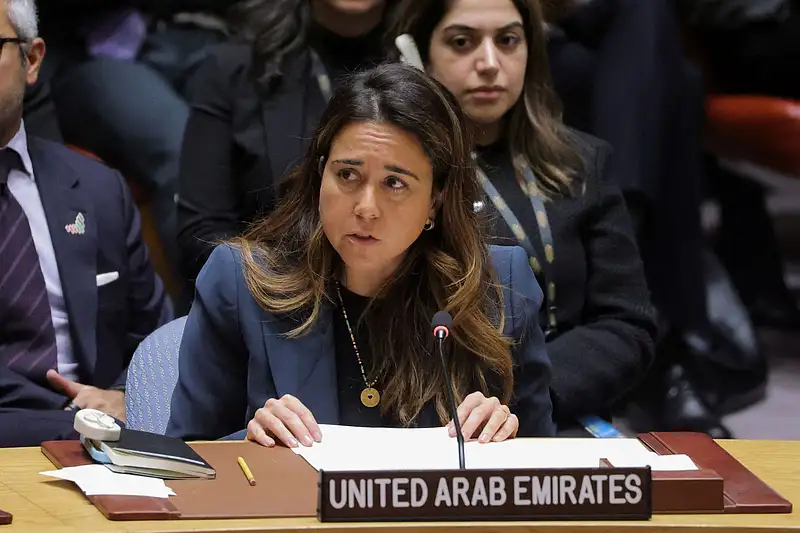
Nusseibeh has taken a leave of absence from her position in the UAE Government to focus on her candidacy
- PUBLISHED: Thu 22 Oct 2026, 7:10 AM UPDATED: Thu 22 Oct 2026, 8:44 AM


The United Nations should use "quiet diplomacy" to prevent conflicts from escalating and help secure practical agreements that ease human suffering while paving the way for wider political settlements, UAE diplomat Lana Nusseibeh has said as she announced her candidacy for the world body's top job.
In her vision statement, the former UAE ambassador to the UN calls for a focus on achievable "first agreements", such as securing humanitarian access, exchanging prisoners and negotiating local truces. These agreements, she argues, should be pursued through persistent diplomacy, with measures to verify that they hold.
Recommended For You

She also wants peace efforts to involve those closest to conflicts, including regional organisations and mediators trusted by the parties involved. The UN, she says, does not need to lead every negotiation but should be ready to work with those best placed to make progress.
Stay up to date with the latest news. Follow KT on WhatsApp Channels.
Her approach calls for bridging differences between countries not simply to keep them talking, but to secure agreements that reduce violence, allow humanitarian assistance to reach those in need and create the conditions for lasting peace.
Nusseibeh, the UAE's Minister of State and Envoy to the UN and European Union, announced her candidacy on Wednesday, October 21, after being formally nominated by President Sheikh Mohamed bin Zayed Al Nahyan.
Sheikh Mohamed submitted her nomination in a letter addressed to the presidents of the UN General Assembly and Security Council. According to the Emirates News Agency (WAM), the UAE President highlighted her extensive experience at the UN, her judgement in addressing international challenges and her record of constructive work.
If successful, Nusseibeh would become the first woman to lead the United Nations since its establishment in 1945. She would also become the second Secretary-General from the Arab world, after Egypt's Boutros Boutros-Ghali, who held the position from 1992 to 1996.
The veteran diplomat has taken a leave of absence from her UAE Government responsibilities to focus on her candidacy.
In her vision statement, she said the decision reflected the independence required of the Secretary-General under the UN Charter.
 I wish to offer myself to this office as I would serve it: speaking frankly with every government and answering to none. There will be no exemptions for friends and no grudges against critics.
Lana Nusseibeh
What determined diplomacy can achieve
Announcing her candidature, Nusseibeh reflected on both the possibilities of diplomacy and the cost when it falls short.
"I have spent much of my professional life working in and around the United Nations, and I have seen first-hand what determined diplomacy can achieve – countries with profound differences finding common ground, and agreement where people said agreement was impossible," she said.
But she also warned that the growing gap between international commitments and results was undermining confidence in the organisation.
"When the distance between what we promise and what we deliver grows, trust erodes, and so does our ability to act," she said.
"I am standing to be Secretary-General because I believe this is a moment to act with greater urgency: to act earlier, bring people together across difference, and drive the work forward until it produces concrete results."
More than a decade at the UN
Nusseibeh brings extensive experience of international diplomacy to the contest, having served as the UAE's Permanent Representative to the United Nations from 2013 to 2024.
She led the country's participation during its 2022-2023 term as an elected member of the UN Security Council and twice served as its President.
Her tenure included negotiations on some of the most divisive issues before the Council, including the humanitarian crisis in Gaza.
In December 2023, she led a visit by current and incoming Security Council members to the Rafah border crossing to draw attention to the humanitarian situation. She also played a key role in securing the adoption of Resolution 2720, aimed at facilitating humanitarian aid deliveries to Gaza.
Nusseibeh has also served as a Vice-President of the UN General Assembly and President of the Executive Board of UN Women. Her work has included efforts to reform the Security Council and revitalise the General Assembly.
Beyond conflict resolution, her proposals for the UN include strengthening accountability, reducing duplication and focusing the organisation's work on measurable results across peace and security, development and human rights.
A race without a consensus candidate
Nusseibeh enters the race at a crucial stage in the selection process, with the Security Council yet to agree on a successor to António Guterres, whose second five-year term ends on December 31, 2026.
According to Reuters, six rounds of informal Security Council polling have failed to produce a candidate acceptable to all five permanent members, the United States, Russia, China, Britain and France.
In the latest poll on October 16, former Costa Rican Vice-President Rebeca Grynspan narrowly led the field. However, all seven contenders received at least two opposing votes from permanent members, leaving the contest without a clear winner.
The deadlock has opened the door for new candidates to enter the race.
The next Secretary-General must be recommended by the 15-member Security Council and subsequently appointed by the General Assembly. A candidate needs at least nine votes in the Council and must avoid a veto by any of its five permanent members.
The position carries a five-year term, with the next Secretary-General due to take office on January 1, 2027.
The selection comes amid longstanding calls for a woman to lead the UN for the first time, as well as an informal tradition of regional rotation that has prompted expectations of a candidate from Latin America. Neither consideration is a formal requirement under the UN Charter.
For Nusseibeh, the contest will involve seeking support from the same world powers whose divisions have often made international agreement difficult.
Her vision statement sets out how she intends to approach the role if appointed: "I will judge my own work by the impact it produces, not by what it proclaims."

As Associate Editor, Sahim Salim helps tell the UAE story like no one else does — and leads a team of reporters that asks the questions to get news and headlines that matter.