 E-Paper
 Sign In


Iran launched 3,300 missiles, drones at UAE over several weeks: Gargash
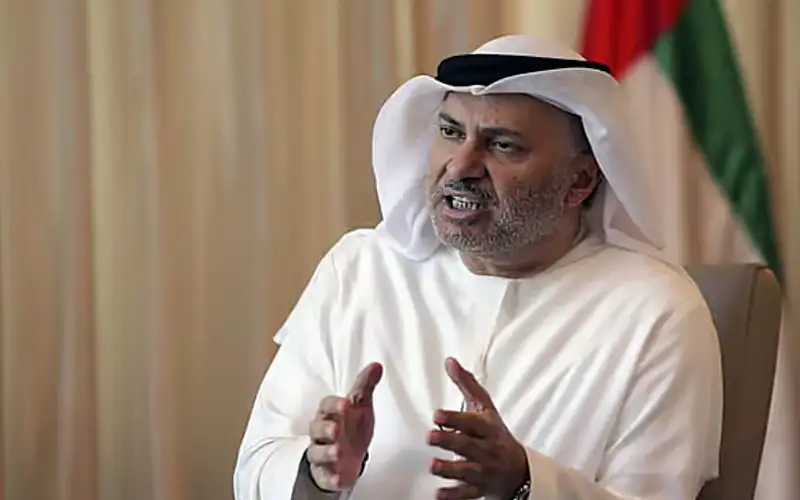
Gargash said the attacks largely targeted civilian sites, adding that the sustained strikes had demonstrated the country’s broader national resilience
- PUBLISHED: Mon 7 Sept 2026, 11:58 AM UPDATED: Mon 7 Sept 2026, 10:29 PM


[Editor's Note: For the latest updates on US-Iran hostilities since a 14-point MoU expired on August 17, follow the Khaleej Times live blog.]
Iran launched 3,300 missiles and drones at the UAE over the course of several weeks, with the vast majority of the attacks targeting civilian infrastructure, Dr Anwar Gargash, Diplomatic Adviser to the UAE President, said in a Special Address at Hili forum. Most of the projectiles were intercepted by the country’s air defences, he added.
Recommended For You

Gargash said the sustained attacks had demonstrated not only the capabilities of the UAE Armed Forces but also the country’s broader national resilience.
Even while missiles were still in the air, the UAE’s non-oil foreign trade grew by 13 per cent in the first half of the year, he said, stressing that the nation’s development ambitions had not been curtailed and its goals remained firmly on course.
Stay up to date with the latest news. Follow KT on WhatsApp Channels.
“Naturally, some sectors were affected, but our economy did not falter,” he said. “It continued to grow and, importantly, to expand in the sectors on which our future depends.”
Crisis will reshape the region
“Six months into a crisis that, in my view, will reshape the region’s geostrategic landscape and alter its politics, what has emerged is a more complex and far more uncertain region than the one we knew before,” he said.
He added “But I have little doubt that we are moving towards a more complicated Gulf and a more challenging wider region.”
In this environment, strategic autonomy was not a slogan but a policy choice that allowed the UAE to keep its economy growing, its people safe and its decisions independent, he said.
Despite the attacks, engagement with Tehran would ultimately be unavoidable. “Geography leaves us no alternative to engagement,” Gargash said, distinguishing between restoring a necessary working relationship and rebuilding trust.
He described the attacks on Gulf countries, which had not attacked Iran, as a “premeditated war of choice” and “a profound failure of strategy and statecraft”. Iran had destroyed, in weeks, bridges with its neighbours that took decades to build, he said.
A functional relationship could eventually be restored, but the presumption of good faith underpinning Gulf engagement with Tehran had been demolished and “may take many years, perhaps decades, to rebuild”, he added.
Regional response ‘underwhelming’
Gargash described Arab, regional and international responses to the crisis as “ineffective and underwhelming” in preventing the war, protecting energy and maritime trade, and containing a confrontation that began with the war in Gaza before expanding.
Gulf countries demonstrated strength individually, but their national responses did not translate into an equally effective collective strategy, he said.
“I do not believe that collectively we rose strategically to the magnitude of the threat,” Gargash said. The problem was not a lack of understanding about the challenge posed by Iran, but a failure to turn that shared assessment into a sufficiently united response.
No country should control Strait of Hormuz
Gargash said the status of the Strait of Hormuz lay at the heart of the confrontation and questioned whether Iran could emerge from what he called “essentially a military defeat” with a geostrategic and economic advantage.
Around a quarter of the world’s seaborne oil passes through the strait, along with a significant share of the fertiliser on which global agriculture depends, he said. Disruption therefore threatens energy, trade and food security well beyond the region.
“No single state should control the Strait of Hormuz,” Gargash said. “It is an international waterway of global importance, not a strategic privilege to be exercised by whichever country happens to possess the means to disrupt it.”
Using the waterway as an instrument of coercion was unacceptable, while attacks on merchant shipping “must carry consequences”, he said.
UAE strengthens alternative corridors
“Maritime security, trade and energy security were always central to our agenda. Today, they have moved to the very front of it,” Gargash said.
The UAE is expanding port capacity along its eastern coast and strengthening the pipelines, railways and trade infrastructure connecting it, while developing alternative cargo corridors.
“Our energy exports will not be held hostage, nor will our trade and economic activity,” he said. “Importantly, we are not starting from scratch. Much of this planning was already in place.” The crisis had accelerated existing timelines and increased the urgency of delivery, he added.
Gargash called for sustained de-escalation, freedom of navigation through Hormuz, credible guarantees against further Iranian attacks, and renewed respect for sovereignty and non-interference.
Decisions of war and peace could not be left to militias, he said, adding that Iran’s nuclear programme required clear terms, verification and consequences for non-compliance.
Credible deterrence and national capabilities remained essential, but strategic autonomy did not mean isolation. The UAE’s long-standing partnerships, particularly with the United States, remained an important source of security and strength, he said.
Deterrence must also be accompanied by serious diplomacy addressing security, non-interference, freedom of navigation, economic cooperation and rebuilding confidence.
“Relations can be restored more quickly than trust,” Gargash said. “Trust is the mountain we will have to climb.”
He said Iran’s aggression had damaged relations with its neighbours and deepened its isolation. The way out lay in rebuilding bridges, pursuing de-escalation and reaching a durable political settlement.
“If diplomacy is to succeed, Iran’s intentions will ultimately have to be judged by its actions, not simply by its words,” he said.


Ruqayya Alqaydi is an associate editor with an endless curiosity to learn. Like a journalist on a caffeine overdrive, she is fuelled by passion and on a mission to uncover every gem in the UAE.