E-Paper
 Sign In


From Hatta to Nepal: How Dubai Police’s 16-member rescue team supports mountain operations
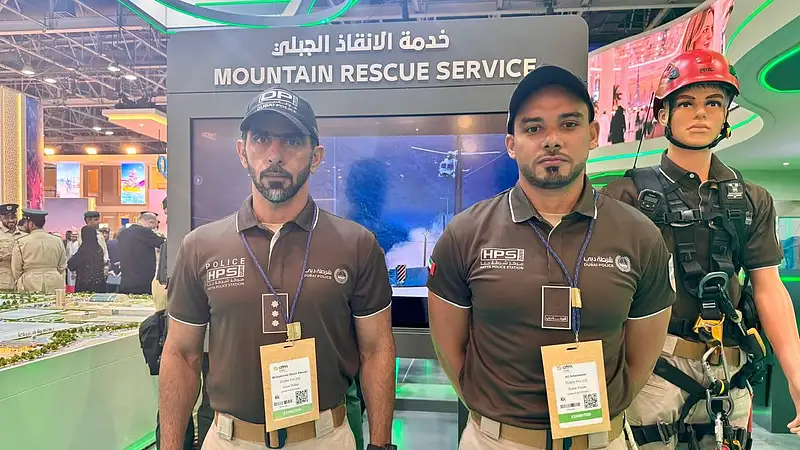
The unit uses custom-made vehicles, buggies and 14 mountain bikes, half electric and half manual, along with two smart patrol bikes fitted with 360-degree cameras
- PUBLISHED: Mon 14 Sept 2026, 1:59 PM


A specialised, well-trained, small unit of 16 elite officers is keeping the mountains of Dubai safe. From mountain rescues to stormwater retrievals, these officers- who are part of Dubai Police, are trained for months on various levels to make the team. A part of the team is currently in Nepal, as part of the UAE contingent supporting with the rescue efforts in the aftermath of deadly floods that have killed over 1300 people.
“There are three levels of training that we undergo,” a spokesperson told Khaleej Times, on the sidelines of the Arabian Travel Market that began in Dubai on Monday. “In the first level, we learn how to navigate the mountains, then we learn how to walk around carrying the equipment. In the third level, we learn how to conduct rescue missions and save people who are stranded.”
Recommended For You




The spokesperson said that the team works in groups of five and each person is put on one shift every 48 hours.
Stay up to date with the latest news. Follow KT on WhatsApp Channels.
Well-equipped team
The unit operates in the mountain zones using custom-made vehicles, buggies, and 14 mountain bikes — half electric, half manual. There are also two smart bike patrols equipped with 360-degree cameras that capture reports from every angle. They also have several additional gadgets including drones, night-vision goggles, mics and speakers.
Drones have transformed their work. "Earlier we needed three people to operate these drones,” he said. “Now only one person can take the lead of the drone. The drones carry microphones, spotlights, night vision, and AI, allowing officers to search vast areas and even call out to lost hikers.”
For carrying the equipment- often weighing between 40 to 50 kilograms- the team uses a new machine called Hypershell. "We wear it on us and it supports us with heavy items," he said. "It's extremely useful especially when we have to walk long distances on a rescue mission.”
Hiking precautions
The spokesperson said that most of the work of the team is concentrated around the mountains of Hatta. To help them move faster during rescues, the team includes members familiar with Hatta's terrain. As hiking season begins in the country, the team is expecting to get busier in the coming weeks.
The spokesperson said most rescues follow the same pattern: hikers underestimate the terrain.
"People start off on a trail and think it's easy,” he said. “So, they keep going deeper and deeper until they realize they are way off the marked trails. Then they are lost with no water or food.”
He added that most hikers lose mobile signals and are unable to call for help. “Cell connectivity is very difficult in the mountains,” he said. “So usually, the call for help comes from family members who are unable to locate the hiker.”
He added that the team uses radio communication to stay in touch with each other in the mountain regions.
The team also supports missions beyond the UAE, including in Morocco, Libya, and Turkey. They are also regularly called to help stranded hikers in Jebel Jais and Fujairah.
The team’s advice for hikers is simple- "Carry extra water, food, good clothes and good shoes and take the trail that suits your ability," the spokesperson said.
He added that every mountain is different. "Ras Al Khaimah mountains are different from the ones in Hatta,” he said. “There are different kinds of rocks, including one that looks strong but gives away when hikers step on it. So we always ask people to be extremely careful.”