 E-Paper
 Sign In


UAE students top Arab rankings in PISA 2025 as scores rise in science, maths and reading
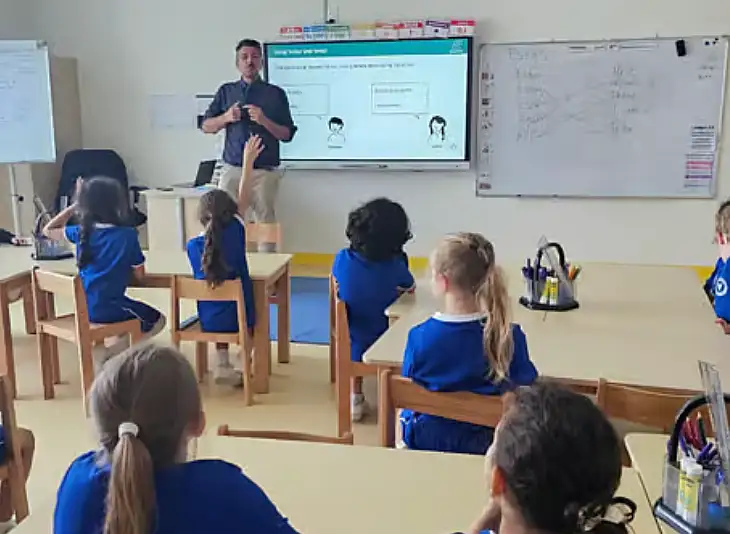
The Minister of Education attributed the results to UAE’s wider push for AI and digital education, citing advances in schools’ digital readiness
- PUBLISHED: Tue 8 Sept 2026, 2:58 PM


The UAE has emerged as the top-performing Arab country in science, mathematics and reading among those participating in the Programme for International Student Assessment (PISA) 2025, with students recording significant improvements across all three areas.
The results, overseen by the Organisation for Economic Co-operation and Development (OECD), place the UAE among a small group of countries to have made gains across the board at a time when international performance has generally declined.
Recommended For You





UAE students improved their science score by 26 points to 458, mathematics by 21 points to 453, and reading by 15 points to 433.
Stay up to date with the latest news. Follow KT on WhatsApp Channels.
The country was also one of only eight out of 91 participating countries and economies to improve in all three subjects compared with PISA 2022.
Sarah Al Amiri, Minister of Education, attributed the progress to the combined efforts of schools, teachers and education staff, while also highlighting students' own ambition and determination.
She said the achievement reflected efforts to strengthen skills in reading, science and mathematics and prepare young people for future demands.
UAE sees fewer low performers as Dubai leads national results
The gains were not limited to average scores. The UAE also recorded fewer low-performing students and a larger share reaching advanced performance levels, suggesting that improvement was spread more broadly across the student population.
At the emirate level, Dubai recorded the strongest performance in all three areas, scoring 506 in science, 496 in mathematics and 484 in reading.
That put Dubai 48 points above the UAE average in science, 43 points higher in mathematics and 51 points higher in reading.
Dubai students also surpassed the OECD average by 24 points in science, 33 points in mathematics and 23 points in reading, highlighting the emirate's strong performance within the UAE education system.
The results come against a backdrop of declining average performance among OECD countries, making the UAE's across-the-board improvement particularly notable.
Al Amiri also linked the results to the UAE's wider push towards AI and digital education, pointing to advances in schools' digital readiness and the responsible use of technology.
She reaffirmed the UAE's leadership in AI education and the role of education in supporting sustainable development.
AI literacy, digital readiness emerge as key strengths
The PISA 2025 findings also offer an indication of how technology is being incorporated into UAE classrooms.
Some 81.7 per cent of UAE students said they had learned in class how to evaluate information generated by AI, compared with 62.6 per cent across the OECD.
Meanwhile, 96.3 per cent of UAE students attend schools with subject-specific guidelines governing digital device use. The corresponding OECD figure is 71.2 per cent.
The findings reflect the country's broader effort to integrate AI into the curriculum while teaching students to use technology responsibly, think critically and assess the reliability of digital information.
The UAE's progress has also been linked to ongoing curriculum development, improvements in teaching quality, professional development for education staff and changes to assessment policies.
Approximately 34,639 students from 1,070 schools across the country participated in PISA 2025, giving the results a broad national base.
The Ministry said the outcome reflects the combined contribution of education authorities, schools, leaders, teachers, students and parents, while stressing the importance of stronger partnerships between schools, families and communities.
The findings also underline the need for schools to continue updating curricula in line with future skills and international best practices, while investing in teacher and school-leader development.
PISA assesses 15-year-old students on their ability to apply knowledge and skills to real-world situations and evolving challenges, providing an international measure of how well education systems are preparing young people for the future.
