 E-Paper
 Sign In


Commentary: We cannot build the future with yesterday’s definition of talent
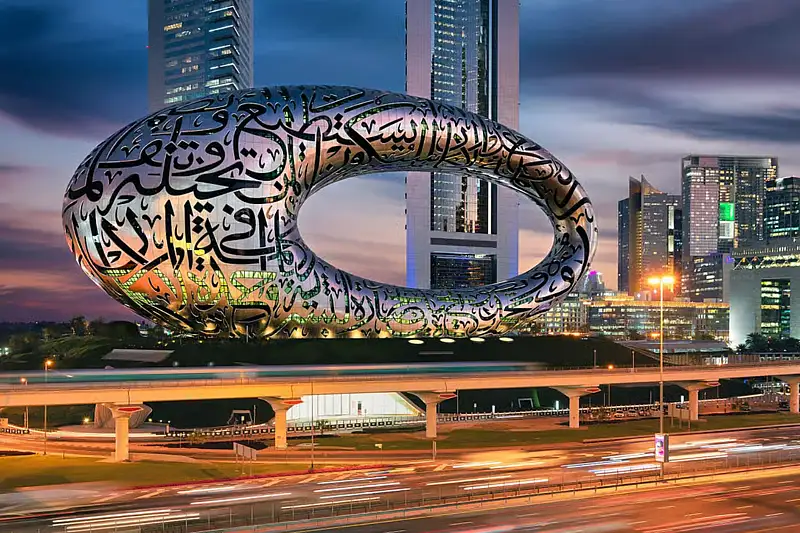
As the Museum of the Future prepares to reopen in 2027, it is looking for people with warmth and imagination, with no previous museum or customer-service experience required
- PUBLISHED: Mon 2 Nov 2026, 1:25 PM
- By:
- Azza Al Nuaimi


The author, Azza Al Nuaimi, is the Chief Operating Officer at the Museum of the Future
'Execute'. Of all the words written across the facade of the Museum of the Future, it is the one we return to most. It completes a statement by His Highness Sheikh Mohammed bin Rashid Al Maktoum, Vice President and Prime Minister of the UAE and Ruler of Dubai: “The future belongs to those who can imagine it, design it and execute it.”
Recommended For You


Dubai has built its reputation on that final word. Ambition here comes with a commitment attached: to turn ideas into tangible results, to challenge what is considered possible and then to deliver.
Delivering the future ultimately depends on people. As we embrace technologies that are reshaping cities, industries and the nature of work itself, our methods of identifying talent have not always evolved at the same pace.
A CV can tell us where someone has worked, what they studied and which titles they have held. It rarely tells us how they respond to uncertainty, earn someone’s trust or make a complex idea meaningful.
Consider a revealing finding from the World Economic Forum’s Future of Jobs Report 2025: 50% of employers identify empathy and active listening as a core skill for their workforce, compared with 45% who say the same of AI and big data.
Human and technical capabilities work best together, and the future depends on both. A scientist may develop a breakthrough and an engineer may turn it into working technology, yet it often takes a storyteller, educator or gifted communicator to help people understand why that breakthrough matters. The future needs people who create innovation and people who make it meaningful to others.
Qualifications and experience remain important, and they belong alongside other measures of potential. If we expect people to think differently, we should be prepared to assess them differently.

And here lies a paradox worth considering: no one has previous experience of the future, so why do we expect to find it on their CV? This is not about dismissing the experience people have gained, but recognising that their capacity to learn, imagine and adapt may matter more than the number of years they have spent in a particular role. At a time when artificial intelligence is learning to think more like humans, perhaps we should be looking more closely at what makes us uniquely human.
For the Museum of the Future, this has particular significance as we prepare to reopen in 2027 with a reimagined visitor experience. We can design extraordinary spaces and present ambitious visions of tomorrow, yet a visitor’s most memorable moment may be a human one: someone who listens, understands their perspective and helps them see their place in the future.
That is why we launched Future Perfects, our search for the human face of the Museum’s visitor experience. We are looking for warmth, imagination, emotional intelligence and adaptability, with no requirement for previous museum or customer-service experience.
Alongside conventional interviews, we are inviting candidates to demonstrate these qualities through auditions. The principle is simple: assess people in ways that reflect the work they will actually do.
The wider lesson goes beyond auditions. Every organisation can ask whether its hiring methods reveal the capabilities it genuinely needs.
Dubai’s future will be shaped by the technologies we develop and the institutions we create, and just as much by the potential we choose to see in people. We cannot build tomorrow while searching for talent through yesterday’s lens. To imagine, design and execute the future, we must also rethink who gets the opportunity to shape it.
If Dubai has taught us anything, it is that rethinking what is possible is only the beginning. The real challenge is to act on it. That is how we Dubai-it.