 E-Paper
 Sign In


Al Sharaa highlights UAE investment in Syria, says stability is shared regional interest
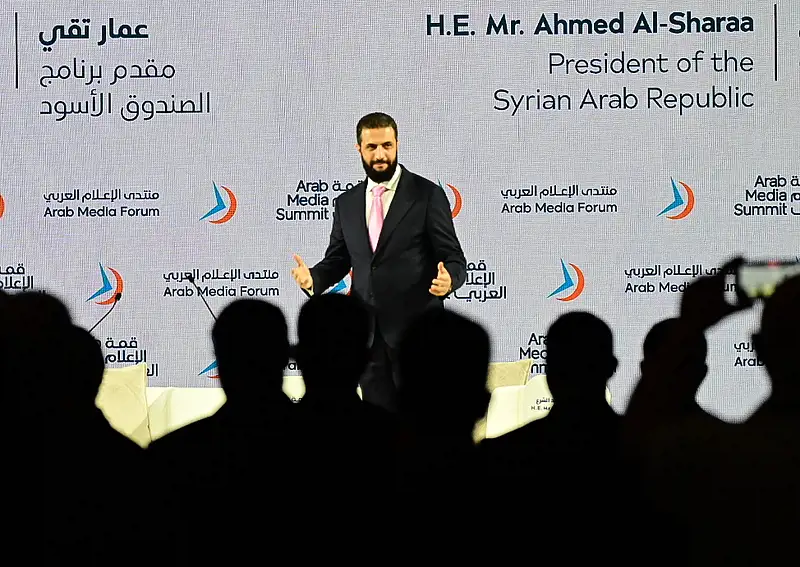
Speaking during Arab Media Forum in Dubai, Al Sharaa cited DP World’s investment in Port of Tartous as an example of UAE’s ability to identify opportunities in Syria
- PUBLISHED: Tue 15 Sept 2026, 1:10 PM UPDATED: Tue 15 Sept 2026, 2:47 PM


Syrian President Ahmed Al Sharaa highlighted the growing role of UAE investors in Syria, referring to planned projects involving Emirati businessman Mohamed Alabbar. He said the value of the proposed investments had not yet been announced because the plans were still being developed.
Speaking during a keynote dialogue at the Arab Media Forum in Dubai, Al Sharaa also cited DP World’s investment in the Port of Tartous as an example of the UAE’s ability to identify opportunities in Syria. He said investment in ports and infrastructure could help restore the country’s position within regional trade and energy supply chains. Al Sharaa said Syria was moving from being viewed as a source of regional instability to becoming an economic and strategic opportunity. “Syria’s stability today does not serve Syria alone, but the entire region. It is a shared interest for everyone,” he said.
Recommended For You

Stay up to date with the latest news. Follow KT on WhatsApp Channels.
From conflict zone to regional opportunity
The Syrian President said Syria could support commercial corridors connecting markets across West Asia and the wider region.“ We can say that Syria could become a major opportunity for the international community,” he said. “This is not only about the economy, but also politics, security and humanitarian issues.” Syria could become a centre for energy supply chains and commercial and industrial exchange as infrastructure is restored, he said.
Al Sharaa described the transition as one from “a major arena of conflict to a station for peace”, adding that its benefits would not be limited to economics. Rebuilding infrastructure and productive sectors would require substantial international participation, he said, stressing that Syria could not complete the process alone. “These transformations cannot be undertaken by Syria alone,” he said. “There must be a significant contribution from other countries.”
The Syrian leader also pointed to tourism as an important part of the country’s economic recovery. Before the conflict, Syria formed part of regional travel routes connecting visitors from the Gulf with Damascus and other cities in the Levant. Restoring the sector could attract Arab and international visitors while supporting economic activity in Syria and neighbouring countries, he said.
Rebuilding trust in institutions
Al Sharaa said restoring confidence between Syrians and state institutions remained one of the country’s principal challenges. For years, many citizens did not feel that institutions such as the government, parliament and judiciary represented them, he said. Rebuilding those bodies and restoring their relationship with the public would therefore be central to Syria’s transition.
The Syrian people were now passing through “stages of rebuilding the state and its institutions”, he said, after years of political conflict and economic damage. The country had also faced the challenge of maintaining infrastructure, public services and energy supplies during the transition, he added.
Al Sharaa said improving public administration would require better planning and follow-up, as well as the effective use of technology. Syria’s people and their long history of commercial activity remained among the country’s greatest strengths, he said.
He also stressed that the country’s future should be inclusive, saying no community or individual should be excluded because of religion, ethnicity, belief or school of thought. “We cannot exclude any group, any person or any belief”.
The dialogue, titled Syria of the Future, took place during the official opening of the Arab Media Summit 2026 at Dubai World Trade Centre. The summit runs from September 15 to 17 under the patronage of Sheikh Mohammed. The 24th edition features more than 175 sessions and over 400 speakers. Its programme covers artificial intelligence, digital transformation, emerging technologies, journalism, broadcasting, social media and changing audience behaviour.


Ruqayya Alqaydi is an associate editor with an endless curiosity to learn. Like a journalist on a caffeine overdrive, she is fuelled by passion and on a mission to uncover every gem in the UAE.