 E-Paper
 Sign In





KEO: Engineering a net-Zero future at Dewa’s Al Shera’a headquarters
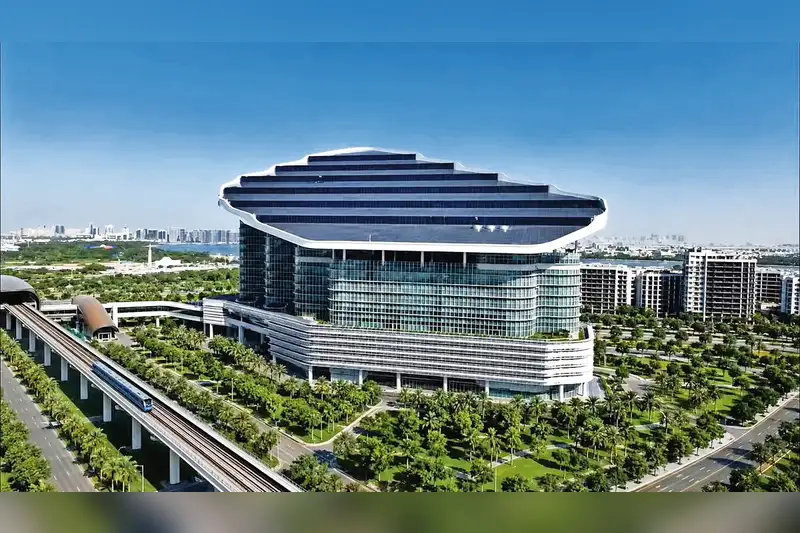
KEO’s work on Al Shera’a shows how integrated engineering, performance modelling and careful design decisions helped turn an ambitious sustainability brief into one of the world’s most advanced government buildings
- PUBLISHED: Fri 23 Oct 2026, 11:40 AM
- By:
- Mohammad Ballout


A net-zero building is not created by adding solar panels to an otherwise conventional design. Its performance is shaped much earlier, through decisions about everything from the façade and glazing to cooling, lighting and controls, and how those individual systems work together.
That challenge was particularly significant at Al Shera’a, the new headquarters of Dubai Electricity and Water Authority (Dewa) in Al Jaddaf. Conceived as a benchmark for sustainable government buildings, the project initially targeted net-zero energy performance.
Recommended For You





The completed building has gone further with Dewa’s Al Shera’a becoming a net-positive building, generating more clean energy annually than it consumes.
KEO joined the project during the Design Development phase, working alongside the wider project team to help translate Dewa’s sustainability ambitions into a coordinated, performance-driven engineering solution.
A collaborative approach brought architectural and mechanical, electrical and plumbing systems closer together, while detailed energy analysis helped assess demand and identify opportunities to improve efficiency without compromising occupant comfort or operational requirements.
Considering the UAE’s climate, cooling was inevitably central to that equation. The team examined façade performance, solar shading, glazing specifications and building-envelope efficiency to limit heat gain and reduce cooling loads before energy was consumed.
Designing out demand
The emphasis on reducing demand extended across the building with KEO using the outputs of the energy modelling and performance analysis to inform design decisions.
High-performance HVAC solutions were coordinated with energy-efficient lighting, advanced building automation and smart controls. Detailed design coordination and performance modelling helped align these systems with the project’s long-term energy targets.
Renewable generation formed the other side of the equation. Photovoltaic systems were incorporated to harness Dubai’s abundant solar resource, with the design process evaluating the relationship between on-site generation, building loads and system efficiency. The completed building has around 5MW of solar generation capacity.
The sustainability strategy extended beyond energy. Water conservation measures, intelligent building operations and indoor environmental quality were incorporated into the design, recognising that a high-performance workplace must combine resource efficiency with occupant wellbeing.
The integration of architectural, mechanical and electrical systems was therefore a key factor in achieving the building’s performance targets.
Al Shera’a has since achieved LEED Platinum certification for New Construction, scoring 102 points out of a possible 110.
Its achievement illustrates a broader lesson in sustainable design that there is no single technology that makes a building net zero, or net positive. Performance comes from the interaction between architecture and engineering, from reducing demand before adding generation, and from ensuring individual systems work as a whole.
For KEO, the project demonstrates how integrated engineering, performance modelling and multidisciplinary collaboration can help convert ambitious sustainability targets into measurable operational outcomes.