 E-Paper
 Sign In





From scroll to cart: How social media is shaping the modern Diwali wishlist
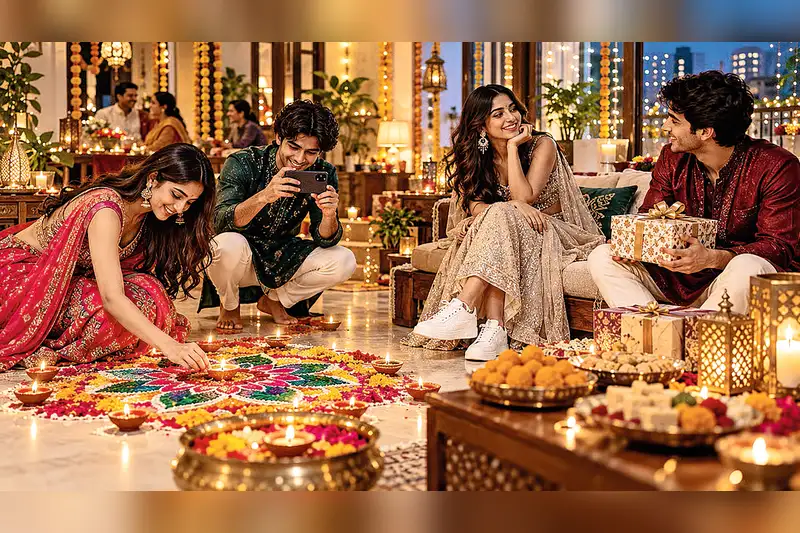
From viral fashion and beauty finds to festive décor and last-minute gifts, discover the trends and tastemakers lighting up Diwali shopping
- PUBLISHED: Wed 4 Nov 2026, 11:00 AM UPDATED: Sat 7 Nov 2026, 9:27 AM


There was a time when Diwali shopping meant wandering through a market, stopping at a familiar shop and asking family what they thought. In 2026, the ritual has acquired a new soundtrack: the swipe of a screen, the ping of a WhatsApp message and the familiar voice of a creator saying, “You need this.”
The festive shopping journey is no longer a straight line from shop to shopping bag. It begins with a Reel, continues through a group chat, gets a second opinion from a creator, perhaps passes through an AI recommendation and can end with a delivery at the doorstep — or a visit to the store to see the product in real life. And this year, the influence is stronger than ever.
Recommended For You





The Reel Comes First
For many shoppers, the first step is not deciding what to buy but discovering something they did not know they wanted. That is where short-form video has changed the game. Meta's 2026 research with the Retailers Association of India found that social media influences 77 per cent of retail purchase decisions, while Reels and creators are increasingly driving product discovery.
The result is a new kind of digital window shopping. A creator styling a saree can inspire an outfit; a home creator decorating a dining table can suddenly make brass diyas feel irresistible; a beauty creator demonstrating a festive makeup look can turn a lipstick into an urgent purchase.
The product does not necessarily arrive with a hard sell. It arrives wrapped in a lifestyle.
The Rise of the Relatable Creator
The biggest influencer this Diwali may not have millions of followers.
Nano and micro creators are expected to account for 75 per cent of festive creator activations in 2026, according to Qoruz data. That shift matters because festive shopping is personal. Consumers increasingly want to see how something actually looks, feels and fits into everyday life. A creator showing her family preparing for Diwali, styling an affordable outfit or putting together a gift hamper can feel more useful than a glossy campaign featuring a celebrity. In other words, the question has changed from “Who is famous?” to “Whose taste do I trust?”
Group chat has entered the checkout
Then comes the second opinion. A screenshot of a handbag lands in a group chat. Someone replies with a better option. Another person sends a Reel. Someone else asks, “Does this come in another colour?”
For Gen Z shoppers, this social validation is becoming an important part of the buying journey. New 2026 research from Snapchat and GWI found that 52 per cent of Gen Z consumers planning technology purchases seek advice from friends or family, while 46 per cent seek opinions before buying. In beauty, nearly half research for inspiration and 45 per cent seek advice.
Even fashion shopping is a blend of planning and impulse. Almost 68 per cent of respondents were buying or considering buying fashion and apparel for Diwali, while 49 per cent combined advance planning with spontaneous purchases.
The friend who says “buy it” may now have almost as much influence as the person selling it.
AI is becoming the new shopping companion
And then there is the newest voice in the room: artificial intelligence.
In 2026, AI is moving beyond being a tool for answering questions and becoming part of the festive inspiration process. Shoppers can use AI to generate gift ideas, narrow down choices and explore products based on budgets, tastes and occasions.
Google's latest festive research describes today's shopper as increasingly “inspired”, “immersive”, “instant” and “intelligent”, with visual discovery and AI changing how people move from inspiration to purchase. This could mean asking for gift suggestions for a hard-to-shop-for sibling, finding a festive outfit for a particular budget or narrowing down home decor without scrolling through hundreds of products.
The search bar is no longer necessarily the starting point. Sometimes, the conversation is.
From scroll to store: Yet the physical shop is far from disappearing.
In fact, the most interesting Diwali shopper of 2026 may be one who does everything at once. More than half of Indian retail consumers now research online before buying in-store, while a similar proportion research in-store before purchasing online, according to Meta and the Retailers Association of India's 2026 findings.
A shopper might discover a necklace through a Reel, check reviews online, send it to a sister, visit the boutique, try it on and then complete the purchase through a website.
Digital and physical retail are no longer competing destinations. They are simply different rooms in the same shopping journey.
The new Diwali influence
So, who is really influencing what we buy this Diwali?
It is not one celebrity, one platform or one advertisement.
It is the creator whose taste we trust, the friend whose opinion we value, the algorithm that knows what we might like, the AI assistant helping us narrow the choices and the retailer making sure the product is available when we finally decide.
Diwali shopping in 2026 is less about being told what to buy and more about being continuously shown what could make the celebration feel a little more us.
The traditional bazaar may still be glowing with lights, but the modern one fits neatly inside a phone — and it is open long before the first diya is lit.