 E-Paper
 Sign In


Central Bank of the UAE marks 50 years of financial stewardship and innovation
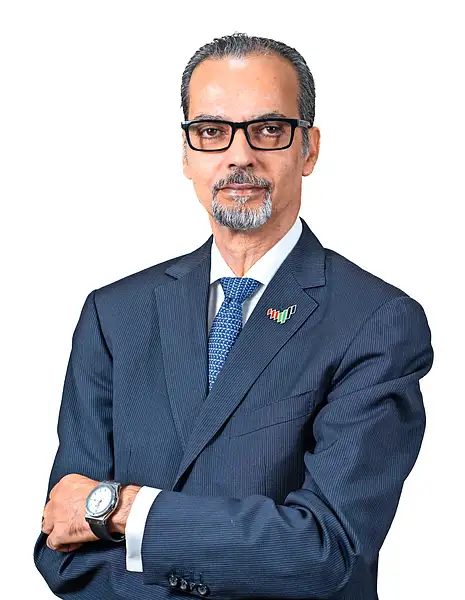
UAE Banks Federation, representing 63 members, has been a crucial partner in translating Central Bank’s vision into practice
- PUBLISHED: Mon 2 Jun 2025, 10:18 AM


Suneeti Ahuja-Kohli
Central Bank of the UAE (CBUAE) is celebrating its 50th anniversary this year, while continuing to play a pivotal role in guiding the nation’s financial landscape and propelling it onto the global stage with increasing speed.
Recommended For You





Since its establishment with the creation of the UAE Currency Board in 1973, Central Bank has emerged as a bedrock of stability and a catalyst for innovation, navigating the UAE through economic shifts and technological revolutions.
“Over the past five decades, CBUAE has not just overseen monetary policy, but has built the bedrock of confidence that has allowed the UAE to emerge as a regional and global financial centre,” says Jamal Saleh, Director-General of UAE Banks Federation (UBF).
“It has done this through decisive reforms and relentless focus on global best practices.” In 2008, when the financial crisis rippled through economies worldwide, UAE Central Bank was among the first in the region to adopt Basel III Standards, strengthening capital and liquidity buffers. As a result, the capital adequacy ratio of the UAE banking system today is higher than required. At the end of December 2023, it stood at 17.9 per cent —well above the 13 per cent minimum required under Basel III guidelines, according to the CBUAE’s Monetary, Banking & Financial Markets Developments Report for Q4 2023. These reforms, says Saleh, “have ensured that UAE’s banks are not only safe but also capable of sustaining growth in the face of volatility.”
In 2018, UAE Central Bank introduced the Federal AML/CFT Law, followed by the Executive Office for AML/CTF in 2020, aligning UAE’s framework with the Financial Action Task Force’s stringent standards. This was a significant step in paving the way to combat money laundering and terror financing.
Equally striking has been CBUAE’s proactive stance in times of crisis. At the height of Covid-19 pandemic, CBUAE launched the Targeted Economic Support Scheme (TESS), injecting more than Dh100 billion in liquidity to support businesses and protect jobs.
“The TESS programme was not merely a reaction — it was a strategic intervention that underpinned confidence in the banking sector,” says Saleh.
Yet, CBUAE’s ambition extends well beyond stability. Its National Payment Systems Strategy (NPSS), Digital Dirham (CBDC) pilot project, and the Financial Infrastructure Transformation (FIT) Programme underscore a clear vision for a future-ready financial system.
“Our member banks are investing heavily in modernising their systems to align with these initiatives,” says Saleh. “From AI-powered risk management to open banking APIs, the sector is embracing the future with vigour.”
UBF, which represents 63 members across the UAE, has been as a crucial partner in translating this vision into practice. Saleh describes the relationship between Central Bank and UBF as “a model for constructive collaboration,” built on technical committees and joint working groups that ensure policy frameworks which are both practical and forward-looking.
This close cooperation has yielded tangible outcomes. UBF has spearheaded efforts to promote Emiratisation in the banking sector, supporting CBUAE’s workforce emiratisation targets, via dedicated cooperation with Emirates Institute of Finance (EIF), with training programmes and certifications tailored for Emirati professionals. On the consumer front, UBF’s Code of Conduct — endorsed by UAE Central Bank — has helped standardise ethical practices and transparency across the sector.
Sector’s sustainability drive has also gained momentum. At COP28, which was hosted in Dubai, UBF pledged to mobilise over Dh1 trillion in sustainable/green finance by 2030.
“This is not an aspirational goal—it is a clear, actionable roadmap,” says Saleh, noting that some UBF member banks have already met more than half of their 2030 targets. RAKBANK’s issuance of the GCC’s first social bond last year and FAB’s continued leadership in green bond issuance highlight UAE sector’s growing appetite for ESG finance.
Even amid shifting geopolitical dynamics and heightened regulatory scrutiny, Saleh remains greatly optimistic about UAE’s positioning.
“Our capital adequacy ratios, liquidity coverage, and risk frameworks are among the strongest globally,” he says, pointing to the sector’s consistent performance despite global derisking trends.
According to Fitch Ratings, UAE banks achieved a pre-tax return on average equity (ROAE) of 22 per cent in 2024, up from 20 per cent in 2023, with several banks reporting ROAEs above 25 per cent.
Looking ahead, Saleh believes that the next decade will see the UAE cementing its role as a global financial hub, propelled by continued investment in digital transformation, sustainability, and inclusive growth.
“The partnership between CBUAE and UBF exemplifies how public-private collaboration can foster responsible innovation and ensure UAE’s place at the forefront of global finance,” he says.
As our Central Bank charts its next chapter, the UAE’s banking sector stands poised to bridge tradition with innovation, building a future-ready ecosystem that is as resilient as it is ambitious.