 E-Paper
 Sign In





Al Shera’a: A global model redefining intelligent and sustainable government infrastructure
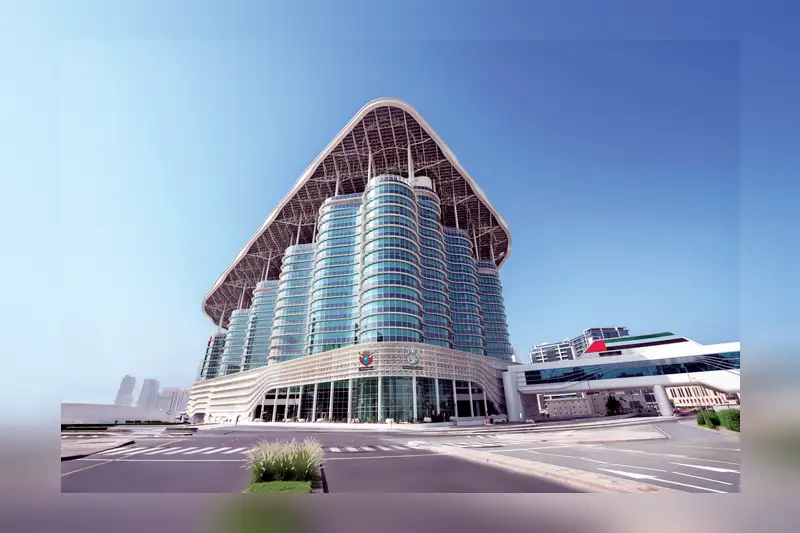
Al Shera’a presents a new vision for future-ready infrastructure by bringing together sustainable architecture, clean energy, artificial intelligence and user-centric design
- PUBLISHED: Fri 23 Oct 2026, 10:52 AM


Al Shera’a, the new headquarters of Dubai Electricity and Water Authority (Dewa), is a global model for government buildings that integrate environmental stewardship, digital transformation, operational efficiency and human wellbeing within a single ecosystem. It presents a new vision for future-ready infrastructure by bringing together sustainable architecture, clean energy, artificial intelligence (AI) and user-centric design.
Saeed Mohammed Al Tayer, Managing Director and CEO of Dewa, said: “We are guided by the vision and directives of His Highness Sheikh Mohammed bin Rashid Al Maktoum, Vice-President and Prime Minister of the UAE and Ruler of Dubai, who has established a forward-looking model based on anticipating the future and developing infrastructure that supports smarter, more sustainable and more resilient cities. Al Shera’a embodies this approach by redefining the concept of government buildings, integrating sustainability, innovation, digital intelligence and quality of life within an institutional environment that learns, adapts and responds efficiently to the needs of its users.”
Recommended For You




Al Tayer added that Al Shera’a reflects Dubai’s approach to shaping the future through innovation and sustainability. He noted that the building has strengthened its global standing by earning LEED Platinum certification in the New Construction category of the Leadership in Energy and Environmental Design (LEED) rating system, achieving 102 out of 110 points. This recognises its exceptional performance in energy efficiency, resource management, indoor environmental quality and innovation.

Al Shera’a has also been designed in accordance with the latest standards to achieve WELL Building Standard Platinum Certification and Dubai’s Al Sa’fat Platinum Rating for green buildings.
Al Tayer affirmed that Al Shera’a is more than a headquarters; it is a blueprint for the future. It demonstrates how government buildings can evolve into intelligent and adaptive environments that generate more energy than they consume, transform data into actionable insights, optimise resources and enhance quality of life.
A blueprint for future govt infrastructure
Al Shera’a translates the aspirations of the Dubai Clean Energy Strategy 2050 and the Dubai Net Zero Carbon Emissions Strategy 2050 into a tangible and measurable reality. By combining renewable energy generation, intelligent operations, digital twin technologies, resource efficiency and human-centric design within a unified ecosystem, the building represents a new generation of government infrastructure.
The philosophy underpinning Al Shera’a is reflected in its architectural identity. Its name, which means ‘sail’ in Arabic, symbolises movement, progress and openness. The design draws inspiration from traditional Emirati houses, reinterpreting elements of local architectural heritage through a contemporary lens that prioritises sustainability, connectivity and human experience.
More than an architectural landmark, Al Shera’a is designed as a workplace that promotes collaboration, innovation and wellbeing. The building comprises 19 floors in addition to the ground floor and a basement, with a built-up area of more than two million square feet. It accommodates a wide range of facilities, including a conference hall, training rooms, an innovation centre and exhibition spaces, as well as amenities that support employees’ quality of life, including a nursery and sports facilities. Together, these features create a holistic work environment that fosters creativity, continuous learning and social interaction.
A net-positive building
Renewable energy is a core component of Al Shera’a’s design and operation. The building integrates photovoltaic technologies across its structure, including rooftop solar installations, façade-integrated solar systems and photovoltaic elements incorporated into key architectural features.
The building has a total electricity generation capacity of five megawatts (MW), generating approximately 7,500 megawatt-hours (MWh) of renewable energy annually. Al Shera’a features approximately 26,000 square metres of photovoltaic solar panels, in addition to 1,000 square metres of Building Integrated Photovoltaic (BIPV) systems. The BIPV system comprises 284 panels with a total capacity of 185 kilowatt-peak (kWp).
The building also features approximately 8,400 photovoltaic panels installed across the roof, podium fins, ground level, shaded structures and solar tree. Specialised robotic systems clean the solar panels to maintain optimal performance and enhance energy efficiency.
Al Shera’a is capable of generating more clean energy than it consumes annually, reinforcing its position as a net-positive government building. By embedding renewable energy generation within its architecture, the building demonstrates how urban infrastructure can actively contribute to decarbonisation while reducing reliance on conventional energy sources.
A cognitive building driven by AI
At the heart of Al Shera’a is an advanced cognitive ecosystem that integrates AI, Internet of Things (IoT) technologies and big data analytics to optimise building operations. The intelligent platform connects thousands of devices and systems through a unified digital environment, enabling real-time monitoring, predictive insights and automated decision-making. Supported by more than 110,000 smart sensors, over 1,500 wireless access points and more than 3,200 network devices, These generate more than 1.9 million automated control commands daily, enhancing operational integration and improving performance efficiency.
A Smart System with a Unified App
Through the AI-powered Al Shera’a smart application, users can seamlessly interact with approximately 100 interconnected systems covering parking management, workplace resources, access control, elevators, indoor environmental quality, shared mobility services, employee wellbeing, dynamic Navigation and Accessibility, and comfort control including lighting and air conditioning. This integrated approach transforms the building from a passive structure into an intelligent environment capable of learning, adapting and continuously improving its performance.
Digital twins transforming operations and resilience
A key enabler of Al Shera’a’s intelligent operations is its digital twin ecosystem, which creates a dynamic virtual representation of the building’s systems, spaces and assets. Connected to real-time data streams from sensors and IoT networks, the platform provides a comprehensive operational view that supports energy optimisation, predictive maintenance and performance monitoring.
Digital twin technologies also enhance operational resilience by enabling remote diagnostics, compliance monitoring, advanced risk assessment and informed decision-making. By transforming operational data into actionable insights, the system helps maximise resource efficiency, improve asset management and strengthen long-term building performance.
The Johnson Controls OpenBlue platform, in collaboration with Microsoft and MORO, further supports the transformation of operational data into actionable insights and decisions, optimising building systems, occupancy and resource management while enhancing operational efficiency, readiness and resilience.
Putting people at the centre of sustainability
While technology and sustainability define much of Al Shera’a’s infrastructure, the building has been designed with people at its centre. Intelligent systems continuously adapt lighting, temperature and space utilisation according to actual occupancy and demand, creating a comfortable and productive environment while minimising resource consumption.
This human-centric approach extends beyond workplace comfort to encompass wellbeing, flexibility and work-life balance. As a result, sustainability at Al Shera’a is reflected not only in energy savings and environmental performance, but also in the quality of the daily experience provided to employees and visitors.
An integrated sustainability ecosystem
Al Shera’a’s sustainability strategy extends beyond energy efficiency to encompass water conservation, resource management and sustainable mobility. Advanced systems support water reuse, indoor air quality management and intelligent control of cooling and lighting, while 46 electric vehicle charging stations encourage the transition to cleaner transportation.
The headquarters is also directly connected to Al Jaddaf Metro Station through a dedicated elevated, air-conditioned pedestrian Metro Link, promoting public transport use and reducing reliance on private vehicles. This integration demonstrates how sustainable infrastructure can contribute to wider urban mobility and environmental objectives.
Through this integrated model, Al Shera’a establishes a global benchmark for future government infrastructure and reinforces Dubai’s position at the forefront of sustainability, innovation and future-ready urban development.