 E-Paper
 Sign In





Freight rates could take up to a year to ease after war ends: Aramex CEO
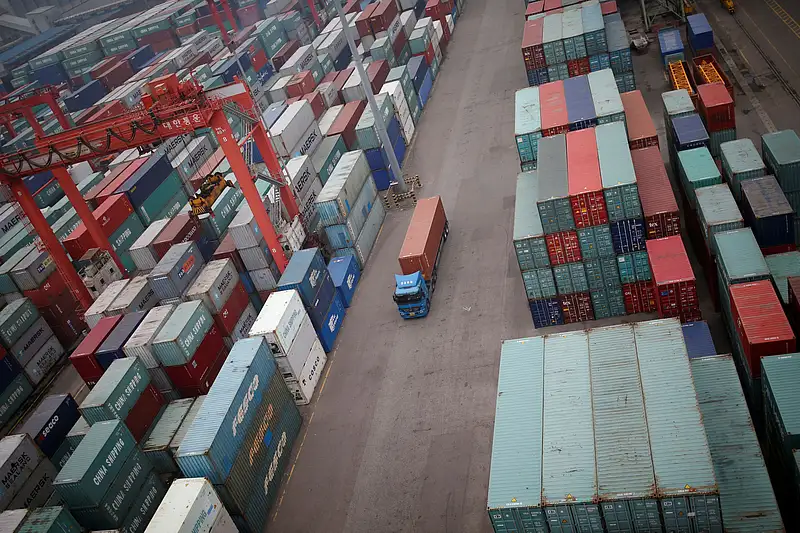
The logistics group’s chief executive explains how alternative trade routes powered its second quarter performance and sees the centre of logistics as shifting to the Middle East
- PUBLISHED: Mon 2 Nov 2026, 6:00 AM UPDATED: Mon 2 Nov 2026, 10:23 AM


Aramex is aiming for double-digit revenue growth in 2026 and 2027, and sees freight rates normalising only six to 12 months after peace returns to the region, its group CEO, Amadou Diallo, said.
“That is our aspiration and our obligation,” Diallo told Khaleej Times when asked if the company could sustain the double-digit growth achieved in the second quarter of 2026.
Recommended For You



The Dubai-listed company reported group revenue of Dh1.83 billion for the second quarter of 2026, up 22 per cent year on year and the highest quarterly figure in its history. May and June each set monthly records, lifting first-half revenue to Dh3.43 billion, up 12 per cent. Net profit rose seven-fold to Dh47 million, supported by freight forwarding demand and tighter cost control.
Stay up to date with the latest news. Follow KT on WhatsApp channels.
He said most of the recent growth came from multimodal solutions built to keep European shipments flowing into the GCC. These use ports in Turkey, linked to overland routes into the region, as well as gateways such as Sohar, Salalah and Jeddah.
“Putting in place alternative routings to be able to offer solutions so that the market could be sustained and resilient is what we offer,” he said.
A logistics and supply chain industry veteran with over 30 years of experience, Diallo joined Aramex as group CEO on May 1, 2026.
Freight rates to stay high
Asked when freight rates might come down, Diallo said he could not predict when the conflict would end. He said that once peace returns and supply chains are replenished, conditions should normalise within six to 12 months.
“At the moment we have a lot of shipping lines that are not coming. We have a lot of airlines that are not coming. You have ports that are congested,” he said. Until supply chains are re-established, he added, the effect will remain inflationary.
Aramex has applied surcharges on last-mile services that use energy, but Diallo described the increase as marginal. “We have to make sure that our customers and consumers can afford their products,” he said.
As reported by Khaleej Times earlier, shipping freight charges have jumped from $2,000 to around $12,000 due to the US-Iran war, high oil prices, the closure of the Strait of Hormuz and a shortage of containers.
The company has also been hit by higher fuel prices and port congestion, Diallo said. He added that being a local organisation with local talent helped it keep trade moving even when many ports were blocked.
He also noted that the conflict has meant fewer tourists, which reduced demand in e-commerce, fashion and retail. “Peace is always much better to navigate any business,” he said. “A better tomorrow cannot happen without peace.”
Diallo said Aramex has received many requests for contract logistics solutions based in the region. The trend began before the conflict, he said, but has accelerated as businesses seek to be closer to customers and avoid ocean freight price rises. Demand for warehousing is high in the UAE, Jeddah, Turkey and India.

Drones: Focus on the middle mile
Aramex has been testing drone deliveries since 2022 and began a pilot in Abu Dhabi last year. Diallo said the company found last-mile delivery to consumers complicated in dense urban areas, so it is now piloting drones for heavier shipments between stations.
He said drones are faster, avoid congestion during same-day delivery windows and are safer in hazardous settings such as oil and gas.
Regulations still need to allow wider use in the region, he added, and he gave no launch date. He said drones could also connect cities and supply spare parts to remote farmers in markets such as East Africa.
Centre of logistics shifting
Aramex has operations in multiple locations across the UAE, including Khorfakkan, Fujairah and Ras Al Khaimah, and will work with other big companies to build multimodal solutions as infrastructure develops.
He said the development of Khorfakkan, Fujairah and Sohar, the planned rail link from Oman and port projects in Basra and Turkey are all important.
He believes the centre of logistics is shifting to the Middle East, after earlier being concentrated in Singapore and then Shanghai, as Asian manufacturers move production to Saudi Arabia, the UAE, Egypt and Morocco.
Under its Accelerate28 strategy, Aramex is using AI for dynamic route optimisation and predictive delivery estimates. It is also using sensors rather than scanning to track shipments, and applying AI in finance, HR recruitment and sales. Diallo said the aim is to focus staff on customers rather than repetitive tasks.
Aramex is expanding in Saudi Arabia, Asia, Africa, America and Europe. Diallo declined to disclose the investment figure, but said it “is not small”.
Diallo said Aramex is also focused on employee engagement and community service. “It is important that people don’t only talk about business but also about the contribution to society,” he said.
