 E-Paper
 Sign In





Dubai rents: 1 in 5 tenants now pays less than before as rentals ease on new supply
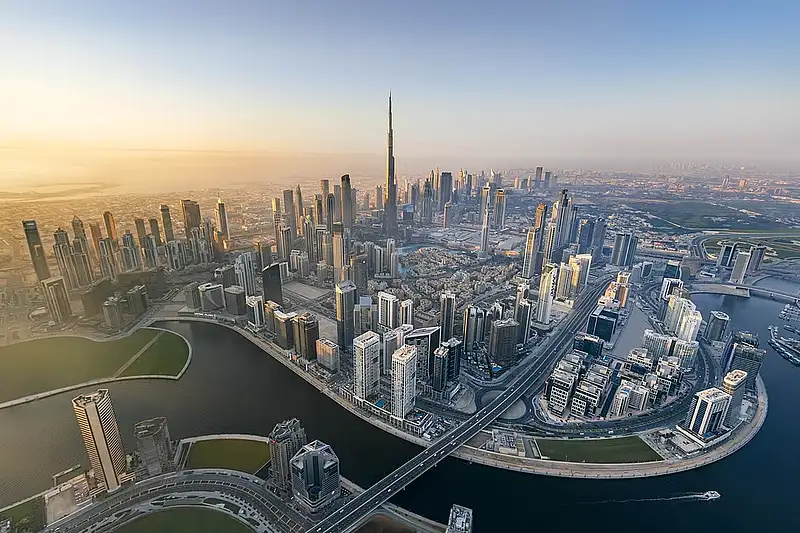
The share of Dubai rental transactions recording a lower rent has more than quadrupled since the start of the year, as record handovers give renters more choice, according to Cavendish Maxwell
- PUBLISHED: Mon 2 Nov 2026, 8:45 AM UPDATED: Mon 2 Nov 2026, 9:48 AM


More than one in five Dubai tenants are now paying less than they did under their previous contract, as a growing supply of completed homes hands renters greater bargaining power, according to new research from property consultancy Cavendish Maxwell.
In the third quarter of 2026, 21.4 per cent of rental transactions recorded a rent reduction compared with the prior contract, up from just 4.8 per cent in the first quarter. A further 38.7 per cent renewed at the same rent, while the share recording an increase fell to 40 per cent from 59.4 per cent over the same period.
Recommended For You





Stay up to date with the latest news. Follow KT on WhatsApp Channels.
Cavendish Maxwell said the shift points to diminishing landlord pricing power and greater scope for tenants to negotiate.
Average rents stood at Dh77.3 per square foot per year in September, up 5.5 per cent year-on-year. That is a sharp slowdown from the 11.5 per cent annual growth recorded in September 2025. Rates dipped in the second quarter before recovering in the third to return to their March 2026 level.
More than 172,000 rental contracts were registered in Q3. Renewals totalled 94,300, down 10.6 per cent year-on-year, while new contracts rose 18.2 per cent to 77,700.
The consultancy expects the expansion of available stock to weigh on rental growth going forward, particularly for apartments, which make up the largest share of completions.
Gross rental yields averaged 6.6 per cent for apartments and 4.9 per cent for villas and townhouses in Q3. Apartment yields eased slightly from a year earlier, but remain attractive against other major global residential markets.
Dubai Investments Park led apartment yields at 10 per cent, followed by International City (9 per cent) and Dubai Production City (8 per cent). Among villas and townhouses, Dubai Industrial City topped the table at 6.5 per cent, ahead of Jumeirah Golf Estates (5.8 per cent) and Damac Hills 2 (5.7 per cent).
Record deliveries
Dubai delivered about 38,000 residential units between January and September, up 41.4 per cent on the same period of 2025 and more than the full-year totals for 2023 and 2024.
About 12,400 homes were handed over in Q3 alone.
Another 24,400 units are scheduled for the rest of 2026, although based on historical materialisation rates, actual completions are expected to range between 7,300 and 12,200. The pipeline is far larger beyond that, with 136,100 units due in 2027 and 155,700 in 2028, a combined 291,800.
“The contraction in launches highlights a significant scaling back of development, with caution among developers and regional uncertainty leading to some projects being deferred. Meanwhile, the volume of new units planned for handover in the next two years is considerable, even when materialisation rates are brought into the equation,” said Ronan Arthur MRICS, director, head of residential valuation at Cavendish Maxwell.
He added that absorption will depend on population growth, household formation and employment and investment demand.
Sales and prices cool
Residential sales reached Dh72.6 billion across 33,900 transactions in Q3, down 13.2 per cent and 2 per cent, respectively, from Q2. Year-on-year, value fell 47.6 per cent and volumes 38.6 per cent, leaving transactions at their lowest quarterly level since Q1 2024.
Average sales prices stood at Dh1,644 per square foot in September, down 2.2 per cent year-on-year. This is the first annual decline since the post-pandemic recovery began, with prices turning negative in August. Prices did edge up 0.3 per cent quarter-on-quarter.
Off-plan sales accounted for 72.2 per cent of transactions, or 24,500 deals worth Dh47.1 billion, but were down 41.9 per cent year-on-year. Ready-market transactions rose 19.7 per cent on Q2 to 9,400, though they remain 28 per cent below Q3 2025.
Arthur said: “Following two years of sustained increases in sales activity, transaction volumes have declined over the last four quarters, with Q3 2026 purchases at their lowest level since Q1 2024 and more than 38 per cent down on the peak levels recorded a year ago. Cavendish Maxwell has reported a more measured investment environment over the last few months, and this latest insight highlights how regional tensions continue to affect investor confidence and buyer sentiment.”
Where buyers are active
Dubai South led off-plan apartment sales with 4,776 transactions, more than 2.5 times second-placed Downtown Jebel Ali (1,865). Azizi Milan (1,283), Jumeirah Village Circle (1,153) and Dubai Residence Complex (946) followed.
In the ready segment, Jumeirah Village Circle kept first place with 1,111 apartment sales, double Business Bay’s 555. Sobha Sanctuary topped off-plan villa and townhouse sales with 282, while Damac Lagoons led ready villas and townhouses with 211.
Luxury homes priced at Dh20 million and above recorded 257 sales worth Dh9.6 billion, down 40.5 per cent year-on-year. Ultra-luxury sales, at Dh50 million and above, totalled 42 transactions worth Dh3.4 billion, with nine properties selling for more than Dh100 million.
Launches slump
Developers launched 48 projects with 15,300 units in Q3, down 72.7 per cent and 62.9 per cent year-on-year respectively, though unit launches more than doubled from Q2. Over the first nine months, 190 projects with 49,800 units were launched, down 67.7 per cent and 65.5 per cent from the same period of 2025.
Cavendish Maxwell said developer caution and regional uncertainty prompted many to defer launches. It expects downward pressure on prices to persist into 2027 and rental growth to compress further.
