 E-Paper
 Sign In





Emirates posts Dh3.6 billion H1 profit despite regional conflict
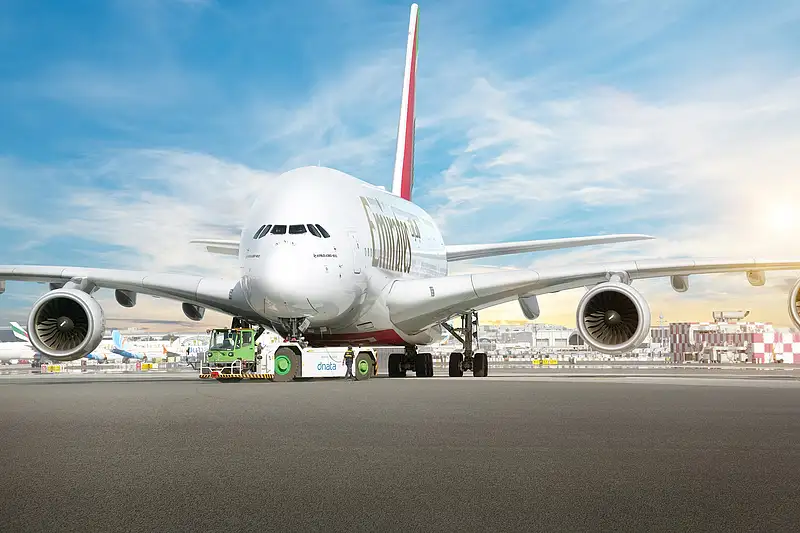
The group announced Dh66.2 billion revenue despite regional challenges and rising fuel costs in the first half of the 2026-27 financial year
- PUBLISHED: Thu 5 Nov 2026, 9:56 AM UPDATED: Thu 5 Nov 2026, 11:29 AM


The Emirates Group remained profitable in the first half of the 2026-27 financial year despite regional challenges and rising fuel costs, highlighting the resilience of its business model and operational efficiency.
After accounting for income tax charges, its profit after tax was Dh3.6 billion, down 66 per cent from last year.
Recommended For You



Sheikh Ahmed bin Saeed Al Maktoum, Chairman and Chief Executive, Emirates Airline & Group, credited the performance to the efforts of its teams and their ability to navigate challenging operating conditions.
Stay up to date with the latest news. Follow KT on WhatsApp Channels.
“I would like to commend the exceptional efforts exerted by the government of the UAE and its ongoing support, which played a pivotal role in overcoming challenges and ensuring the continuity of operations in the aviation sector,” he said.
At Emirates and dnata, he said, the group continues to invest with a long-term vision, grounded in excellence in customer experience, developing future capabilities, and enhancing our readiness to seize growth opportunities, thereby ensuring the sustainability of our success and solidifying our position in the global aviation industry.
Demanding 6 months
Since the outbreak of the regional war involving the US-Israel and Iran, the GCC aviation was disrupted through airspace restrictions, flight diversions and higher operating costs.
Airlines faced longer routes, increased fuel consumption, higher insurance premiums and passenger uncertainty.
“It has been a demanding six months, and once again our business model and our people stood up to the test. Against unprecedented regional challenges and high fuel prices, the Group has delivered a profit before tax of Dh4.1 billion. Customer demand held firm and our cargo operations made a strong contribution, keeping revenue and cash levels healthy even as global jet fuel prices doubled against the same period last year, impacting our costs and profitability," said Sheikh Ahmed.

“I’d like to thank the UAE government for its decisive response and its co-ordination of all stakeholders to enable the safe resumption of air transport in the aftermath of military activity across the Gulf region. The government’s measures have also led to the easing of travel advisories to and through the UAE. This has allowed us to restore our operations with confidence and to keep serving our customers and communities, he said in a statement on Thursday.
Revenue down 12%
Emirates chief stressed that the group didn't pause its investments, continued to expand its fleet, and develop capabilities.
The Group achieved an Ebitda of Dh12.5 billion, 41 per cent lower than the Dh21.1 billion reported for the same period last year.
Group revenue was Dh66.2 billion for the first six months of 2026-27, down 12 per cent from Dh75.4 billion (US$ 20.6 billion) last year.
The Group closed the first half year of 2026-27 with a cash position of Dh54.1 billion on September 30, 2026, compared to Dh59.6 billion on March 31, 2026.
The group said it has been able to tap on its own strong cash reserves to support business needs, including pre-delivery payments for aircraft and servicing existing debt obligations. The Group also paid the remaining Dh2 billion in dividend to its owner, the Investment Corporation of Dubai (ICD), of the Dh3.5 billion declared for the financial year 2025-26.
Saj Ahmad, chief analyst at the London-based StrategicAero Research, said despite the US-Iran conflict, and the expected disruption, that Emirates managed to stay in the black and remain profitable is a remarkable testament to the airlines ability to navigate challenges that are outside of its control.
“While hammered by increased fuel costs, probably not helped by the ageing A380 fleet and lack of fuel efficient 777Xs, Emirates decline of profits by 66 per cent was not a surprise. As the world’s fourth biggest cargo airline, Emirates growth here was a welcome boost to their bottom line and going forward, there is hope that a cessation to the regional war will allow the airline to get back to 100 percent of its network,” he added.
Employees shrink
Sheikh Ahmed said the group entered the second half of 2026-27 with “measured optimism”.
He added that the group will keep a close watch on costs and geopolitical developments.
“We’ve weathered challenges before, and with our strong cash position and solid foundation built up over the years, the Group is well-placed to navigate the headwinds of volatility and high fuel prices.”
Saj Ahmad said with Ramadan just over 12 weeks away, it’ll be a quieter second half for the airline, but the omens for 2027 look to be very good.
"The long awaited 777X draws closer to certification and the first examples should be with Emirates in Q2 2027 while additional A350-900 deliveries bring additional fuel efficiency into the fleet mix, helping to combat the fuel bill – the single biggest headache for all airlines.
"Coupled with next years Dubai Air Show, theres a lot to be positive about – and if the regional war can conclude, normalcy will further augment additional traffic to and through Dubai International Airport and that should also bring about a decline in fuel bills too – and ostensibly, better fares for passengers too," he added.
Compared to March 31, 2026, the Emirates Group’s employee base dropped by 2 per cent to 128,237 on September 30, 2026.
Emirates airline profit plunges 66%
The first six months of 2026-27 brought significant challenges to Emirates’ operations as intermittent airspace restrictions and closures across the region tested the airline’s operational agility, while government travel advisories reshaped consumer choices and travel flows.
Emirates profit before tax for the first half of 2026-27 reached Dh3.7 billion, compared to its record performance of Dh11.4 billion for the same period last year.
Emirates airline’s profit after tax fell 66 per cent to Dh3.3 billion.
Emirates revenue, including other operating income, of Dh56.9 billion was down 13 per cent compared with Dh65.6 billion last year. The airline’s revenue performance can be attributed to enduring travel demand across its markets, particularly for Emirates’ premium cabins, and a solid contribution from the airline’s cargo business.
Emirates’ operating costs (including fuel) dropped by 2 per cent in line with operations. Despite a 12 per cent reduction in fuel uplift due to lower operations, Emirates’ fuel costs, before hedging gains, rose by 60 per cent compared with the previous half-year.
Gains of Dh7.1 billion from its fuel price risk management strategy significantly offset the impact of higher fuel prices, reducing the net fuel cost increase to 13 per cent. Fuel remains the largest component of the airline’s operating cost at 34 per cent.
Emirates’ EBITDA of Dh11.5 billion remained healthy, down 41 per cent compared to Dh19.7 billion (US$ 5.4 billion) for the same period last year.
At September 30, Emirates was operating 91 per cent of its pre-disruption network, with its passenger and cargo network spanning 150 airports in 78 countries and territories.
Between April 1 and September 30, Emirates expanded its inventory of Premium Economy seats and brought its latest cabin products to customers in even more markets, as it received delivery of 9 new A350 aircraft and completed the full cabin refurbishment of 12 aircraft (9 A380s, 3 Boeing 777s).
The airline’s Starlink installation programme also continued at pace, equipping 36 more aircraft with high-speed Wi-Fi in the sky during the first six months of the year, and bringing Emirates’ total Starlink-installed fleet to 57 aircraft as of September 30.
Overall capacity during the first six months of the year decreased by 10 per cent to 28.2 billion Available Tonne Kilometres (ATKM) due to a reduced flying schedule. Capacity measured in Available Seat Kilometres (ASKM), decreased by 17%, whilst passenger traffic carried measured in Revenue Passenger Kilometres (RPKM) was down by 25% with an average Passenger Seat Factor of 72.0 per cent, compared with 79.5 per cent during the same period last year. Emirates carried 21.8 million passengers between April 1 and September 30, 2026, down 22 per cent from the same period last year.
Emirates SkyCargo and dnata
Emirates SkyCargo transported 1.2 million tonnes in the first six months of the year, down by 1 per cent compared to the same period last year. However, cargo revenue increased by 52 per cent as the regional conflict reduced available airfreight capacity while concurrently pushing shippers to seek airfreight options due to marine transport disruptions.
In the first half of 2026-27, Emirates SkyCargo added capacity from 5 new Boeing 777 freighters delivered, and the deployment of its first passenger-to-freighter converted aircraft.
dnata’s revenue, including other operating income, reached Dh11 billion down by 7 per cent compared to Dh11.7 billion generated in the same period last year.
Overall profit before tax for dnata was Dh 410 million, down by 51 per cent from the same period last year. dnata’s profit after tax is Dh 309 million, down 56 per cent from last year.
Illustrating its operating performance, dnata’s EBITDA was Dh939 million, down 31 per cent from last year’s Dh 1.4 billion.
dnata’s airport operations remain the largest contributor to revenue with Dh5.4 billion, a 3 per cent decrease compared to the same period last year, as its growing global business offset the reduction of customer airline operations at its UAE hub during this period.
