 E-Paper
 Sign In


UAE to launch world's most advanced security and rescue training hub
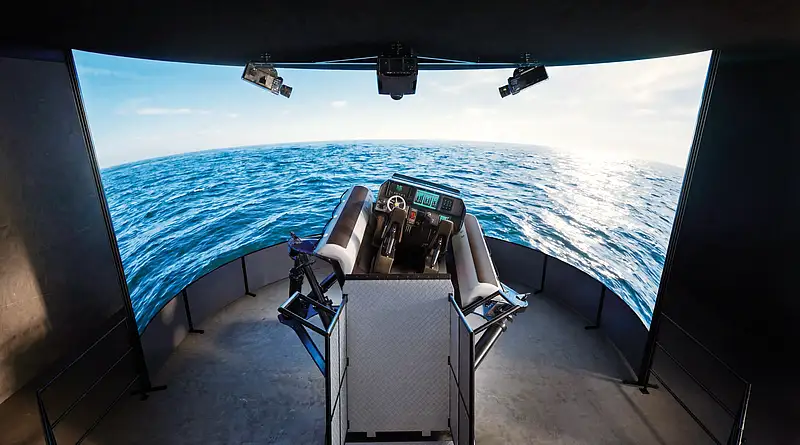
SRTC will position UAE as a global centre of excellence for security and rescue training
- PUBLISHED: Mon 7 Sept 2026, 8:00 AM


The Security and Rescue Training Centre (SRTC) is set to strengthen the UAE's standing as a leading global destination for specialised security and rescue training, while reshaping the country's emergency response, security and mission-critical training ecosystem, according to a senior executive behind the project.
Jamal Alkaf, CEO of Sahra Group, said the multi-million-dollar facility will train more than 4,500 personnel annually using advanced simulation technologies that are up to ten times more efficient and generate 99% fewer emissions than conventional live training exercises, which can cost as much as $10,000 per hour.
Recommended For You


"The launch of the Security and Rescue Training Centre represents a landmark milestone for the global safety and resilience sector, introducing capabilities that are unmatched anywhere in the world today. The centre's strategic vision for the coming decade is centred on continuous innovation, the integration of advanced technologies, and a carefully planned international expansion programme," Alkaf told BTR during an interview.
Developed by Sahra Group in partnership with AMST Group, the global leader in aircrew training and simulation solutions, the state-of-the-art centre is scheduled to open in 2028. The first facility of its kind in the UAE, SRTC will deliver world-class emergency response training for professionals across the Middle East and beyond, featuring advanced helicopter and water rescue simulators designed to prepare teams for the complexities and challenges of real-life rescue operations.
Transforming Emergency Response
Alkaf said the centre is far more than a specialised facility; it is a transformative driver for the UAE’s emergency response, security, and mission-critical training landscape.
“At its core, the centre serves as a powerful engine for our national objectives. By localising advanced training capabilities that previously required traveling abroad, we are capturing and retaining world-class expertise right here inside the country. This directly fuels the development of highly skilled local talent, creates prestigious, high-tech employment opportunities, and builds an enduring foundation for workforce sustainability among our frontline responders. In doing so, we are seamlessly aligning our operations with the UAE's long-term human capital and sustainability strategies,” he said.

On a broader scale, he said the centre significantly elevates the UAE's geopolitical and economic footprint. “By introducing an unparalleled level of simulation-based instruction, we are actively drawing regional and international organisations to train within our borders. This influx of global defence, public safety, and commercial entities not only validates our advanced capabilities, but it firmly cements the UAE’s position as the definitive global hub for specialised security and rescue operations.
“We are essentially shifting the paradigm from the UAE being an importer of specialised training to a world-class exporter of operational excellence, ensuring our nation dictates the future standards of critical emergency response,” he said.
A Landmark Development
Alkaf said the launch of the SRTC is a landmark development for the global safety and resilience sector because it introduces a capability that simply does not exist anywhere else in the world today.
“The SRTC will be the only commercial capability globally to combine high-fidelity simulation environments for Helicopter Emergency Response and OPITO Training under a single roof, providing a full-service offering for all major public safety and tactical disciplines,” he said.
Historically, he said elite teams had to split their training across separate, geographically disconnected facilities to master land, air, and sea tactics.
“By bridging this gap, we have built a fully synchronised, 24/7 environment where a crew can transition seamlessly from an advanced helicopter hoist simulation, fast roping, or rappelling towers, directly into high-speed boat operations, maritime vessel simulators, or helicopter underwater egress training (HUET) in a dedicated rescue pool.
“By housing helicopter simulators suspended on cranes that literally fly inside the facility, we can accurately mimic real-world rescue and mission scenarios. What truly makes this a paradigm shift for global resilience is how it solves the massive friction points of cost, risk, and asset availability inherent to live tactical preparation.”
Live Helicopter Training
Live helicopter training is astronomically expensive, often costing up to $10,000 per hour, and heavily ties up physical aircraft that should otherwise be deployed on active duty.
“Our facility eliminates these constraints, freeing up real, physical assets for operational use while completing training programs at a fraction of the cost.”
Furthermore, our simulation-driven approach allows for realistic training in high-risk scenarios, such as medical emergency response, rescues in natural disasters, and complex special forces and counter-terrorism operations, that cannot be safely or efficiently replicated in live training. To achieve this, the centre will be supported by cutting-edge AI paired with advanced spatial sound design and high-fidelity 3D visual imagery. This immersive digital environment allows us to instantly drop trainees into hyper-realistic, dynamic landscapes — ranging from unforgiving desert terrains to active, high-intensity war zones.
“By utilising AMST’s high-fidelity systems, we subject teams to intense environmental challenges including severe rotor downwash, pitch darkness, and extreme noise levels. This ensures personnel are fully conditioned for the psychological and physical pressures of life-saving missions in a perfectly controlled, entirely repeatable, and zero-risk environment.
“Ultimately, while achieving these unmatched readiness levels, we are also cutting carbon emissions per training hour by over 99 percent compared to live flights, proving that the ultimate standard in mission readiness no longer requires a choice between operational excellence and environmental sustainability.”
SRTC — A Regional Hub for Innovation
Alkaf said the centre’s collaboration with AMST is a strategic cornerstone that instantly elevates the SRTC into a premier regional hub for innovation, simulation-based training, and operational excellence. “We are not simply opening a facility; we are introducing an exclusive, highly sophisticated training ecosystem to the Middle East.”
The training concept implemented here is a proprietary solution born from a decade-long partnership between AMST and the Bavarian Mountain Rescue (Bergwacht). While Bergwacht originated this unique mission-based methodology, AMST is the sole global partner authorized to design and commercialise these centres worldwide. By bringing this exclusive concept, and more, to the UAE, bolstered by AMST's four decades of expertise in aircrew simulation and human factors, we are bypassing generations of trial and error to establish a world-class capability from day one.
Concretely, this manifests as the world’s only commercial facility to combine high-fidelity Helicopter Emergency Response and OPITO training, the SRTC provides a full-service, 24/7 offering across all disciplines, including medical emergency response, disaster relief, special forces, and counter-terrorism operations. By housing unique, crane-suspended helicopter simulators that 'fly' inside the facility, alongside fast vessel simulators, a dedicated rescue pool, HUET systems, and fast-roping towers, the centre replicates high-risk scenarios that are impossible to safely conduct in live environments. This advanced approach subjects teams to realistic environmental challenges like darkness, rotor downwash, and high noise levels to ensure full mission readiness.
“This centre benefits directly from a strong foundation of global operational experience. AMST has successfully delivered similar cutting-edge simulation centre’s for elite civil and military operators across Europe and Asia, and the real-world insights gathered from those international projects have been directly integrated into our UAE infrastructure.”
However, what truly cements our position as a sustainable regional hub is the depth of our commitment to capability transfer. This partnership goes far beyond a standard technology acquisition; AMST is actively transferring operational know-how and empowering our local instructors to fully master, maximize, and continuously evolve this training methodology.
“By fusing AMST’s world-leading simulation technology with Sahra Group's regional vision, we are building a future-proof centre of excellence that will redefine emergency response and security training across the region...and across the globe,” he said.
Advantages of Simulation-driven Training
Alkaf said the shift from traditional training methods to advanced, simulation-driven training represents a quantum leap forward in how we prepare team members for high-consequence operations. When you break it down across realism, safety, cost, and sustainability, the advantages are absolute.
“In terms of realism and safety, traditional live-aircraft training inherently forces a compromise. You cannot safely practice catastrophic engine failures, severe tail-rotor malfunctions, or blind, zero-visibility rescues in a real multi-million-dollar helicopter over open water. Simulation deletes that risk entirely.”
“Using AMST's high-fidelity systems, we create a hyper-realistic, high-stress environment, complete with authentic rotor downwash, driving rain, pitch darkness, and overwhelming noise levels, where crews can push themselves to the absolute limit. We can simulate the most complex, high-risk scenarios repeatedly and safely, allowing operators to make mistakes, learn, and build muscle memory in a zero-risk environment where a mistake costs nothing rather than human lives or critical assets.”
From a cost-efficiency and environmental sustainability standpoint, the contrast is staggering. Operating a live utility or military helicopter for tactical training is astronomically expensive, routinely costing between $5,000 and $10,000 per flight hour when you factor in fuel, specialised maintenance, depreciation, and support crews. Advanced simulation reduces those direct operational costs by up to 90%, allowing agencies to achieve ten times the training volume for the same budget.
“Crucially, this financial efficiency goes hand-in-hand with our environmental responsibilities. Replacing heavy live flight hours with electricity-powered, ultra-high-fidelity simulation slashes carbon emissions per training hour by over 99%. We are proving to the global security sector that achieving the highest level of mission readiness no longer requires a choice between fiscal responsibility, operational excellence, and environmental sustainability.”
Immersive Learning Environments
Elaborating on the range of industries and professionals that will benefit from the centre’s specialised training programmes and immersive learning environments, Alkaf said the SRTC is designed to be a critical national and regional asset, built to train more than 4,500 personnel annually across a highly diverse ecosystem of public safety, defense, and commercial sectors.
“Our specialised training programmes and immersive learning environments are engineered precisely for those on the front lines of crisis management. In the public sector, this includes elite personnel from the Police, Coast Guard, Civil Defence, Fire Services, and Medical Services, alongside the Army, Navy, and Special Forces. Beyond defence and first responders, the centre will serve commercial operators from high-consequence industries such as tourism, oil, gas, and energy, where rigorous safety and crisis-response protocols are foundational to daily operations.
To support these diverse industries sustainably, he said the center accommodates both initial qualification training and recurrent refresher courses. This ensures that operational personnel do not just learn a skill once but remain continuously sharp and aligned with the latest global technological and methodological standards throughout their careers.
“Ultimately, our primary focus is on mission-critical emergency response environments, specifically helicopter emergency medical services, complex rescue hoist operations, maritime rescues, large-scale disaster response, and high-risk security operations. These are intense, volatile environments where seconds literally matter and mistakes cost lives, and our immersive setups ensure these professionals are fully prepared before they ever face a real-world crisis.”
Aligning with National Priorities
Alkaf said the SRTC is fundamentally aligned with the UAE’s national vision to cultivate a sustainable, highly skilled local workforce and pioneer future-ready capabilities.
“Our ultimate objective is clear: we are positioning the UAE to become the number one global hub for specialised mission training. In direct support of the government's Emiratisation directives, our facility is not merely introducing advanced hardware; it is creating an incubator for elite, high-tier technical careers for UAE nationals.”
“Through a comprehensive capability transfer strategy with AMST, our long-term mandate is that the centre's elite training staff will be entirely Emirati. By transferring proprietary operational knowledge directly to local talent, we are ensuring that UAE nationals will stand as the primary instructors, engineers, and simulator operators leading a critical piece of national security infrastructure, certified to the highest global standards,” he said.
Sahra Group’s Strategic Ambitions
Alkaf said Sahra Group has envisioned the SRTC not merely as a single facility, but as a dynamic, highly scalable platform designed to pioneer a new global standard.
“Our strategic roadmap for the centre over the next decade is built around continuous innovation, technological integration, and deliberate international expansion,” he said.
“As the world’s first commercial capability to fuse full-spectrum helicopter emergency response with OPITO-certified training, the underlying infrastructure we are deploying in the UAE is designed from day one to grow. By embedding cutting-edge hardware including helicopter hoist systems, fast roping and rappelling towers, Helicopter Underwater Egress Trainers (HUET), and maritime vessel simulators to enable safe, realistic training for high-risk scenarios, such as underwater escape for tactical Army training — we ensure that we have the built-in agility to rapidly expand our training portfolios, integrate next-generation simulation technologies as they emerge, and forge new, high-level international partnerships seamlessly over time.”
Our ultimate ambition is to establish the centre as the definitive global benchmark for operational readiness. While our immediate priority is to ensure the absolute technical, operational, and commercial success of the flagship UAE hub, the entire business model has been explicitly engineered to be replicable, Alkaf said.
“The blueprint we are perfecting here, combining AMST’s advanced simulation systems with our commercial model, is highly mobile. Over the next decade, we envision exporting this proven framework into other critical international markets that lack centralized, high-fidelity mission training.
“By leveraging the data, operational insights, and success of our flagship UAE location, Sahra Group will be uniquely positioned to develop similar state-of-the-art centers worldwide, transforming how international militaries, first responders, and high-consequence industries prepare for life-saving missions,” Alkaf concluded.
Who Can Train There
The centre is for both government and commercial teams, including:
• Police and coast guard
• Military and special forces
• Fire and civil defense services
• Helicopter Emergency Medical Services
• Commercial workers such as oil and gas or tourism
