 E-Paper
 Sign In


UAE poised for swift economic rebound despite challenging environment
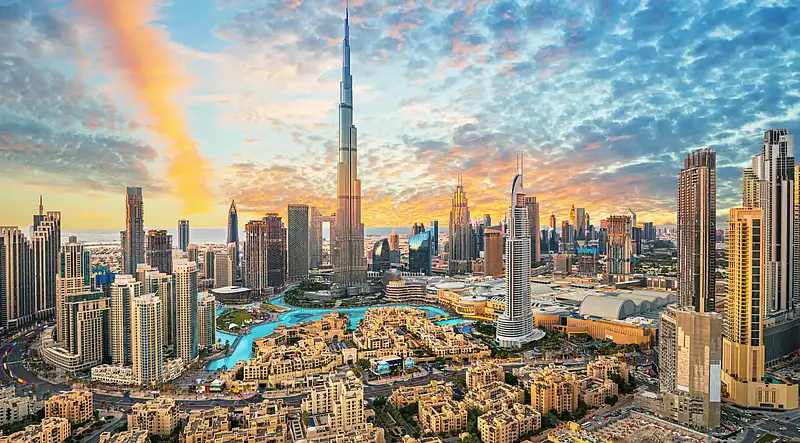
Strong fundamentals, diversified growth drivers and policy support are expected to help the UAE recover more quickly than its regional peers despite ongoing geopolitical and trade disruptions
- PUBLISHED: Tue 22 Sept 2026, 9:00 AM


The UAE economy is expected to recover more quickly from the current wave of regional disruptions than its Gulf counterparts, supported by its diversified growth model, strong policy framework and robust institutional foundations, according to experts.
While Gulf economies are projected to experience a sharper-than-anticipated slowdown in 2026 amid geopolitical tensions, elevated energy prices and disruptions to trade and supply chains, the UAE is widely regarded as being better positioned to absorb these shocks and return to stronger growth in 2027.
Recommended For You




Regional economies continue to operate in a challenging environment as shipping movements through the Strait of Hormuz and Bab Al Mandab remain constrained. Repeated disruptions to maritime trade routes, renewed hostilities and pipeline outages have pushed Brent crude prices back above $100 a barrel in September after reaching a 2026 peak of $126.41 in April. Analysts attribute the UAE's resilience to a combination of visionary leadership, consistent economic policies, successful diversification efforts, reliable supply chains and sustained investment in public safety, community wellbeing and critical infrastructure.
"The UAE's economic outlook continues to benefit from diversified growth drivers, proactive policy measures and substantial fiscal buffers, alongside gains in the capital markets, a resilient banking sector and continued expansion in the insurance industry," experts said.
Industry specialists noted that the country's diversification strategy, combined with ongoing support for businesses, investors and consumers, is expected to enhance its resilience and adaptability despite an uncertain external environment.

The Central Bank of the UAE expects economic growth to moderate to 1.7% in 2026 as regional developments weigh on trade, shipping, tourism and private-sector confidence. However, the regulator forecasts a strong rebound to 9.8% in 2027. In its June 2026 Quarterly Economic Report, the central bank said the slowdown is likely to be temporary, with stronger growth next year supported by higher oil production, continued expansion in non-oil sectors, sustained government spending and ongoing infrastructure projects.
A senior analyst said current growth projections are based on expectations that geopolitical tensions will ease and shipping activity through the Strait of Hormuz and Bab Al Mandab will gradually return to normal over the next six to 12 months. "If that happens, we would expect a significant rebound in both the oil and non-oil segments of GCC economies," the analyst said.
Tourism and Trade to Drive Recovery
Tourism, transport, trade and real estate recorded slower activity during the first half of the year as heightened geopolitical tensions affected visitor flows, hospitality demand and logistics operations. However, experts believe that a normalisation of tourism and trade activity, combined with continued strength in the real estate sector, will help restore economic momentum in 2027 alongside increased hydrocarbon production.
Economists also highlighted the role of the UAE's Comprehensive Economic Partnership Agreements (CEPAs), which have expanded market access for exporters and supported cargo diversification in recent years. In addition, the National Programme to Strengthen Supply Chain Resilience is expected to further enhance trade continuity despite challenging regional conditions.
Business leaders and industry specialists identified stable economic policies, a sound financial system, rising investment in technology and continued spending on human capital as key drivers of sustainable non-oil growth. They noted that the UAE's economic agenda remains firmly focused on diversification, productivity enhancement and deeper integration into global trade networks.
Strong Fundamentals
In July, IMF Mission Chief for the UAE, Said Bakhache, said the country's strong economic fundamentals, ample policy buffers, advanced preparedness and swift policy response had helped contain the impact of the recent US-Iran conflict-related shock. "Timely and well-targeted support measures have helped preserve financial stability, safeguard essential supply chains, support affected sectors and households, and sustain market confidence, underscoring the UAE's institutional capacity to navigate a major external shock," Bakhache said.
The IMF also noted that resilient trade, aviation and logistics sectors, together with robust domestic demand, continue to support economic growth. The fund expects the UAE to maintain a fiscal surplus, underpinned by higher oil prices, prudent budgeting and relatively low public debt levels.
Despite short-term pressures stemming from regional uncertainty, economists remain confident that the UAE's diversified economic base, strong institutions and strategic planning will enable it to recover faster than its regional peers and reinforce its position as one of the Middle East's most resilient economies.
The IMF expects overall economic activity in 2026 to remain slightly below 2025 levels due to softer non-hydrocarbon growth and disruptions to trade and tourism. However, it anticipates a rebound in the second half of the year as exports recover and regional conditions gradually normalise. Growth is expected to accelerate further in 2027, driven by higher hydrocarbon production and continued expansion across the non-oil economy.
Bolstering Domestic Demand
Dr Monica Malik (PhD), Chief Economist at Abu Dhabi Commercial Bank, said the UAE businesses are adapting, and the population has remained resilient despite the challenging environment in the region.
“Various government support measures have been positive. We see the UAE's economy rebounding strongly in 2027, with strong expansion in both the oil and non-oil fronts,” Dr Malik told BTR.
She said the UAE has already ramped up oil production above pre-February levels and will likely see further increases in 2027.
On the non-oil front, the ADCB Chief Economist said sectors such as tourism, transport, logistics, and retail will benefit from any regional normalisation.
“Key areas that we also see bolstering domestic demand will be government spending and the investment programme. The favourable business environment, infrastructure, and focus on economic diversification make us positive on the medium-term outlook,” she said.
Saad Maniar, CEO of Baker Tilly UAE, also echoed similar views and said the UAE economy has continued to demonstrate resilience despite heightened regional tensions and the prolonged conflict involving the US and Iran.
“The UAE’s resilience reflects strong financial buffers, stable policies, sound banks, reliable supply chains and sustained investment in public safety, community wellbeing and essential infrastructure. Together, these measures reassure investors that the leadership can manage shocks decisively,” Maniar told BTR.
He said the UAE should continue to address the perception of insecurity through clear communication, visible preparedness, demonstrable actions and continued social inclusion. “This will strengthen confidence and attract a broader mix of residents, investors, capital and skills from diverse geographies.”
Maniar said the UAE's diversification efforts across sectors such as tourism, technology, renewable energy, and financial services helped shield the economy from geopolitical shocks in the region.
“The UAE has wisely avoided putting all its eggs in one basket. Tourism, technology, renewable energy, finance, logistics and trade provide alternative sources of growth when one sector or market is disrupted. This diversity also attracts different forms of capital and talent. The next phase should deepen local innovation, advanced manufacturing, food security and energy security. This will reduce external dependence, create high-value employment and make economic resilience even more broad-based,” he said.
To a question he said strong fiscal policies, infrastructure investments, and the UAE's position as a global business hub are some of the key factors that helped the emirate in sustaining economic growth during a challenging regional environment.
“Strong fiscal management, low public debt, substantial reserves and continued investment in defence, ports, airports and digital networks have protected confidence and kept trade and business moving. These strengths reinforce the UAE’s role as a dependable hub linking Asia, Africa and Europe,” he said.
The UAE should continue balancing security spending with commercially productive infrastructure, while simplifying regulation and supporting private-sector investment. This will convert resilience into sustainable growth, according to Maniar.
About the lessons can businesses and investors draw from the UAE's economic performance over the past six months, he said the key lesson is to prepare for rainy days before they arrive. “Businesses need liquidity, diversified suppliers and markets, tested continuity plans and disciplined monitoring of geopolitical exposure. As tensions ease, opportunities should expand in logistics, tourism, finance, technology, defence, renewable energy and advisory services,” he said.
“Investors and businesses should act early, focus on strong fundamentals and anticipate regulatory change, positioning themselves to capture opportunities while helping clients navigate a more sophisticated compliance environment,” Maniar said.
CEPAs Strengthening Trade Resilience
Economists say the UAE's network of Comprehensive Economic Partnership Agreements (CEPAs) has emerged as one of the country's most important economic shock absorbers, helping businesses diversify export markets and reduce dependence on traditional trade corridors.
Since launching its CEPA programme in 2021, the UAE has signed agreements with key trading partners across Asia, the Middle East, Africa and Latin America. The agreements have expanded opportunities for exporters in sectors such as manufacturing, food processing, pharmaceuticals, logistics, renewable energy, technology and financial services.
Analysts note that the strategic value of CEPAs has become even more evident during periods of geopolitical uncertainty and shipping disruptions. As traditional trade routes through the Strait of Hormuz and Bab Al Mandab face periodic challenges, UAE exporters have benefited from wider market access and a broader range of trading partners, reducing concentration risks and strengthening supply-chain resilience.
"CEPAs are no longer just trade agreements. They have become strategic economic-security tools that diversify export destinations, strengthen supply chains, attract investment and reduce vulnerability to regional disruptions," says an analyst.
The agreements have also reinforced the UAE's position as a global re-export and logistics hub. By lowering trade barriers and streamlining customs procedures, CEPAs support cargo diversification through UAE ports and airports, helping maintain trade flows even when regional transport networks come under pressure.
Unlike conventional free trade agreements that focus primarily on tariff reductions, CEPAs cover a broader range of areas including services, digital trade, investment protection, government procurement, intellectual property and customs facilitation. This enables UAE companies to access new markets more efficiently while attracting greater foreign direct investment.
Industry specialists say the CEPA programme is closely aligned with the country's long-term economic diversification agenda. Greater integration with high-growth economies is expected to boost non-oil trade, stimulate industrial development, encourage innovation and create new opportunities for UAE-based businesses.
Combined with the National Programme to Strengthen Supply Chain Resilience, CEPAs are helping build a more flexible and globally connected trading ecosystem. Experts believe this will play a significant role in supporting economic growth when regional conditions normalise, particularly in sectors such as logistics, aviation, manufacturing, tourism and professional services.
