 E-Paper
 Sign In





UAE completes a missing link in its transport network Etihad Rail ushers in a new era of connectivity
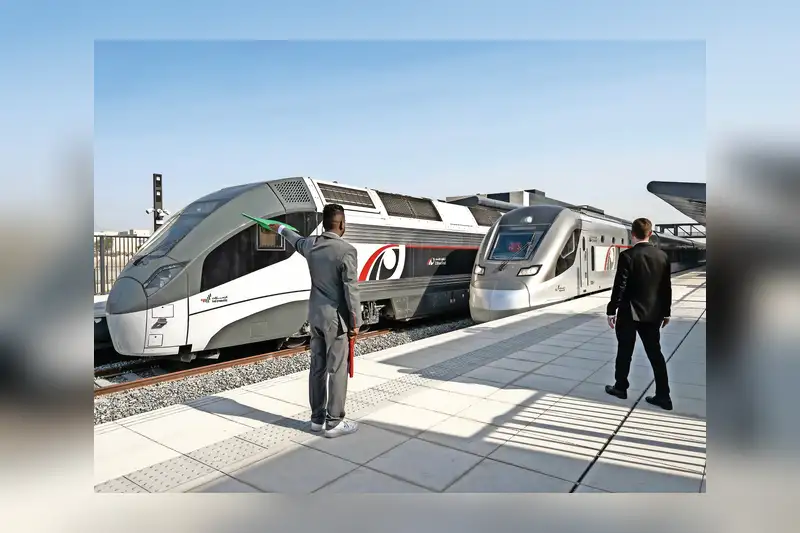
From world-class aviation and global seaports to urban Metro systems and a national passenger railway, the UAE is bringing its transport ambitions together to connect people, businesses and destinations
- PUBLISHED: Tue 27 Oct 2026, 7:30 AM


For decades, the UAE has built its reputation on connecting the world. Its airports link continents, its airlines carry international passengers, and its ports support global trade. Within its cities, Metro systems, trams, buses and highways provide extensive transport connections. One important link remained missing: a national passenger railway connecting the Emirates themselves.
That gap is now beginning to close. On September 30, 2026, Etihad Rail launched passenger services connecting Abu Dhabi and Dubai, following the introduction of services between Abu Dhabi and Fujairah on 30 June.
Recommended For You





The expansion adds intercity passenger rail to the UAE’s established aviation, maritime and urban transport infrastructure, marking a significant step towards a more integrated national network.
From global aviation to a national railway
The UAE’s geographical position between Europe, Asia and Africa has helped establish it as an international centre for passengers, cargo and commerce.
Dubai International Airport and Zayed International Airport in Abu Dhabi connect the country to major international markets, while Emirates and Etihad Airways have strengthened its global aviation presence. Ports such as Jebel Ali support shipping, logistics and distribution, linking the UAE with international supply chains.
Within cities, Dubai Metro offers an alternative to road travel, supported by trams, buses and other mobility services. Abu Dhabi continues to develop its public transport network to serve expanding urban areas.
However, travelling between the Emirates has traditionally depended heavily on private cars, taxis and coaches.
Etihad Rail introduces another option. Passengers can now travel by train between selected destinations, with the potential for more predictable journey times and connections to other transport services. This is the missing link in the UAE’s transport ambitions: a national passenger railway complementing the infrastructure that already connects the country to the rest of the world.
Etihad Rail brings Abu Dhabi and Dubai closer
The Abu Dhabi–Dubai connection is particularly significant because the two cities are the UAE’s principal economic centres.
The service links Abu Dhabi’s Mohammed Bin Zayed City station with Dubai’s Al Yalayis station, near Jumeirah Golf Estates. The journey takes approximately 57 minutes, offering an alternative to travelling between the two Emirates by car.
The initial timetable includes 10 daily passenger services between Abu Dhabi and Dubai, alongside six daily services between Abu Dhabi and Fujairah. Trains can reach speeds of up to 200 kilometres per hour and accommodate as many as 400 passengers.

Fares between Abu Dhabi and Dubai start at Dh39 for Comfort Class and Dh109 for Premium Class. Tickets are available through Etihad Rail’s official website and mobile application, as well as ticket vending machines at stations.
The railway’s success will depend on more than speed. Frequency, affordability, reliability and convenient station locations will all influence whether travellers choose rail over their usual mode of transport.
The early response has been encouraging. On October 2, shortly after the Dubai connection opened, additional services were announced for the weekend of October 3 and 4. More than 1,000 additional seats were released for each day across three added services.
For commuters, the railway provides another way to plan journeys between Emirates. Families and leisure travellers gain an alternative to driving, while businesses have another mobility option between two closely connected economic centres.
Connecting the train to the Metro
A national railway becomes more useful when passengers can reach their final destinations without arranging an entirely separate journey.
Dubai’s Etihad Rail station has been designed to connect with the emirate’s wider public transport system. A pedestrian bridge links Al Yalayis station with Jumeirah Golf Estates Metro Station on the Red Line, allowing passengers to transfer between intercity rail and urban Metro services.
Announced integration arrangements involving Dubai’s Nol system also aim to simplify journeys across Etihad Rail and public transport, including the Metro, tram and buses.
This matters because a journey does not begin when a passenger boards a train or end when it arrives. Travellers must also reach the station, transfer between transport modes and complete the final part of their journey.
Convenient connections can make rail more practical for residents travelling between residential communities and business districts, as well as visitors unfamiliar with local roads.
Dubai’s planned Metro Gold Line could strengthen this integration further. Approved in April 2026, the Dh34 billion project is planned as a 42-kilometre underground line with 18 stations. It is intended to connect with the existing Red and Green lines and integrate with Etihad Rail.
As these projects progress, the relationship between national and urban rail could become increasingly important in shaping how people travel across the UAE.
A national network extending beyond the main cities
Etihad Rail’s ambitions extend well beyond Abu Dhabi and Dubai. The passenger network is planned to connect 11 cities and regions through a phased rollout, reaching residential communities, tourism destinations and economic centres.
Passenger services between Abu Dhabi and Fujairah began their introductory operational phase on June 30, 2026. Dubai and Al Dhaid followed on 30 September, while additional destinations are scheduled to join the network.
According to the announced rollout schedule, the next stages are planned as follows:
November 30, 2026: Madinat Zayed and Liwa.
December 30, 2026: Additional Al Dhafra destinations, including Al Sila, Al Dhannah and Al Mirfa.
March 30, 2027: University City in Sharjah.
These dates reflect the announced schedule and remain subject to operational developments.
The planned stations will extend the railway’s geographical reach. Al Sila, in the west, occupies a strategic location near the UAE’s border with Saudi Arabia. Stations serving Al Dhannah, Al Mirfa, Madinat Zayed and Liwa are intended to improve access to communities and destinations beyond Abu Dhabi’s main urban area.
Further east, Fujairah provides access to the Gulf of Oman coastline, while Al Dhaid and the planned University City station extend the network into Sharjah.
This wider reach is important because national connectivity should not be limited to the busiest city-to-city routes. Rail access could improve connections to employment, education, tourism and other services while creating opportunities for regional development. As the network expands, its value will depend on how effectively services connect with surrounding communities and local transport.
Aviation, shipping and rail: Three pillars of connectivity
The UAE’s transport ambitions rest on three complementary pillars: aviation, shipping and rail. Each serves a distinct purpose, but together they strengthen the country’s ability to connect people, goods, businesses and destinations.
Aviation connects the UAE to the world: Its international airports and airlines make the country a major gateway between Europe, Asia, Africa and beyond. Emirates and Etihad Airways bring tourists, investors and business travellers into the country, creating opportunities for onward journeys.
Shipping connects the UAE to global commerce: Ports such as Jebel Ali are important gateways for international trade, handling cargo that supports manufacturing, retail, construction and logistics. Connecting ports with inland transport helps move goods between maritime terminals, industrial facilities and distribution centres. Etihad Rail’s freight operations complement this infrastructure by providing another way to transport cargo across the country.
Rail connects the Emirates themselves: Passenger services introduce a national intercity transport option to a network historically dominated by road travel. As the system expands, it can connect population centres, residential communities and tourism destinations while linking with urban transport services.
The strength of these three pillars lies in how they work together. An international visitor could arrive by air, travel between Emirates by train and use the Metro or buses to reach local attractions. Goods arriving by ship could be transported onwards by freight rail to inland destinations.
Making these connections seamless will require reliable timetables, convenient transfers, clear passenger information and effective coordination between operators.
The UAE has invested in individual transport systems. The next challenge is to make them operate as complementary parts of a wider network, improving passenger journeys and supporting more efficient freight movements.
Air and rail: The next frontier for tourism
One of the most promising developments is the potential integration of passenger rail with international aviation.
In September 2026, Etihad Airways and Etihad Rail announced a memorandum of understanding to explore integrated air–rail journeys, tourism initiatives and improved connectivity. The partnership aims to make it easier for residents and international visitors to travel beyond their arrival airport and discover destinations across the country.
The agreement does not yet represent a fully operational nationwide air–rail booking system, but it points towards closer cooperation between airlines and railway services.
International visitors often organise their holidays around one principal destination because travelling between Emirates can involve additional driving, transfers and planning. A convenient railway could make multi-destination itineraries easier to organise.
Visitors could explore Abu Dhabi’s cultural attractions, continue to Dubai for shopping and entertainment, and travel onwards towards Fujairah for its coastline and mountain scenery. As further stations open, destinations in Sharjah and Al Dhafra could become easier to include in travel plans.
For airlines, hotels and tour operators, this creates opportunities for multi-city holiday packages, coordinated transfers and transport-inclusive bookings. Visitors could potentially combine flights, train journeys and local public transport within a single itinerary.
Domestic tourism could benefit too, giving residents another option for weekend breaks, family visits and leisure trips without relying entirely on their own vehicles.
Realising this potential will require convenient timetables, reliable connections and practical links to attractions. Nevertheless, Etihad Rail provides a foundation for closer cooperation between aviation, rail and the tourism industry, potentially spreading visitor spending across more destinations.
Freight rail strengthens the wider transport ecosystem
While passenger trains are attracting public attention in 2026, Etihad Rail’s freight operations remain central to the national network.
Freight services have been operating since 2023, supporting the movement of goods for industries including construction, manufacturing and logistics.
In January 2026, Etihad Rail reported that its freight operations had transported more than 6.5 million tonnes of sulphur, over 10 million tonnes of aggregates and 148,000 containers during 2025. The company also reported that rail transport of bulk materials and containers had eliminated more than 500,000 truck journeys in the Al Dhafra region.
These figures demonstrate the potential for rail to transport large volumes of freight efficiently. Where suitable cargo shifts from road to rail, the benefits can include fewer heavy-goods vehicle movements on particular routes, improved logistics efficiency and reduced transport emissions.
Passenger and freight services serve different purposes, but both contribute to connecting economic centres more effectively. Freight rail helps businesses move goods between ports, industrial areas and distribution facilities, while passenger rail connects people with jobs, education, family and leisure destinations.
Together, they give the national railway a wider role in supporting the UAE’s economic development.
Rail offers the UAE another option as its population grows and demand for travel increases. When trains carry substantial numbers of passengers, they can provide an alternative to individual road journeys. The environmental benefits depend on passenger numbers, the energy used to operate the trains and the journeys being replaced.
A reliable service could encourage some commuters to leave their cars at home, while giving visitors another way to explore the country. Businesses could also benefit from additional options for employee travel between locations.
However, the railway’s success will depend on more than infrastructure. Convenient station access, dependable schedules, competitive fares and connections to local destinations will be essential if rail is to become a regular choice rather than an occasional experience. Feeder buses, taxis, Metro connections, pedestrian access and coordinated passenger information will all influence whether travellers find the train genuinely convenient.
Etihad Rail should therefore be viewed as the beginning of another stage in the UAE’s transport development, with its full benefits emerging as the network expands and connections improve
Etihad Rail’s passenger launch marks an important milestone in the UAE’s transport development. Aviation connects the country to international markets, shipping supports global trade, and urban transport systems move people through its cities.
Passenger rail now adds another vital link between destinations across the Emirates. The Abu Dhabi–Dubai connection is an important step, while planned expansion into Al Dhafra and Sharjah will extend the network’s reach. Closer cooperation between airlines and rail operators could also create opportunities for tourism and multi-destination travel.
With Etihad Rail, the UAE is connecting the connections — bringing its cities, communities and economic centres closer together while strengthening its position as a global hub for travel, trade and tourism.
Key Highlights
New rail link: Etihad Rail launched Abu Dhabi–Dubai passenger services on September 30, 2026.
Faster journeys: The Abu Dhabi–Dubai trip takes approximately 57 minutes.
Daily services: The initial timetable includes 10 daily Abu Dhabi–Dubai services.
Integrated transport: Dubai’s Al Yalayis station connects to Jumeirah Golf Estates Metro Station via a pedestrian bridge.
Network expansion: Further stations are planned in Al Dhafra and Sharjah.
Three pillars: Aviation connects the UAE globally, shipping supports trade, and rail strengthens domestic connectivity.
Tourism opportunities: Air–rail cooperation could make multi-emirate holidays easier to plan.
Freight benefits: Rail supports cargo movement and can reduce reliance on road haulage.