 E-Paper
 Sign In





Renewable energy is powering the UAE
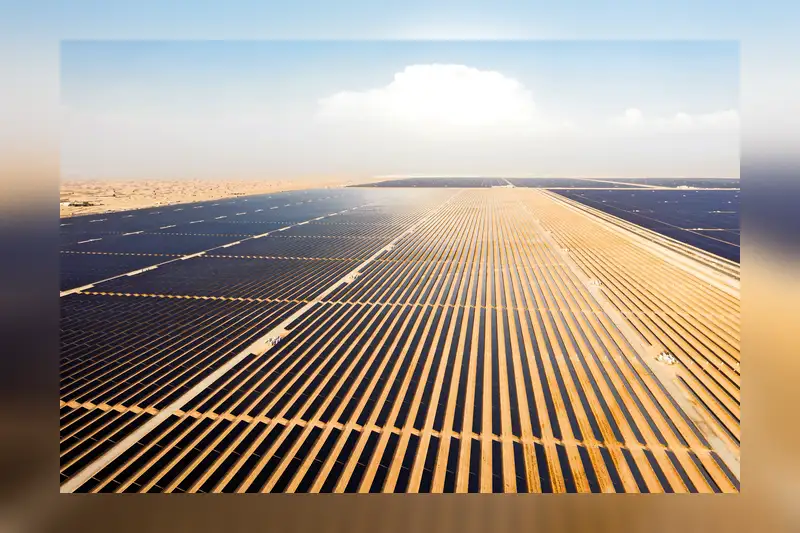
Large-scale solar and battery storage are reshaping renewable energy from an intermittent source into dependable, round-the-clock power
- PUBLISHED: Thu 29 Oct 2026, 7:30 AM


For much of the past decade, the UAE’s renewable-energy story has been written in megawatts. Bigger solar parks, lower tariffs and rapidly expanding capacity became the clearest markers of progress. That story is now entering a more sophisticated phase. The question is no longer simply how much solar power can be generated when the sun is shining, but how reliably that clean electricity can be delivered across the day and night as demand continues to rise.
Two projects now sit at the centre of that shift. In Abu Dhabi, Masdar and Emirates Water and Electricity Company are developing a 5.2GW solar photovoltaic plant paired with 19GWh of battery storage, designed to deliver 1GW of continuous clean power. In Dubai, the seventh phase of the Mohammed bin Rashid Al Maktoum Solar Park will add 2,000MW of photovoltaic capacity alongside a 1,400MW battery energy storage system capable of six hours of storage. Together, the developments show how storage is moving from the sidelines of the energy transition to the heart of it.
Recommended For You


The timing is important because the UAE’s electricity needs are becoming larger and more constant. Data centres, artificial intelligence, advanced manufacturing, cooling and electric mobility are all adding new loads to the system, while population and economic growth continue to push consumption higher. UAE Minister of Energy and Infrastructure Suhail Al Mazrouei told Khaleej Times this month that the region will need more electricity in the years ahead and that the shift towards cleaner energy will continue because “it makes sense”. He also stressed that resilience must now be considered across the whole electricity system, from generation to distribution.
That wider demand picture helps explain why battery storage has become so important. Solar generation is strongest during daylight hours, but electricity demand does not disappear when the sun goes down. Storage allows part of that daytime output to be held back and released later, giving utilities more flexibility and making renewable generation far more useful across the full 24-hour cycle.
From solar output to firm power
The Abu Dhabi project is the clearest example of how far that idea has advanced. Masdar reached financial close in July on the $6.1 billion development, securing a $5.1 billion financing package backed by 13 local and international banks. The project will combine 5.2GW of solar with 19GWh of battery storage and is designed to deliver a steady 1GW of clean electricity.
The scale of the financing is significant in its own right. Renewable energy has already demonstrated that it can compete on generation cost. The next commercial test is whether it can provide the reliability that utilities, industries and digital infrastructure require. A project of this size shows that storage-backed renewable power is moving firmly into mainstream infrastructure.
Masdar has framed the project in exactly those terms. Mazin Khan, Chief Financial Officer at Masdar, said the development would “deliver reliable, affordable, clean energy around the clock”, while the company described the financing as evidence of strong confidence in the project’s commercial fundamentals.

Ibraheem Al Mansouri, Director of Engineering at Masdar, said: “10 years from now, I hope people will remember this as the start of a new era. We proved renewable energy can deliver continuous, reliable power — supporting the growing demand driven by AI and digitalisation.”
Reflecting on Masdar’s broader journey, Al Mansouri added: “Being part of Masdar’s journey from the early days and continuing to deliver first-of-its-kind projects globally is inspiring. This project changes the mindset about renewable energy and proves what’s possible.”
Storage at scale
Dubai is taking the same idea forward through the Mohammed bin Rashid Al Maktoum Solar Park. The seventh phase will add 2,000MW of photovoltaic capacity and a 1,400MW battery system with six hours of storage, creating total storage capacity of 8,400MWh. Dewa says this will make it one of the world’s largest solar-plus-storage projects.
The scale of the solar park has also moved well beyond its original plan. Its current production capacity stands at 3,860MW, while Dewa expects the total to exceed 8,000MW by 2030, compared with the original target of 5,000MW. Clean energy currently represents around 21.5% of Dewa’s installed capacity and is expected to rise to more than 36% by the end of the decade.
The role of storage is what makes the latest phase especially important. Instead of feeding electricity into the grid only when solar output is strongest, part of that energy can be shifted into the evening, helping renewable generation follow demand more closely. For the grid, that means greater flexibility. For the wider clean-energy strategy, it means that every additional megawatt of solar can potentially become more useful.
Dewa has already been working with several forms of energy storage. The fourth phase of the solar park includes concentrated solar power with 5,907MWh of thermal storage and achieved 39 days of continuous CSP operation, while Dubai is also developing pumped-storage hydroelectric capacity in Hatta. The seventh phase takes that strategy further by adding battery storage at a much larger scale.
Investment momentum
The arrival of storage at this scale changes the economics of renewable-energy investment. Traditional solar projects are comparatively straightforward: build the generation asset, connect it to the grid and sell electricity when sunlight is available. Storage adds capital and complexity, but it also creates a more valuable product by making that electricity available at more useful times.
That is why the financing behind the Masdar project deserves as much attention as the technology. A $5.1 billion debt package from 13 banks is a strong indication that lenders are becoming more comfortable with the commercial case for very large battery-backed renewable projects.
Dubai’s experience points in the same direction. Successive phases of the Mohammed bin Rashid Al Maktoum Solar Park have been developed through the independent power producer model, bringing private capital and international expertise into major public infrastructure. The seventh phase will follow the same approach.
For investors, the appeal is becoming broader than owning a solar asset. Storage-backed power is increasingly tied to grid stability, energy security and the ability to serve sectors that need uninterrupted electricity.
That connection is particularly visible in the digital economy. Data centres run continuously and cannot simply reduce demand when solar output falls. The same is true of advanced manufacturing and many AI-related workloads. Masdar has already pointed to these sectors as drivers of rising electricity demand, while Al Mansouri told Khaleej Times that the Abu Dhabi project would help meet “the growing demand driven by AI and digitalisation”.
Built for resilience
The UAE’s clean-energy transition is therefore not being pursued as a simple replacement of one source with another. The wider objective is to increase clean-energy capacity while maintaining the reliability and resilience required by a fast-growing economy.
Recent comments from government officials have reinforced that point. Speaking at Middle East Energy, Al Mazrouei said: “This year could be seen as a year of challenge, but we see it as a year of resilience.” He added that diversification and resilience across the entire system, from generation to distribution, had become increasingly important.
Abdulaziz Al Obaidli, Director-General of Regulatory Affairs at the Abu Dhabi Department of Energy, has made the same point from a regulatory perspective. “Energy security is ultimately a question of system resiliency, not only production capacity. The entire system needs to be able to respond effectively as demand continues to grow.”
That observation is particularly relevant to the role of storage. The value of a battery is not simply that it stores electricity; it gives the wider system more options. Power generated earlier can be released later, sudden changes in supply can be managed more effectively, and clean-energy assets can contribute more consistently to system stability.
The need for that resilience will grow as electricity demand rises. DEWA has already reported strong demand growth, while Abu Dhabi is preparing for substantial long-term investment in generation, networks, storage and digital systems.
The first stage of the global renewable-energy transition was largely about proving that solar and wind could be deployed cheaply and at scale. That argument has already been won in many markets. The next stage is about making those resources dependable enough to support economic growth without compromising reliability.
In Abu Dhabi, 19GWh of battery storage will sit alongside 5.2GW of solar to produce continuous clean power. In Dubai, 8,400MWh of battery capacity will be built into the latest expansion of one of the world’s largest solar parks. These are not marginal additions to the electricity system. They are being designed around the idea that renewable power should increasingly be available when customers need it, rather than only when weather conditions allow.
That approach also strengthens the UAE’s role as a testing ground for technologies that can be deployed elsewhere. Masdar already has a renewable-energy portfolio exceeding 65GW and is targeting 100GW by 2030, giving it the scale to take lessons from Abu Dhabi into other markets facing the same questions around storage, reliability and rising demand.
The larger change, however, is conceptual. The country’s clean-energy conversation is moving beyond how many megawatts can be built or how low a solar tariff can fall. Reliability is becoming part of the renewable-energy proposition itself.
For a country building more digital infrastructure, more advanced industry and a larger electricity system, that matters. Solar remains central to the UAE’s clean-energy strategy, but storage is increasingly what gives that solar reach beyond daylight hours.
Al Mansouri’s observation captures the direction succinctly: “We proved renewable energy can deliver continuous, reliable power.” That may prove to be the defining idea behind the UAE’s next chapter in clean energy.


Sana Eqbal is a journalist and media strategist with over a decade of experience at the intersection of media, business and emerging technologies. She specialises in corporate communications, digital storytelling, public relations and AI-powered content strategy.