 E-Paper
 Sign In





How FC Mother leverages football to revolutionise maternal health support
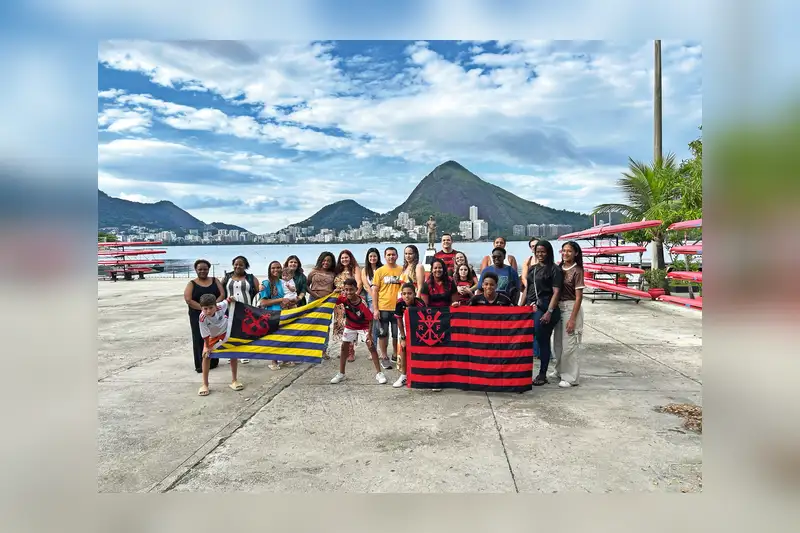
Palestinian-American entrepreneur Morad Fareed is recasting the world’s most beloved sport as a public-health platform to help close maternal health’s social-support gap
- PUBLISHED: Thu 5 Mar 2026, 8:00 AM


In global health, maternal mortality and well-being are typically framed as medical challenges — questions of clinical access, hospital systems, and prenatal care.
Morad Fareed believes that framing misses a larger lever. Across his work in maternal-health philanthropy and investment, the Palestinian-American entrepreneur kept encountering a quieter pattern: women navigating pregnancy without consistent emotional or practical support — partners unsure how to engage, families disconnected, communities absent.“Pregnancy is not meant to be a DIY solo sport,” he says. “It’s meant to be a team effort.”
Recommended For You





That insight led Fareed to an unlikely systems question: if maternal-health outcomes are largely shaped by social conditions, what global infrastructure already exists to mobilise support at scale?
His answer became FC Mother — a New York-based organisation reimagining football clubs and fandom as a distributed public-health platform for mothers.
Reframing football as health infrastructure
Fareed’s core premise begins by stripping football of its identity as sport and examining it instead as social architecture.
“When you zoom out and you forget that football is a sport, and you look at what its infrastructure actually is, it's the largest connected global infrastructure in the world that's unused for health,” he explains. “It's available in every city, in every city there's a club. Football is a universal symbol beloved by 6 billion people, and fandom already exists around it. That's a social behavior that you can influence.”
This lens intersects directly with public-health evidence. “Even though we call it a health problem, it's actually a social problem. 80% of maternal health outcomes are social factors… The clinical side… is only 20%.”
If most maternal outcomes depend on stress, relationships and community support, Fareed argues, then scaling maternal wellbeing requires mobilising people — not just healthcare systems.
“The question is simply, what is a vehicle we can use to fill in the social gap? And that's where football comes in."

FC Mother operationalises that idea through what it calls the “Assist” — a measurable unit of social support provided to a pregnant woman by people around her.
“What we found is that, through the power of football, we can motivate, incentivize and reward healthy actions for social support for moms,” Fareed says. “That is a huge, huge health intervention, and we call that the ‘Assist’.”
In pilot programmes across Brazil, the US and Mexico, each participating mother received roughly 100 assists — practical actions such as transport help, household tasks, emotional check-ins and partner engagement.
“All around the world today, moms are going through pregnancy alone, unprepared, overstressed, overwhelmed, completely lacking social support,” he says. “With FC Mother, we rally a team of social supporters around every mother in the programme.”
The behavioural shift within households proved particularly significant.
“Mothers told us that now they had their partners, their husbands, their boyfriends, doing tangible actions for them,” Fareed notes.
“We saw a 41% behavior change there. That's historic in a public health trial.”
The model’s distinctive leverage lies in engaging men — a demographic often absent from maternal-health programming. “If 80% of the problem is social then mothers need social support. It's not a women's issue, it's a human issue,” he says. “Football engages the men to support mothers… 70% of our audience at FC Mother are men and that's a huge value add to the women's health movement.”
Measuring impact in 'Life Years'
Beyond behaviour change, FC Mother has focused heavily on measurement — particularly to unlock institutional funding.
Fareed’s team applies Life Years, a long-established public-health metric quantifying healthy years gained, as its core impact indicator.
“It's important to note that the notion of Life-Years is not our invention,” he says. “They've been around over 50 years as a metric… used by over 200 nations as a gold standard… We are simply using it as a metric of success and impact.”
The organisation’s Brazil trial generated roughly three additional healthy life years per mother over nine months — an outcome Fareed positions as competitive within global maternal-health interventions.
“What we've just done… was basically apply it in maternal health funding for the first time,” he explains. “We're using Life Years as a funding tool to unlock impact capital.”
That framing resonates with large-scale impact investors seeking comparable metrics across sectors. “There's $2 trillion in impact capital, so we need an institutional-grade impact metric to unlock institutional capital at scale,” Fareed says. “Life Years gives us that.”
From pilots to the World Cup platform
After controlled pilots in Brazil, the US and Mexico, FC Mother has moved into scale partnerships tied to football’s largest global events. “We've been able to generate about 100 assists per mother through our program in Brazil,” Fareed says. “Through this upcoming World Cup partnership, we're going to break records on social support actions… because we're using software to offer rewards for assists to a much bigger fan base.”
Football’s tournament ecosystem offers reach rarely matched in public health campaigns. “The World Cup is unlike anything on the planet and FC Mother's five-year partnership gives us reach to up to 600 million people,” he says. “Compare that to typical women's health initiatives… reaching around 30 million women. There's 2 billion living mothers. Look at that gap.”
The strategy effectively transforms fandom into a distributed care network.
“Every football fan can generate an assist,” Fareed says. “It could be a man, it could be a woman, it could be a 13-year-old, it could be a grandmother or grandfather. We've opened up the funnel to centralize the mother's needs and have the whole fan base participating.”
Mena expansion and the 2034 horizon
The next geographic focus is the Middle East — a region Fareed sees as structurally aligned with FC Mother’s model.
“First of all, we all know MENA is football obsessed, which is fantastic for what we're doing,” he says.
The organisation first introduced its concept regionally at Riyadh’s Future Investment Initiative. With pilots validated and FIFA partnerships secured, localisation discussions are now underway across Gulf markets.
“We're looking at various partnerships in the UAE… There's Serie A, there's La Liga, there's global tournaments, there's events, awards. There's a whole robust nature of cross-pollination happening,” Fareed says. “I think there's a lot of ways for us to really embed FC Mother within the region.”
He emphasises alignment rather than duplication with existing family- and women-health programmes. “A lot of this architecture exists,” he says. “For us, it's helping connect into really great programs that are already functioning… We're not trying to reinvent the wheel here.”
Upcoming milestones such as the 2027 Asian Cup and Saudi Arabia’s 2034 FIFA World Cup create long-term entry points.
“The Asian Cup… is going to be like a trial for the 2034 World Cup,” Fareed says. “That's really what we have our eyes on next.”
Rewriting maternal health through culture
At its core, FC Mother’s proposition is less about sport than social behaviour change — using an existing global ritual to activate care around pregnancy.
“If you wanted to mobilise a billion people to fill social support gaps for a health problem,” Fareed asks, “would you mobilize 100,000 doctors or a billion football fans?”
For him, the answer is self-evident. “The mechanism is love,” he says. “What do they already love? Football.”
In that reframing lies FC Mother’s ambition: to channel football’s vast emotional energy into something tangible — support that shows up in a mother’s daily life.


As a passionate storyteller and content writer, Kushmita Bose loves weaving narratives that inform, inspire, and entertain. Whether she's unraveling tech revolutions, dissecting industry reports, or bringing a brand’s journey to life, Kushmita thrives on transforming ideas into captivating stories. When she’s not busy crafting content, you’ll probably find her daydreaming about her next travel adventure.