 E-Paper
 Sign In





Customer choice will drive the next phase of mobility
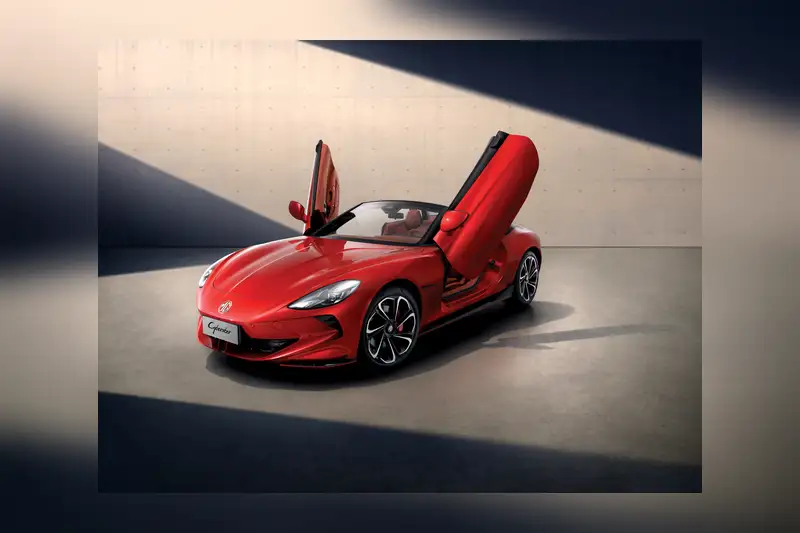
MG Motor sees hybrids, plug-in hybrids and EVs playing complementary roles as the region's mobility landscape evolves
- PUBLISHED: Wed 28 Oct 2026, 7:30 AM


As the Middle East automotive industry navigates the shift towards electrification, connectivity and intelligent mobility, manufacturers are increasingly adopting market-specific strategies rather than a one-size-fits-all approach, says an executive.
Jacky Xu, Managing Director of MG Motor Middle East, said the future of mobility in the region will be shaped by customer choice, varying levels of infrastructure readiness and evolving ownership expectations. While demand for electrified vehicles is accelerating, he believes multiple technologies will coexist for years to come as automakers respond to the distinct needs of individual markets across the GCC and wider Middle East.
Recommended For You


“For MG Motor Middle East, the region's diversity presents both an opportunity and a challenge, requiring a balanced mix of electric, hybrid and conventional powertrains backed by strong after-sales support, technology and customer experience,” Xu told BTR.
He said mobility is becoming increasingly diverse, and the Middle East is a good example of that. The region is made up of very different markets, with varying customer expectations, driving habits, infrastructure and stages of automotive development.
“For MG, this means there is no single approach to mobility. Customers are looking for greater choice, whether that is in terms of powertrain, technology, vehicle type or ownership experience. We are seeing growing interest in electrified vehicles, while internal combustion engines remain important in many markets.
“Our focus is therefore on understanding what customers in each market need and working closely with our distributor partners to respond to those needs. That also extends beyond the vehicle itself to areas such as aftersales, parts availability, reliability and the overall ownership experience,” he said.
He said electrification is a major focus for MG, but “we don't believe the Middle East will transition at one speed or through one type of powertrain”.
“Our approach is to offer battery-electric, hybrid, plug-in hybrid and range-extended technologies, allowing us to respond to different levels of infrastructure and customer demand across the region,” he said.
He said the UAE is one of the more advanced EV markets in the region, with developing charging infrastructure, government support and growing customer openness to EV technology. At the same time, hybrids and plug-in hybrids present a strong near- to medium-term opportunity across much of the Middle East.
“We are already seeing strong momentum. MG recorded 2,148 New Energy Vehicle sales across the region in the first half of 2026, representing year-on-year growth of 410%,” he said.

Xu said technology also needs to deliver a practical benefit in everyday driving. MG’s current technology includes MG Pilot driver assistance features such as adaptive cruise control, lane support and 360° sensing, alongside increasingly connected digital cockpits.
“Looking ahead, we are introducing technologies including semi-solid-state batteries, our Plug-in Hybrid+ system, automated parking and Navigate On Autopilot. So, while we see very strong long-term potential for fully electric vehicles, we believe the transition will take different forms across the region. Our role is to give customers choice and bring the right technology to each market at the right time."
Importance of Design, accessibility and Value
Xu also shed light on the importance of design, accessibility and value in the automobile industry and how MG is balancing innovation with the needs of a broader, value-conscious customer base.
“For MG, accessibility has always been about making good automotive technology available to more people. But value today goes well beyond the initial purchase price. Customers are increasingly considering the technology and equipment they receive, warranty, reliability, aftersales and parts availability, as well as their confidence in the vehicle throughout the ownership period.”
MG benefits from the scale and capabilities of SAIC Motor across research and development, engineering, purchasing and manufacturing. That allows us to remain competitive while continuing to invest in electrification, connectivity, intelligent vehicle systems and safety.
At the same time, he said the Middle East is not one single market. What customers prioritise in the UAE may be different from Saudi Arabia, Kuwait or another market, so we work closely with our headquarters and distributor partners to bring the right specifications and product mix to each market.
“We want to remain competitive without entering a race to the bottom on price. The balance is about combining accessible technology and strong value with quality, safety, customer experience and a sustainable ownership proposition.”
To a question about investment in the region's automobiles, including new flagship showrooms, alongside continued expansion of dealer and aftersales capabilities, Xu said the Middle East is strategically very important to MG, and our investment here is already visible on the ground.
“Together with our distributor partners, we have been building flagship facilities that bring every stage of ownership under one roof. In Kuwait, Adel Alghanim Automotive has just opened a 25,500-square-metre 4S facility in Shuwaikh, combining the showroom with a service centre, an on-site parts warehouse and a dedicated delivery area.”
In the UAE, he said Inter Emirates Motors is opening a flagship 3S facility on Sheikh Zayed Road in Dubai, covering more than 5,500 square metres, with a two-floor showroom and 24 service bays.
“We have also invested heavily in parts supply. Today, we operate two regional parts warehouses, one in Dubai and one in Jeddah. The Jeddah warehouse, opened with our Saudi distributor, Jiad Modern Motors, covers 5,260 square metres in its first phase, serving customers across the Kingdom and handling urgent orders for the wider GCC and the Levant.
“We are now expanding the Dubai warehouse, with completion expected in the first quarter of 2027. The larger facility will hold a much wider range of parts, allowing us to support more customers across the Middle East. Together, the two warehouses keep genuine parts available and reduce the time our customers' vehicles spend off the road.”
With more than 250,000 MG vehicles now on the road across the region, that is where our focus will remain: expanding the showroom and service network, growing aftersales capacity, and making sure the ownership experience keeps pace with our product line-up. Each investment will be guided by a sustainable business case and the long-term needs of each market.
MG Motor Middle East Vision, Future
Xu said MG has built strong momentum in the Middle East over the past 11 years, with more than 250,000 MG vehicles now on roads across the region.
“My priority is to build on that foundation and take the brand into its next phase. The opportunity now is to move beyond being seen primarily as a fast-growing, value-driven challenger and establish MG as one of the most trusted and desirable mainstream automotive brands across the Middle East.”
“For me, the next phase is about the quality and sustainability of our growth, not simply volume. That means strengthening our distributor network, investing in the customer experience, aftersales and parts support, and ensuring that the ownership experience develops alongside the brand,” he said.
He said innovation and product will also be central. We want to bring an even broader and more relevant portfolio to the region, spanning different vehicle segments and powertrains, while remaining locally relevant to the needs of each market.
“Ultimately, I want MG to be known not just for how quickly we have grown, but for the strength and quality of the brand we are building, one that continues to innovate, earns the trust of its customers and evolves with what they need.”
To a question about the future of MG in the Middle East, he said there is still considerable opportunity for MG in the Middle East.
“Across the GCC, we are working with our distributor partners to sharpen product positioning, strengthen dealer operations and expand aftersales, while preparing a pipeline of new products tailored to the market, including a broader electrified range.
He said electrification will be an important part of that opportunity, but the region's diversity means that different powertrains will continue to play a role.
“We see particularly strong potential for hybrids and plug-in hybrids in the near to medium term, while the UAE is well positioned for continued growth in fully electric vehicles. Beyond powertrains, we see opportunities in connected and intelligent vehicles, advanced safety technologies and new forms of mobility. Our expansion into government and fleet mobility, including the MG8 PHEV joining taxi operations across the UAE and Saudi Arabia, is one example of how the role of the automobile is evolving.”
For MG, Xu said the priority is to grow alongside the market while ensuring that customer satisfaction, brand strength and the quality of the business we are building remain as important as sales volumes.
First-half Growth
Xu said emerging markets remain where much of the automotive industry's growth is coming from, and the Middle East has become one of the most competitive automotive markets in the world. Customers have more choice than ever, new manufacturers continue to enter the region, and established brands are responding with new products and technologies.
“Our response is to compete on value and on the ownership experience, building on more than a century of automotive heritage and over 11 years in this region. That approach delivered strong results in the first half of 2026,” he said.
“We achieved strong sales across our SUV line-up, with models like the MG ZS, HS and RX9 performing well, while our New Energy Vehicle portfolio recorded 2,148 sales across the region, representing year-on-year growth of 410%. We have also adjusted our strategy for the second half of 2026 by expanding our role in government and fleet mobility, with the MG8 PHEV joining taxi operations across the UAE and Saudi Arabia.”
Xu maintained that MG Middle East achieved this despite geopolitical disruption to regional shipping routes that raised freight costs three to five times.
“Rather than pass those costs on to customers, we absorbed them, diversified our routes and ports to limit delays, and worked with financial institutions to make ownership more accessible. Throughout, our warehouses in the UAE and Saudi Arabia kept spare parts available to customers across the Middle East without interruption.
“Looking ahead, I believe there is still considerable headroom for MG in the region. Across the GCC, we have been working with our distributor partners to sharpen product positioning, strengthen dealer operations and expand aftersales, laying the groundwork for a pipeline of new products tailored to the market, including a broader electrified range,” Xu concluded.
