 E-Paper
 Sign In





AI reinvents the laptop for the hybrid work era
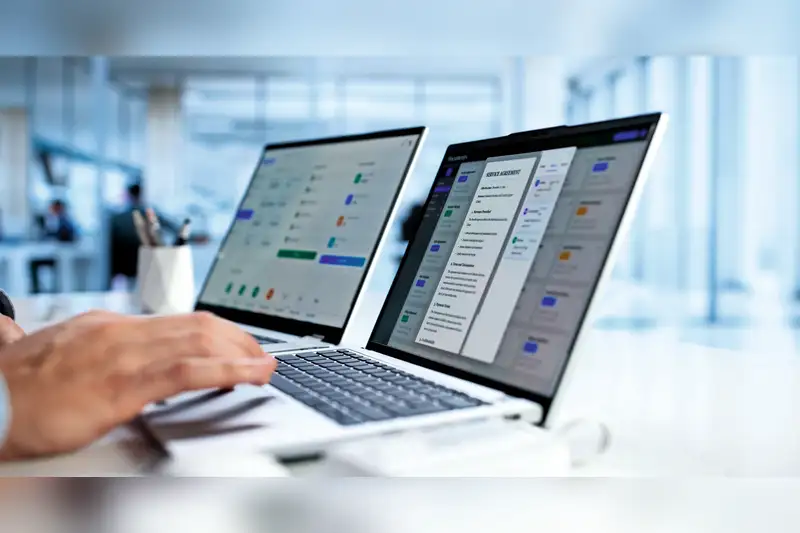
The rise of hybrid work and on-device AI is cementing the laptop's role as the command centre of the digital workplace
- PUBLISHED: Sat 31 Oct 2026, 11:00 AM


Tablets, foldables and smartphones may be gaining ground, but the laptop remains at the heart of the modern workplace. As hybrid work reshapes organisations, laptops continue to be the primary tool for productivity, collaboration and communication.
Industry executives say the laptop's future will depend less on competing with other devices and more on how effectively it integrates artificial intelligence. With on-device AI emerging as the next major computing shift, laptops are expected to play a larger role in automating tasks, improving efficiency and enabling real-time decision-making.
Recommended For You




The category continues to show resilience. According to IDC, global PC shipments, including laptops and desktops, reached 68.2 million units in the second quarter of 2026, while Omdia estimates 46.4 million notebook shipments in the third quarter, underscoring sustained demand despite a changing device landscape.
The AI momentum is particularly strong in the Middle East. IDC research found that 91% of organisations plan to increase AI spending over the next 12 months, with budgets expected to rise by an average of 12%. Nearly a quarter also cited AI-enabled devices as a key investment priority to boost productivity and support local inferencing.
Executives from leading technology brands say laptops are evolving into intelligent digital companions capable of anticipating user needs, streamlining workflows and enhancing productivity.
For businesses pursuing the next phase of digital transformation, AI-powered laptops are increasingly viewed not just as workplace devices, but as strategic tools for growth and innovation.
Reshaping Laptops Market
Michele Montecchio, General Manager, Acer Middle East, said the growth of tablets, foldables and larger smartphones is changing how people divide their time across devices, but it is not removing the need for the PC.
“We increasingly see computing as an ecosystem in which the device follows the workload. A smartphone may be the first screen for communication, and a tablet may suit consumption or lighter tasks, but sustained productivity still requires a different level of computing.

“That difference becomes more evident in professional environments. Working across multiple applications, handling large datasets, creating content, coding or running specialised business software requires processing performance, memory, storage, screen space and input capabilities that are difficult to replicate on a mobile device. Enterprises also have to consider manageability, security, and compatibility with existing software environments, which makes the PC a more strategic purchase than simply choosing a screen size or form factor.”
He said alternative devices are raising expectations. People now expect laptops to wake instantly, last longer away from a charger, remain thin and light and move more naturally between different ways of working. “That is healthy for the category because it pushes laptops to become more capable while retaining the productivity advantages that keep them essential.”
Mohammed Hilili, General Manager of Lenovo Gulf, said the rise of alternative devices is giving consumers and businesses more choice, but it is also making the role of the laptop more distinct. “Smartphones and tablets are well suited to communication, content consumption and lighter tasks, while laptops remain central to sustained productivity, creative work, enterprise applications and high-performance gaming,” Hilili told BTR.
In the UAE and across the wider Middle East, he said this shift is taking place alongside a rapid acceleration in enterprise AI adoption.
According to IDC research commissioned by Lenovo, 91% of organisations in the Middle East plan to increase their AI budgets over the next 12 months, with an average growth of 12%. Nearly one in four also identified deploying AI devices to enhance productivity and enable local inferencing as a key IT investment priority.
“This is strengthening demand for devices that can bring AI closer to users and data while delivering the performance, security, and portability required for modern workflows. As a result, customers are becoming more discerning and looking for premium, AI-ready and purpose-built laptops that offer a clear step up in capability. The laptop continues to earn its place by supporting the depth and complexity that alternative form factors cannot always provide,” he said.
Strongest Growth Categories
About which laptop categories are seeing the strongest growth today, and what user needs to continue to make laptops indispensable despite the rise of alternative devices, Montecchio said three areas are particularly important today: AI PCs, gaming and commercial devices. Each is driven by a different workload, but a common shift is toward users buying around capability rather than specifications in isolation.
“AI PCs are changing device architecture itself. With dedicated neural processing units, or NPUs, more AI workloads can be processed locally rather than relying entirely on the cloud. That matters because on-device processing can improve responsiveness, reduce latency and support greater privacy for certain workloads. As applications use that hardware more, the NPU will increasingly sit alongside the CPU and GPU in how users evaluate PC performance. We offer a large portfolio of AI Pcs like Acer Aspire 14 AI, Acer Aspire X16 AI and Acer swift Air 14 laptops.”
He said gaming is another important driver because it continues to push the performance envelope across graphics, cooling, displays and processing power.
“Many of those advances ultimately benefit creators and other demanding users who rely on our Predator and Nitro laptops. In the commercial segment, priorities differ: reliability, security, manageability, battery life, and total cost of ownership remain critical, particularly as organisations refresh ageing fleets with our TravelMate laptops.”
He opines that the laptop remains relevant because it can accommodate all of these requirements across different configurations. “The category is broad enough to serve a student, a mobile professional, a developer, a creator and a gamer without asking each of them to use the same type of machine."
Hilili said demand is being shaped by a few distinct user needs. Professionals are looking for AI-ready devices that support modern workflows; creators need processing power and display quality for serious production work, and gamers require performance and responsiveness that alternative form factors cannot yet match. “As a global PC leader, Lenovo's portfolio spans all of these segments, from enterprise and commercial through to consumer, creator and gaming, which puts us in a strong position to meet the range of needs customers in the UAE and wider Middle East bring to the table.
“What continues to make laptops indispensable is the combination of sustained performance, display quality, security and flexibility that no other form factor can fully replicate. Whether a professional is running demanding enterprise applications, a creator is working across large video or design files, or a gamer needs the responsiveness and graphics depth that a serious gaming session demands, the laptop remains the device that delivers without compromise.”
The Yoga Pro 9i Aura Edition, with its 16-inch Tandem OLED display and high-performance configuration, speaks directly to creator needs, while the Legion Pro 7i Gen 10 addresses the gaming segment. Our ThinkPad range continues to anchor enterprise and commercial requirements.
The breadth of that portfolio is particularly relevant in a market like the UAE, where customers are adopting technology across work, education, entertainment, and content creation simultaneously.
Laptop Upgrade Cycles
Hilili said hybrid work has made the laptop a central platform for productivity, collaboration and communication, raising expectations around portability, performance, connectivity and security. At the same time, AI is becoming an increasingly practical part of the user experience, supporting functions such as local processing, intelligent noise cancellation, workflow assistance and smarter system management.
“This is influencing upgrade decisions across both consumer and enterprise segments. Customers are not only replacing devices when they reach the end of their lifecycle; they are also upgrading when newer systems can deliver clear gains in productivity, responsiveness and user experience. The ThinkPad X1 Carbon Gen 14 Aura Edition, a Copilot+ PC, reflects this shift, combining AI-ready capabilities, enterprise-grade security and a highly portable design for modern professionals.”
The IDC research commissioned by Lenovo identifies deploying AI devices as the number one IT investment priority for the next 12 months, and predicts that by 2027, 50% of enterprise PC purchases will shift to models with on-device AI agents. For enterprise customers in the UAE and wider Middle East, this makes AI-ready PCs increasingly central to long-term technology planning.
Montecchio expressed his view that AI-powered features, hybrid work trends, and productivity requirements are influencing laptop upgrade cycles and purchase decisions. “We are moving into a more interesting phase of the AI PC cycle. The first phase was largely about introducing AI-capable hardware. The next is about whether users can see a practical benefit from that hardware in the applications and workflows they use every day.
“That is important for upgrade cycles. Historically, users might have upgraded because of a major improvement in processor performance, battery life or a change in the operating system. AI introduces another consideration because the latest PCs include dedicated processing specifically for AI workloads. As more software is optimised for local AI processing, the difference between an older PC and a new generation of AI PC becomes more relevant.”
For enterprises, he said the decision is even more nuanced. IT teams are not buying AI capability simply because it is new. They are looking at whether it can improve productivity, strengthen security, support specific workloads and justify the investment across a fleet. They also have to account for device longevity, management and compatibility.
Hybrid work adds another layer. Laptops are no longer used in one predictable environment, so performance per watt has become extremely important.
“Users want strong performance when they need it, but they also expect long battery life, portability and high-quality video collaboration. The purchase decision is increasingly based on how well a device balances those requirements rather than maximising one specification. A perfect example would be our Acer TravelMate P6 14 AI engineered for limitless productivity in an ultra-lightweight (under 1kg) Windows 11 Copilot+PC.”
Innovations Driving Growth
Montecchio believes that laptops will be coexisting with tablets, foldables and smartphones, and it will depend on the consumers choice and preference of the gadgets.
“I do not think the future is about one device replacing another. It is about clearer specialisation and better continuity between them. Consumers already move between a phone, PC, tablet and other connected devices throughout the day, and each form factor earns its place by being better suited to a particular type of interaction or workload.”
For laptops, he said one of the biggest changes will be a shift toward more intelligent edge computing. As NPUs become more capable and developers build more applications around local AI processing, PCs will handle more intelligent tasks directly on the device. That has implications not only for performance, but also for latency, power efficiency and privacy.
“We will also see greater diversity in PC design. The industry is moving away from the idea that performance and mobility have to sit at opposite ends of the market. Improvements in processor efficiency, battery technology, thermal design and materials are allowing manufacturers to deliver considerably more computing power in increasingly portable systems. You can see it clearly in our latest IFA announcements with the newly launched Acer Swift Blade 14 laptop weighing only 799 gramme, as thin as 12.9mm with ultra-thin bezels and 16:10 aspect ratio designed around mobile productivity and visual-driven workflows on the go.”
The next phase of growth will therefore not come from the laptop trying to become a smartphone or tablet. It will come from improving the workloads people choose a PC for in the first place, while adapting to an ecosystem where users expect their devices to work more intelligently together,” according to Montecchio.
Looking ahead, Hilili said the laptop relevance will be determined by how smarter it gets, not how it competes with other devices. On-device AI is the defining development. As models become more capable of running locally, the laptop becomes less of a tool you operate, and more of an intelligent platform that anticipates what you need and adapts to how you work.
“The next phase of growth will be driven by more useful and integrated on-device AI, alongside advances in battery life, performance, thermal efficiency, displays, connectivity and security. These capabilities will be particularly important in markets such as the UAE, where professionals, businesses, students, creators, and gamers are adopting technology across increasingly connected workflows,” he said.
“Across Lenovo's ThinkPad, Yoga and Legion portfolios, this means developing devices tailored to different user needs while maintaining a common focus on intelligent performance and flexibility. The opportunity is not for laptops to replace other devices, but to work more intelligently alongside them,” he added.
The message from the industry is clear: reports of the laptop's demise have been greatly exaggerated. While new form factors will continue to gain traction, AI is giving laptops a renewed sense of purpose, ensuring they remain at the centre of how people work, collaborate and create in the years ahead.
