 E-Paper
 Sign In


AI adoption and AI transformation creating very strong demand for cloud adoption, agentic AI and GPU usage
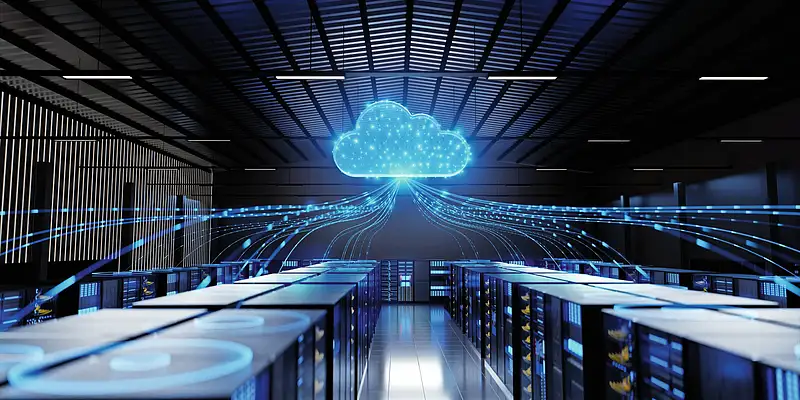
Large-scale solar and battery storage are reshaping renewable energy from an intermittent source into dependable, round-the-clock power
- PUBLISHED: Fri 25 Sept 2026, 8:00 AM


The UAE’s data centre build-out is beginning to look less like a technology story and more like an infrastructure story. The scale of the projects now being planned makes that clear. Du’s AI Park in Dubai is designed to reach up to 1GW of capacity, with multiple liquid-cooled hyperscale data centres spread across a site of around 500,000 square metres in Warsan. The project is being developed in phases over five years and is intended to support some of the most demanding AI workloads in a sovereign environment.
A gigawatt is not simply a bigger data centre. It changes what has to be built around the computing itself. Power connections become more substantial, cooling systems more sophisticated, redundancy more important and energy efficiency much harder to treat as a secondary consideration. That is particularly true for AI infrastructure, where thousands of GPUs are packed into relatively dense environments and run continuously.
Recommended For You




Demand is already giving operators a reason to build ahead of the curve. Speaking to Khaleej Times, Fahad Al Hassawi, du Chief Executive Officer, said the company was seeing strong momentum in enterprise ICT as government-led AI adoption accelerated demand for cloud services, agentic AI and GPU capacity. “AI adoption and AI transformation, which is led by the government, is creating very strong demand for cloud adoption, agentic AI and GPU usage,” he said. “I see a strong momentum happening there, and I hope it will continue further in the year.”

That momentum is also beginning to show up in the investment numbers. Du reported a 12.7% increase in first-half capital expenditure in 2026 to Dh1.038 billion, with data centre projects among the areas being accelerated. The company is also developing a hyperscale facility under a multi-year agreement with Microsoft, with an estimated combined operational and capital cost of around Dh 2 billion. Microsoft will be the main tenant, giving the project a long-term commercial base from the outset.
Al Hassawi has made clear that the company does not see this as a short investment cycle. “Data centre expansion will also continue,” he said. “We take a longer-term view of our investments because they are crucial to sustaining growth, not just this year but over the coming years.”
Power behind the racks
The intensity of AI workloads is changing the physical design of data centres almost as quickly as the software running inside them. Traditional facilities relied heavily on air cooling. That becomes less practical as more powerful GPUs are installed closer together and produce significantly more heat.
Du has already moved into direct-to-chip liquid cooling. Its Dubai Silicon Oasis facility houses a 5.1MW NVIDIA AI supercluster supporting around 4,000 GPUs, while a newer collaboration with NextGenAI has taken that further with a 13MW-plus operational AI supercluster using NVIDIA B300 GPUs and liquid cooling.
The significance is not just technical. Cooling consumes a meaningful share of a data centre’s electricity, so any improvement in thermal management directly affects operating costs and the amount of power that can be devoted to computing. Du says its facilities operate at a Power Usage Effectiveness ratio of between 1.4 and 1.6 at full load, while it has also introduced higher white-space temperature settings, indirect evaporative cooling and building-management systems aimed at reducing non-IT power consumption.
The broader industry is moving in the same direction. AI workloads are forcing operators to think about cooling, electricity and facility design as one problem rather than three separate ones. The more computing capacity that is concentrated in a single location, the more valuable every improvement in energy efficiency becomes.
Energy enters the investment case
For data centre developers, access to power is becoming a commercial consideration long before a facility begins operating. AI workloads are pushing electricity demand higher, while the size of new campuses means developers need confidence that sufficient capacity will be available not only at launch, but as sites expand. In that environment, the speed and certainty of securing a power connection can influence where investment ultimately goes.
This gives the UAE an important advantage. Its data centre expansion is taking place alongside continued investment in generation and network capacity, while the country is also building a larger clean-energy portfolio. For international technology companies assessing new locations, that combination offers something increasingly valuable: the ability to plan computing growth around an energy system that is itself expanding.
Electricity is also one of the largest operating costs for data centres, particularly as AI systems concentrate more computing power into each facility. Improvements in cooling and power management can reduce that burden, but operators still need large volumes of dependable electricity over long periods.
The UAE’s growing renewable-energy base adds another dimension. Technology companies are paying closer attention to the carbon footprint of their infrastructure at the same time that AI is increasing electricity consumption. Expanding solar generation, battery storage and other clean-energy capacity gives operators more scope to support growth while meeting sustainability commitments.
Global investors are already taking notice. BlackRock has identified the UAE and Saudi Arabia as emerging AI-infrastructure centres partly because they combine capital with energy resources at a time when electricity constraints are delaying data centre development elsewhere.
Scale changes the market
The shift becomes even clearer when Khazna Data Centres is brought into the picture. Khazna is developing the infrastructure for Abu Dhabi’s planned 5GW UAE-US AI Campus, one of the largest projects of its kind. The first 200MW of capacity is targeted for delivery in 2026, while Khazna already has around 300MW operational in the UAE and almost another 370MW under construction and commissioning.
For Greg Jasmin, Chief Commercial Officer at Khazna Data Centres, the scale itself changes the nature of the business. “AI infrastructure is totally different in terms of the sizing, in terms of the scale, in terms of the complexities,” he said. Running a 100MW site, he noted, is a very different proposition from operating a 20MW or 30MW facility.
The commercial demand behind that expansion is equally significant.
Jasmin said: “In another 12 to 14 months, almost 700 megawatts of capacity will be live here in the UAE, contracted. And that’s the important part. Not just live. Not just saying we’ve built it, but we’re waiting for them to come. We’ve built it. We’ve leased it.”
That distinction is important because it shows that capacity is not being added speculatively. Much of it is already tied to customers, giving operators greater confidence to continue building at scale.
The size of individual facilities is changing as well. Khazna says many of its future data halls are being designed for capacities of up to 50MW, while individual AI clusters could reach 250MW. At that point, the infrastructure outside the building becomes just as important as what is installed inside it.
Jasmin made that point directly when discussing the 5GW campus. “It’s not just Khazna building a data centre,” he said. “It’s the power generation, the transmission, the distribution to the site.”
That observation gets to the centre of the current data centre boom. Projects of this scale depend on an entire surrounding ecosystem, from substations and cables to cooling plants, fibre routes, backup systems and specialist engineering.
Resilience and sovereignty
There is another reason data centres are becoming strategically important: more of the economy now depends on them. Government services, banking, healthcare, telecoms and industrial systems are moving deeper into cloud and AI infrastructure. The question of where that data sits and how reliably it can be accessed therefore carries more weight than it did when data centres mainly supported conventional enterprise IT.
Du has been leaning heavily into that point. Its National Hypercloud is hosted within liquid-cooled data centres in the UAE and is designed to keep sensitive workloads inside the country.
Jasim AlAwadi, Chief ICT Officer at du, has described it as a platform that ensures “the UAE’s digital assets remain within the country’s borders” while giving customers resilient local infrastructure.
The AI Park is built around the same principle. When it was announced, Al Hassawi said: “Our vision at du is to provide the UAE with a sovereign, secure, and future-proof platform for artificial intelligence.”
That language reflects a wider change in how the sector is viewed. Data centres are no longer simply property assets filled with servers. They are becoming part of national infrastructure, with the same conversations around resilience, redundancy and long-term capacity planning that traditionally surrounded energy, transport and telecom networks.
The UAE’s advantage will ultimately depend on how well it brings these pieces together. Strong connectivity, deep investment capacity, expanding power infrastructure and increasingly sophisticated cooling systems are all becoming part of the same proposition. As AI workloads grow denser and the demand for computing rises, the data centre sector will increasingly be shaped by what surrounds the servers as much as by the hardware inside them.
For operators, that means planning well beyond the next wave of demand. As Fahad Al Hassawi, CEO of du, told Khaleej Times: “Data centre expansion will also continue. We take a longer-term view of our investments because they are crucial to sustaining growth, not just this year but over the coming years.”


Sana Eqbal is a journalist and media strategist with over a decade of experience at the intersection of media, business and emerging technologies. She specialises in corporate communications, digital storytelling, public relations and AI-powered content strategy.