 E-Paper
 Sign In


Abu Dhabi office yield premium driven by scarcity
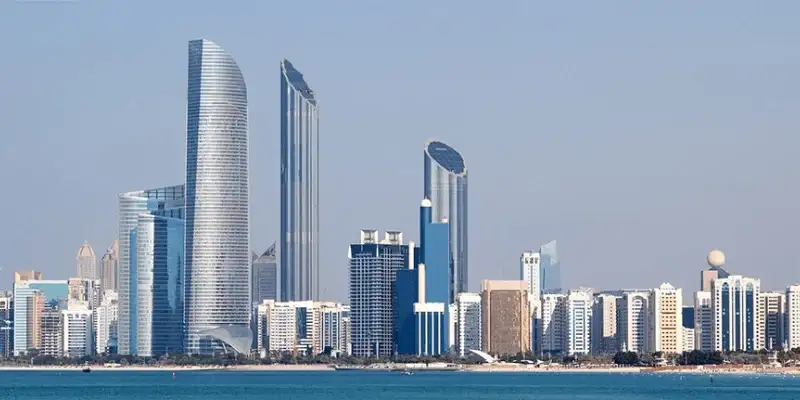
Prudent investors can identify opportunities to unlock capital appreciation, premium rental streams
- PUBLISHED: Sun 1 Nov 2026, 11:30 AM
- By:
- Sean Adam Swinburne


Abu Dhabi's commercial office sector evidence suggests we are in a strong growth phase, presenting an exceptional landscape for institutional developers and real estate investors to capture outsized returns and generate significant Alpha. The structural undersupply of institutional-grade assets highlighted by a staggering 0.1% prime vacancy rate in early 2026 has created a landlord-dominated market. By looking past top-line yields to the physical constraints and regulatory frameworks driving the capital, prudent investors can identify opportunities to unlock capital appreciation and premium rental streams.
Corporate expansion is accelerating at an unprecedented pace, anchored by highly resilient, well-capitalised industries including banking, financial services, sovereign wealth entities, renewable energy, and defence.
Recommended For You





The strategic expansion of the Abu Dhabi Global Market (ADGM) onto Al Maryah Island has catalysed an influx of global asset managers and investment funds. This is heavily concentrated within core geographical hotspots: ADGM on Al Maryah Island, the commercial hubs of Al Reem Island, and the innovative ecosystem of Masdar City. Forward-looking occupiers are actively hunting for spaces that offer dual licensing frameworks, allowing seamless operation across both the Abu Dhabi mainland and free zones a major value-add that developers can leverage to command premium rates.
The widening value gap between institutional-grade real estate and ageing secondary stock represents a highly lucrative play for premium developers looking to maximise their Equity Multiple:
Grade A & Prime Space Mastery: With occupier demand firmly anchored by global ESG targets and efficient floor plate configurations, prime occupancy sits at 95% to 99%. Open market prime rents have surged 16% year-on-year basis. Landlords hold total leverage, successfully compressing tenant incentives by reducing capital expenditure (CapEx) on fit-out allowances and strictly limiting rent-free periods.
Grade B Adaptive Capture: Even secondary properties are experiencing a strong performance lift, enjoying 4.2% rental growth as expanding corporates absorb older mainland assets out of sheer necessity due to the extreme lack of prime alternatives.

While macroeconomic and regional caution caused a brief "wait-and-see" pause, Abu Dhabi’s robust sovereign spending and rock-solid underlying fundamentals have completely decoupled the Emirate from regional volatility, lowering the asset class's systematic Beta. Deferred corporate capital expenditure is now flooding back into the market. Instead of consolidating, multinational corporations are aggressively expanding their growth footprints, creating a highly competitive bidding environment for the limited space available.
Abu Dhabi’s recent implementation of a temporary 0% rental cap on renewals (based on the property’s last registered Tawtheeq value) creates a distinct strategic advantage for tactical investment positioning:
The ADGM Arbitrage Zone: Crucially, ADGM operates under an independent legal and regulatory framework, making it entirely exempt from the 0% rental freeze. Investors holding or developing assets on Al Reem Island and Al Maryah Island are uniquely positioned to realise immediate, uninhibited rental growth and maximise Net Operating Income.
A Temporary Transition Window: Because market stakeholders expect the mainland freeze to be a short-lived stabilisation measure, savvy investors can utilise this period to acquire underperforming mainland assets, reposition them, and prime them for a higher Capitalisation Rate upon policy normalisation.
Abu Dhabi’s 100% foreign freehold ownership laws across premier investment zones such as Al Reem Island, Yas Island, and Al Saadiyat Island have opened the door to an underserved, high-margin market segment.
True strata title commercial units in the 500–3,500sqft bracket are exceedingly rare, with limited footprints like Addax Tower and Radiant Square on Al Reem Island. Where these boutique spaces exist, they are delivering exceptional performance, fetching premium capital values and commanding double-digit rental growth driven by cash-rich small businesses and family offices eager to secure equity in their own corporate spaces.
For developers looking to deploy capital, the competitive runway is incredibly clear, pointing toward an accelerated Internal Rate of Return. Abu Dhabi's total office stock stands at a modest 4.18 million square metres of gross leasable area, with only 428,000 square metres of new supply scheduled for delivery between 2026 and 2028.
Major upcoming projects like Masdar City Square and The Link are already heavily pre-let, confirming massive market absorption capacity. This creates a further Delta we need to define between upcoming supply that is available to lease and that which is already spoken for. Significant market relief is not projected to arrive until closer to 2028 when master projects like One Maryah Place and Saadiyat Grove Business Park debut. Until then, the supply deficit strongly suggests that any investor bringing institutional-grade commercial space to market over the next 24–36 months will step into an ultra-premium, highly profitable landlord's paradise with robust Debt Service Coverage Ratio performance.
Conclusion: Capital deployment options within the office market sector of Abu Dhabi therefore appear to present an attractive proposition. Demand from global financial institutions and locally backed initiatives across a diverse sector spread offers price pressure on a structural supply shortage. Due to the occupier demand profile and existing stock, that opportunity appears to present especially well within the Grade A market with ESG credentials. The question is likely more when, not if, the supply pipeline catches up with demand.
— Sean Adam Swinburne is Director of Valuations at ValuStrat.