 E-Paper
 Sign In





410,000 m³ of water a day, 35 more years at the ports and 600,000 tonnes of waste capacity: Investing in Sharjah's next growth cycle
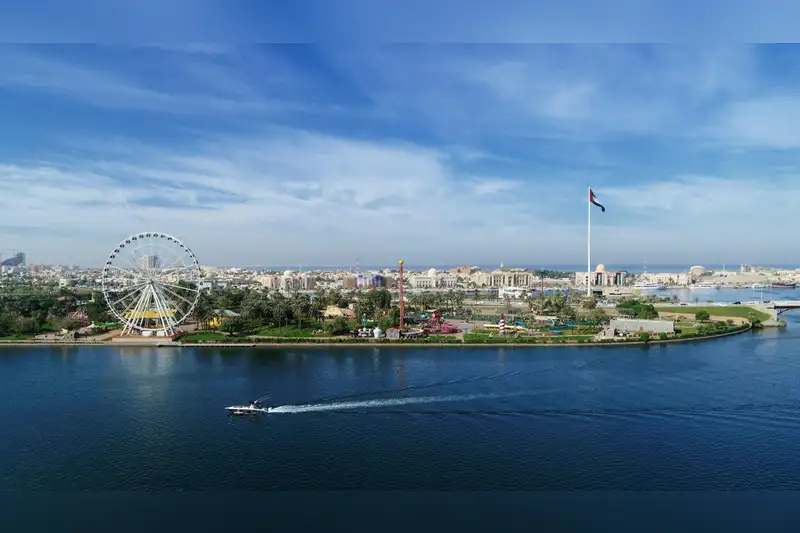
At Sharjah Investment Forum 2026, the emirate's infrastructure partnerships put a bigger question in focus: who will build the capacity economies need to compete for the next generation of investment?
- PUBLISHED: Wed 14 Oct 2026, 10:34 AM


For economies competing for global capital, attracting the next factory, logistics operation or technology company creates another investment requirement: the infrastructure to support it. As industrial capacity expands and populations grow, so does demand for water, energy, transport, waste management and digital connectivity. Increasingly, governments are looking to private capital and specialist operators not only to invest in businesses, but to help build and expand the systems those businesses depend on.
Sharjah is already putting several such models to work. Its first Independent Water Project is being developed to produce 410,000 cubic metres of desalinated water a day by 2028, sufficient for approximately 1.4 million people; its ports authority has entered a further 35-year concession with Gulftainer; and the emirate's waste-to-energy facility is moving towards doubling annual processing capacity from 300,000 tonnes to 600,000 tonnes.
Recommended For You

The structures differ, from an independent utility project and long-term concessions to a joint venture, but they point to a broader shift in the investment landscape. Infrastructure required to accommodate future economic growth is increasingly becoming an investment proposition in its own right.
It is a question that sits squarely within the theme of Sharjah Investment Forum (SIF) 2026, “Building Adaptive Economies”. Attracting capital remains fundamental, but so too is an economy's ability to accommodate that investment over the long term, particularly as demand, technology and the global trade patterns change.

Marwan Alichla, Coordinator General of the SIF Committee, said: “Investment figures capture the capital an economy attracts today; the deeper measure of competitiveness is the capacity it builds for tomorrow. Water, logistics, energy and environmental systems determine whether businesses can establish, expand and remain productive as markets change. By combining public direction with private capital and specialist expertise, Sharjah is building the foundations that allow investment to translate into sustained economic value. This is the shift SIF 2026 brings into focus: from attracting capital to sustaining the growth it creates.”
Building capacity before it becomes a constraint
The Al Hamriyah Independent Water Project illustrates the scale involved. Sharjah Electricity, Water and Gas Authority (Sewa) and ACWA Power are developing Sharjah’s first independent Water Project using seawater reverse osmosis technology. Production is expected to reach 272,000 cubic metres a day by the second quarter of 2027 and 410,000 cubic metres at full capacity in 2028.
Under the long-term arrangement, private-sector capital and water-sector expertise are being deployed to expand an essential utility whose capacity will need to keep pace with population and economic growth.
The same principle is visible in Sharjah's logistics network, albeit through a different structure. Sharjah Ports, Customs and Free Zones Authority and Gulftainer extended the concessions for Sharjah Container Terminal and Khorfakkan Container Terminal by another 35 years in 2023, continuing a relationship spanning five decades.
That partnership is now extending inland. The 150-hectare Al Dhaid Multi-Modal Trade Corridor, structured as a public-private partnership with Sharjah Ports Authority, is planned with annual capacity of 1.5 million TEUs and will physically integrate Khorfakkan Port with the Etihad Rail network. For manufacturers and distributors, connectivity between maritime gateways, inland logistics and rail can directly affect cost, speed and access to regional markets.
Different assets, the same economic question
Sharjah's waste-to-energy facility presents another model. The original project reached financial close at $220 million, bringing institutional financing into what was then a new category of sustainable infrastructure in the UAE.
The Emirates Waste to Energy Company, now jointly operated by BEEAH and Tadweer Group, is advancing a second-phase expansion. The plans will increase annual waste-processing capacity from 300,000 tonnes to 600,000 tonnes and power generation from 30 MW to 60 MW. The expansion simultaneously adds capacity to manage increasing waste volumes and generate more low-carbon electricity.
Water, ports and waste-to-energy serve very different economic needs, and there is no single partnership or financing model behind them. What connects them is the role of long-term infrastructure capacity in determining how readily an economy can absorb future growth.
That changes the discussion around investment competitiveness. Regulation, licensing, incentives and ease of establishment remain important, but investors making long-term decisions also need to know whether utilities can accommodate expansion, whether goods can reach markets efficiently and whether transport, digital and environmental infrastructure can keep pace.-
This question and several others will be examined at the ninth Sharjah Investment Forum (SIF), during talks like “Beyond Ease of Doing Business: Building Economies Where Businesses Grow””; “Supply Chains Under Pressure: Building Economies That Can Withstand Global Shocks” , and others.
Organised by Invest in Sharjah in collaboration with the UAE Ministry of Investment, SIF 2026 takes place on 14–15 October 2026 at Al Jawaher Reception and Convention Centre in Sharjah. Investors and business leaders can explore the programme and registration details on the official SIF 2026 website.
